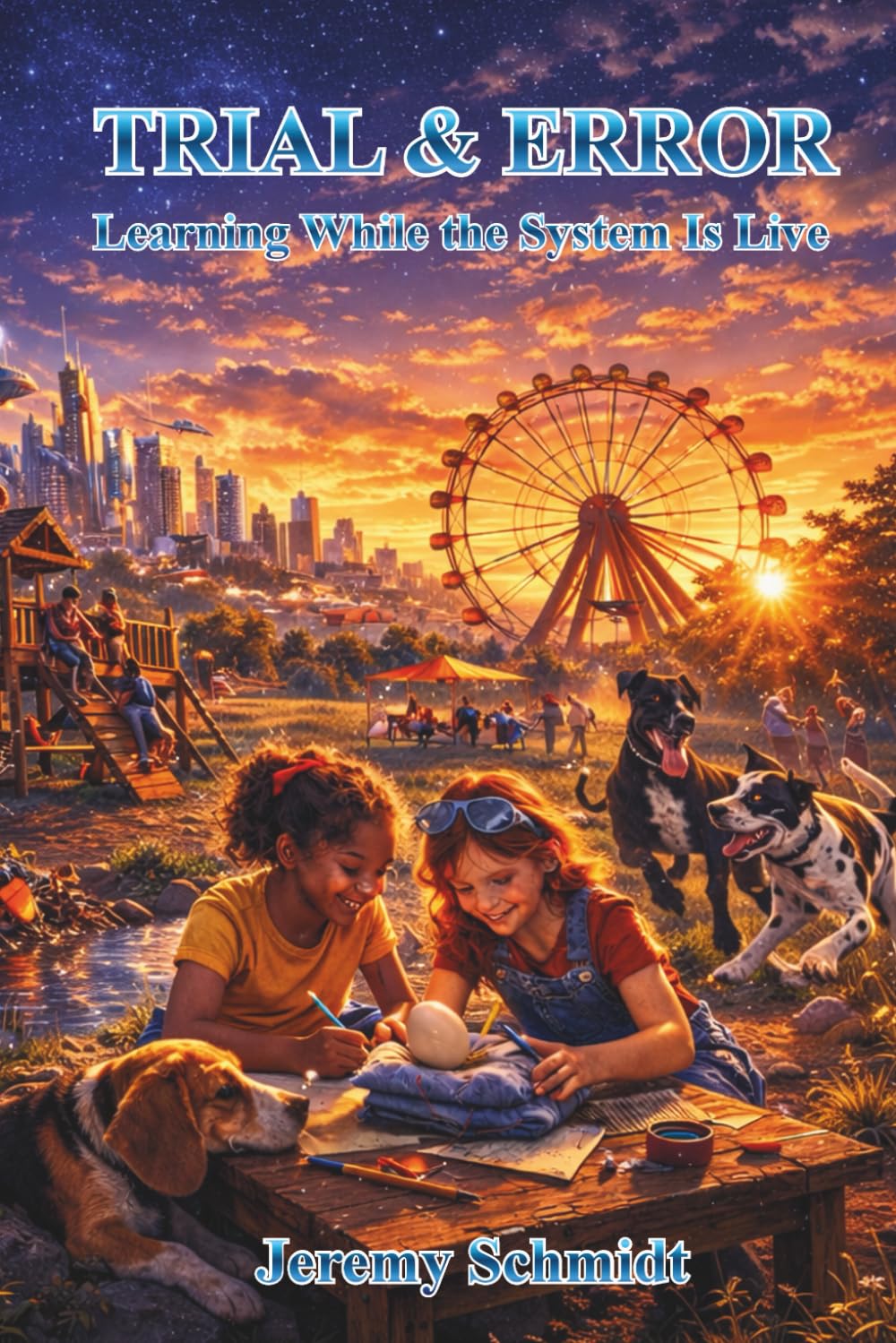
Trial & Error: Learning While the System Is Live (The Digital Adulthood Series)
$15.99
by Jeremy Schmidt



What do collapsing bridges, Darwin’s finches, supply chain shortages, and Shakespearean theater have in common? They all reveal the same principle: complex systems learn through trial and error. In an age defined by rapid technological change and massive interconnected networks, the systems we build—from infrastructure and markets to digital platforms and global institutions—operate at scales previous generations could scarcely imagine. When these systems succeed, they often appear seamless. When they fail, the consequences can spread quickly and unpredictably. Yet history suggests that failure itself is not the enemy of progress. In Trial & Error , Jeremy Schmidt explores how experimentation, adaptation, and resilient design have quietly shaped the development of modern society. Drawing from engineering, biology, economics, and public life, the book examines how systems evolve when ideas are tested against reality. Along the way readers encounter: • the dramatic lessons of the Tacoma Narrows Bridge • Charles Darwin’s observations across the Galápagos Islands • the hidden complexity of global supply chains • the discipline of performers who adapt when the show must go on • and the civic institutions that sustain long-term learning across generations Rather than chasing perfect solutions, the most enduring systems embrace a more practical approach: they create environments where ideas can be tested safely, mistakes remain survivable, and knowledge accumulates over time. Blending thoughtful storytelling with insights from science, history, and everyday experience, Trial & Error offers a hopeful perspective on how societies adapt, innovate, and improve—even when the path forward is uncertain. Because progress rarely arrives fully formed. More often, it emerges from the patient work of trying, learning, and trying again.