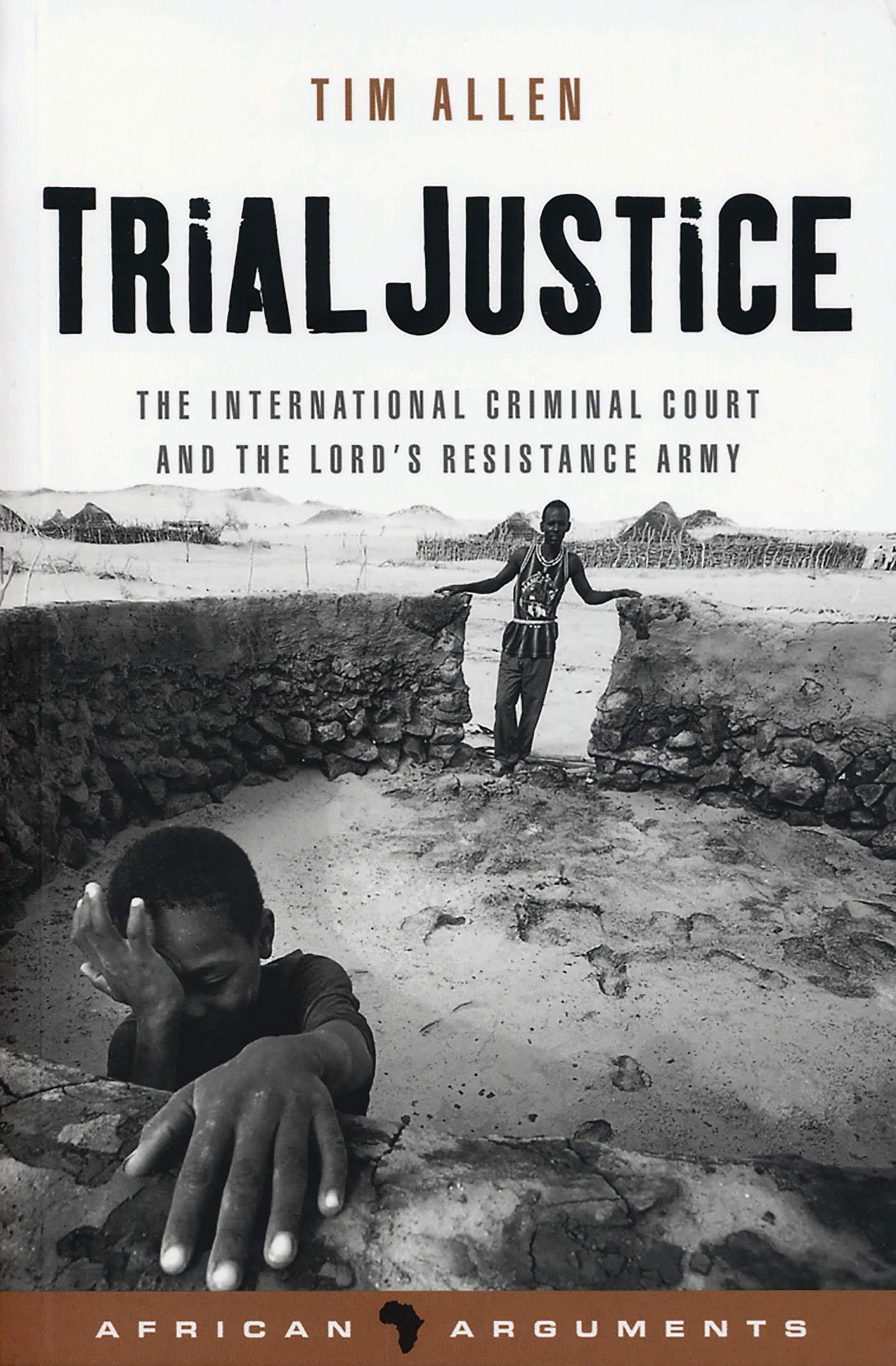



The International Criminal Court (ICC) has run into serious problems with its first big case -- the situation in northern Uganda. There is no doubt that appalling crimes have occurred here. Over a million people have been forced to live in overcrowded displacement camps under the control of the Ugandan army. Joseph Kony's Lord's Resistance Army has abducted thousands, many of them children and has systematically tortured, raped, maimed and killed. Nevertheless, the ICC has confronted outright hostility from a wide range of groups, including traditional leaders, representatives of the Christian Churches and non-governmental organizations. Even the Ugandan government, which invited the court to become involved, has been expressing serious reservations. Tim Allen assesses the controversy. While recognizing the difficulties involved, he shows that much of the antipathy towards the ICC's intervention is misplaced. He also draws out important wider implications of what has happened. Criminal justice sets limits to compromise and undermines established procedures of negotiation with perpetrators of violence. Events in Uganda have far reaching implications for other war zones - and not only in Africa. Amnesties and peace talks may never be quite the same again. “...excellent and very up-to-date book...Tim Allen's book is really valuable. It contains a wealth of background material, and firsthand interview material gathered in northern Uganda, on the issue of the interaction between the ICC and the situation [in Uganda].” ― Helena Cobban, 'Just World News' “..an excellent book on the northern Uganda conflict...” ― Carlos Rodriguez, Ugandan Observer “For those engaged in efforts to improve the lives of people in the north, this book is an informative read. For those who are engaged in the punditry business, it is an imperative...[Allen] brings out all of the issues and engages in a detailed analysis of the diverse views on justice and reconciliation especially for and among the Acholi people with particular reference to the ICC.” ― The Sunday Vision (Uganda) Dr Tim Allen is a Reader at the London School of Economics and Programme Director of the post-graduate programme in Development Studies. Alcinda Honwana is visiting professor of anthropology and international development at the Open University (UK). She was chair in international development at the Open University and taught anthropology at the University Eduardo Mondlane in Maputo, University of Cape Town and the New School in New York. She was also programme director at the Social Science Research Council in New York. Honwana has written extensively on the links between political conflict and culture and on the impact of violent conflict on children and youth, conducting research in Mozambique, the Democratic Republic of the Congo, Angola, Colombia and Sri Lanka. Her latest work has been on youth transitions and social change in Africa, focusing on Mozambique, Senegal, South Africa and Tunisia. Alcinda Honwana's latest publications include: The Time of Youth: Work, social change, and politics in Africa, 2012; Child Soldiers in Africa, 2006; and Makers and Breakers: Children and youth in postcolonial Africa, 2005 (co-edited). She was awarded the prestigious Prince Claus Chair in Development and Equity in the Netherlands in 2008. Alex de Waal is Executive Director of the World Peace Foundation and a research professor at Tufts University. During 2009-11 he served as senior advisor to the African Union High Level Implementation Panel for Sudan and Program Director at the Social Science Research Council. His academic research has focused on issues of famine, conflict and human rights in Africa including. He was awarded an OBE in the UK New Year's Honors List of 2009, was on the Prospect/Foreign Policy list of 100 public intellectuals in 2008, and the Atlantic Monthly list of 27 'brave thinkers' in 2009. After studying history at London University, Richard Dowden taught as a volunteer in Uganda in 1971-2. On his return to Britain he worked for a peace organisation in Northern Ireland and then became a journalist, becoming editor of the Catholic Herald in 1976 and joining The Times foreign desk in 1980 travelling extensively in Africa. He became Africa Editor at the Independent at its foundation in 1986 and in 1995 he was invited to join The Economist as Africa Editor. He left The Economist to work as a freelance journalist and writer and in 2003 he became Director of the Royal African Society. He has made three full length documentaries on Africa for Channel 4 and the BBC and also several shorter films and appears frequently as a commentator on African affairs on the BBC, CNN, Al Jazeera, Sky News and other media. His book: Africa: Altered States, Ordinary Miracles was published by Portobello Books in September 2008. He is married with two daughters and lives in London. Chair of the Publications Committee, International African Institute Trial Justice The