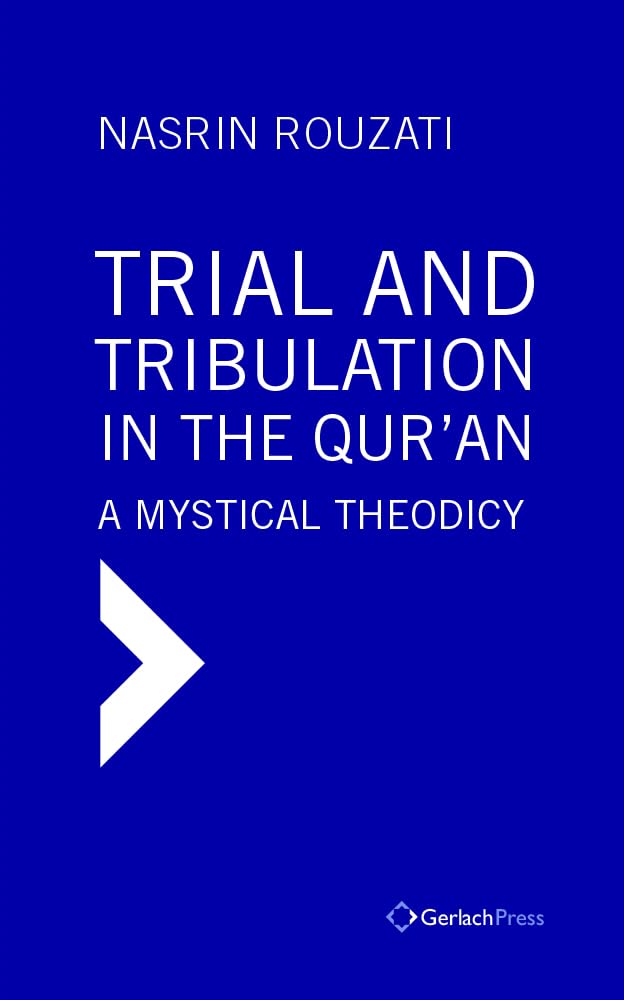



This book offers a critical analysis and re-examination of the notion of Divine trial, first by providing a comprehensive typology and a contextual interpretation of the Qur'anic narratives pertaining to the concept. Divine trial is then investigated through a historical review of prophetic tradition (hadith) and the exegetical literature (tafsir); followed by a discussion on Prophetology, and an overview of bala in the lives of the prophets. The book further develops key aspects of Muslim theology and mysticism through an examination of the works of Rumi and al-Ghazali. Trial and Tribulation in the Qur'an A Mystical Theodicy By Nasrin Rouzati Gerlach Press Copyright © 2015 Gerlach Press All rights reserved. ISBN: 978-3-940924-54-4 Contents Foreword by Colin Turner, ix, Acknowledgements, xi, INTRODUCTION, 1, Background, 2, The Objective, 3, Defining Key Terms and Methodology, 4, Scope and Structure, 5, 1. DIVINE TRIAL NARRATIVES IN THE QUR'AN: A TYPOLOGY, 8, Trial and Tribulation: Purpose in Divine Plan, 8, A Linguistic Overview of bala andfitna, 12, A General Overview of bala and fitna Narratives, 14, Classifications of bala and fitna Narratives, 14, Conclusion, 30, 2. DIVINE TRIAL IN PROPHETIC TRADITIONS AND QURANIC EXEGESIS, 31, Divine Trial in the Prophetic Traditions (hadith), 33, An Overview of Qur'anic Exegesis (tafsir), 36, Conclusion, 59, 3. THE QURANIC PROPHETS AND DIVINE TRIAL, 61, Overview of Divine Trial in the Lives of the Prophets, 64, Noah (Nüh), 65, Abraham (Ibrahim), 66, Lot (Lüt), 68, Moses (Müsa), 69, Jonah (Yünus), 74, Job (Ayyüb), 76, Joseph (Yüsuf), 77, David (Dawüd) and Solomon (Sulayman), 79, Jesus (Isa), 82, Muhammad, 88, Conclusion, 93, 4. DIVINE TRIAL FROM THE MUSLIM MYSTICAL PERSPECTIVE, 95, What is "Mysticism"?, 96, Muslim Mysticism, 98, Jalal al-Din Rumi: A Brief Historical Background, 100, God and the Cosmos, 103, Creation ofAdam: The "Fall" as Context for Divine Trial, 104, Human Life as a Divine Trial: The Spiritual Development, 112, Self-knowledge (ma'rifat al-nafs), 112, Self-purification (tazkiyat al-nafs), 116, Rumi on Self-purification (tazkiyat al-nafs), 118, Rumi on Trial and Tribulation and the Concept of Suffering, 126, Conclusion, 132, 5. DIVINE TRIAL AND MUSLIM THEODICY, 134, The Problem of Evil: An Overview, 135, Perspectives in Theodicy: A Synopsis, 137, Ghazalian Theodicy: Concept of the "Best ofAll Possible Worlds", 141, Ghazali on God and Creation-in-Time, 144, The Best ofAll Possible Worlds: Context for Trust in God, 146, Trial and Tribulation in the Context of the "Best ofAll Possible Worlds", 150, Conclusion, 156, CONCLUSION, 159, Appendix, 163, Bala Narratives in the Qur'an, 163, Fitna Narratives in the Qur'an, 168, Notes, 171, Bibliography, 189, CHAPTER 1 Divine Trial Narratives in the Qur'an: A Typology The Qur'anic approach to the notion of Divine trial becomes visible mostly in the bala and fitna narratives. These narratives reveal that bala is a fundamental pillar of the creational structure of the Cosmos, functioning as an instrument to actualize the purposes of the Creator. The Qur'an clearly illustrates that humankind, regardless of religious belief, individually and collectively as a community, will be put to the test as part of their human experience: "He created death and life to test you, and reveal which of you does best" (Q. 67:2). The depth and comprehensiveness of the concept of bala in the Qur'an reveals that even the prophets are not exempted from this meaningful encounter: "... And we tried you [Moses] with many tests" (Q.20:40). In this introduction, the notion of bala will be discussed in various themes as it can be observed from the Qur'an. These include: the link between bala and the creational structure of the universe both as a whole, and in relation to man's creation, means by which bala is actualized in man's life, and bala as punishment. Trial and Tribulation: Purpose in Divine Plan The strength and universality of the concept of bala within the Qur'anic context posits bala as one of the components of the formation of the universe: "It is He who created the heavens and the earth in six Days — and His throne was on water — so as to test you, which of you does best. Yet [Prophet] if you say to them, 'You will be resurrected after death', the disbelievers are sure to answer, this is clearly nothing but sorcery!" (Q. 11:7). Furthermore, the notion of bala is intertwined with the Qur'anic concept of purposefulness of the Cosmic Creation. Repeatedly the Qur'an reminds us that the Creation of the universe is purposeful, decisive, and not in vain: "It was not without purpose that we created the heavens and the earth and everything in between!" (Q. 38:27). It can further be noticed from the Qur'an that the creation of man (insdn) is distinguished from the rest of the Creation, for the reason that his inner-nature (fi