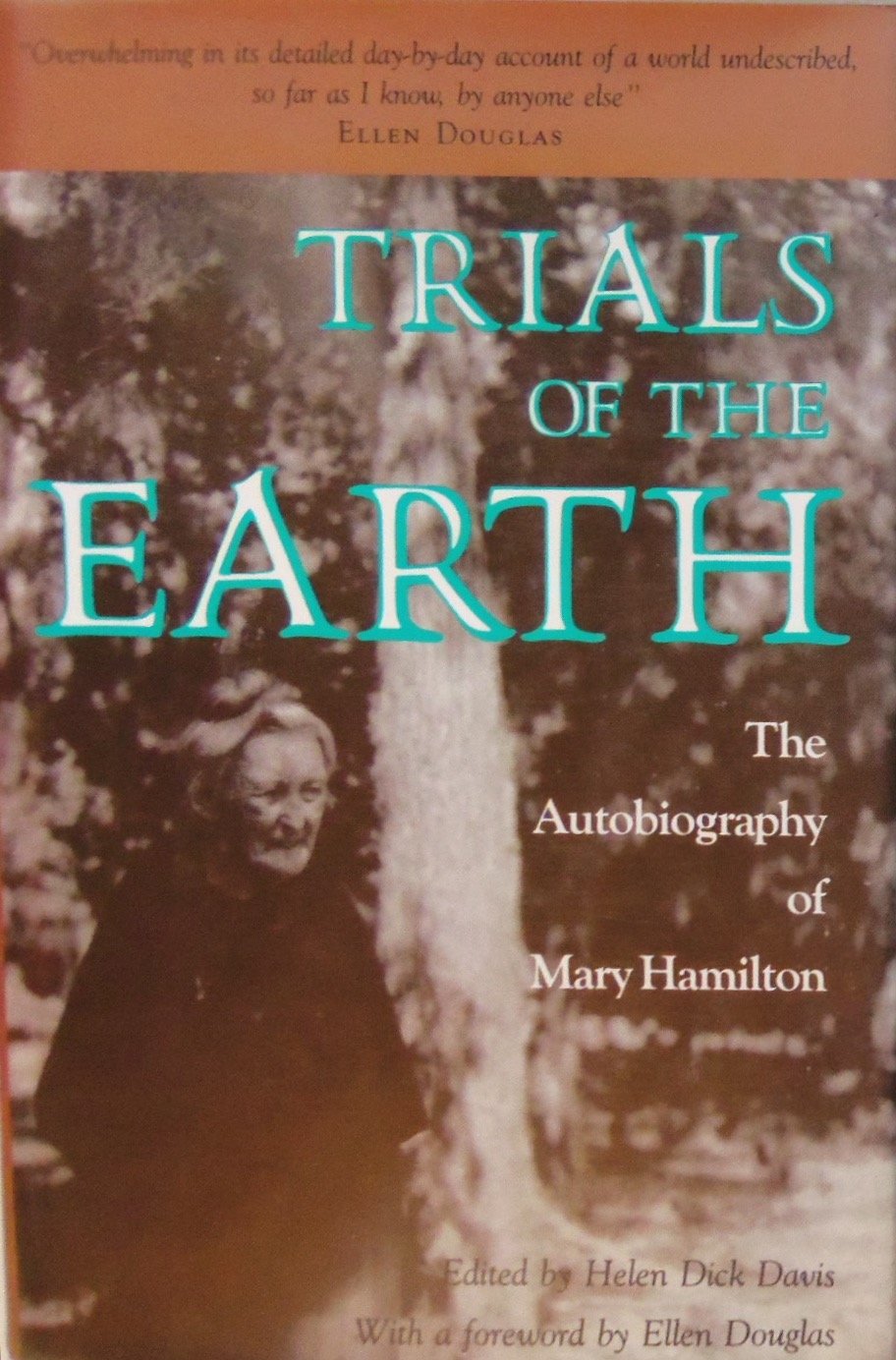



This wrenching memoir of love, courage, and survival was waiting to he told. Withheld for almost a lifetime, it is a tragic story of a woman's trial of surviving against brutal odds. Near the end of her life Mary Hamilton (1866-c.1936) was urged to record this astonishing narrative. It is the only known first-hand account by an ordinary woman depicting the extraordinary routines demanded in this time and this place. She reveals the unbelievably arduous role a woman played in the taming of the Delta wilderness, a position marked by unspeakably harsh, bone-breaking toil. On a raw November day in 1932 Helen Dick Davis entered a backwoods cabin in the Delta and encountered Mary Hamilton, a tiny, hunchbacked old woman sitting by the fire and patching a pair of hunting trousers. They became friends. "She began to talk to me of her life nearly half a century ago in this same Mississippi Delta," Davis says, "which then was a wilderness of untouched timber, canebrakes, a jungle of briars and vines and undergrowth." Spellbound during her visits to the cabin, Davis would listen for hours. At her request, Mary Hamilton began to record memories on scraps of paper. By the spring of 1933 she had given Davis a manuscript of 150,000 words, "the true happenings of my life." Married to a mysterious Englishman, she lived in crude shacks and tents in lumber camps and cooked for crews clearing the primeval Delta forests. While nursing the sick, burying the dead, and making failing attempts to provide a home for her children, she retained a gentle strength that expressed itself in a lyrical vision of nature and in mystical dreams. When Helen Dick Davis appeared to Mary Hamilton in her old age, this long-delayed memoir of pain and grace erupted in a narrative of beauty and compassion and preserved a time and a place never before recorded from such a view. Mary Hamilton's autobiography is published at long last after coming to light from Helen Dick Davis's trunk of mementos. To read Hamilton's autobiography is to experience an extraordinary life of courage and hardship. Born in 1867 and married at age 18 to a man 12 years her senior, Hamilton found herself raising (and, sadly, burying) children in a variety of Mississippi delta farms and boarding houses. In addition to hardship, her life was tinged with mystery; her husband, Frank, came from an upper-class English family but refused to speak of his past or allow his children to claim their possible foreign inheritance. Hamilton, a born storyteller, has written a rich, simple narrative; her personal strength is surpassed only by the strength of her writing abilities. This work ranks with Martha Summerhayes's Vanished Arizona (1911). Originally turned down by a publisher in 1933, Trials of the Earth is long overdue in its chance to win readers and tell of a time long gone. - Katherine Gillen, Mesa P.L., Ariz. Copyright 1992 Reed Business Information, Inc. Used Book in Good Condition