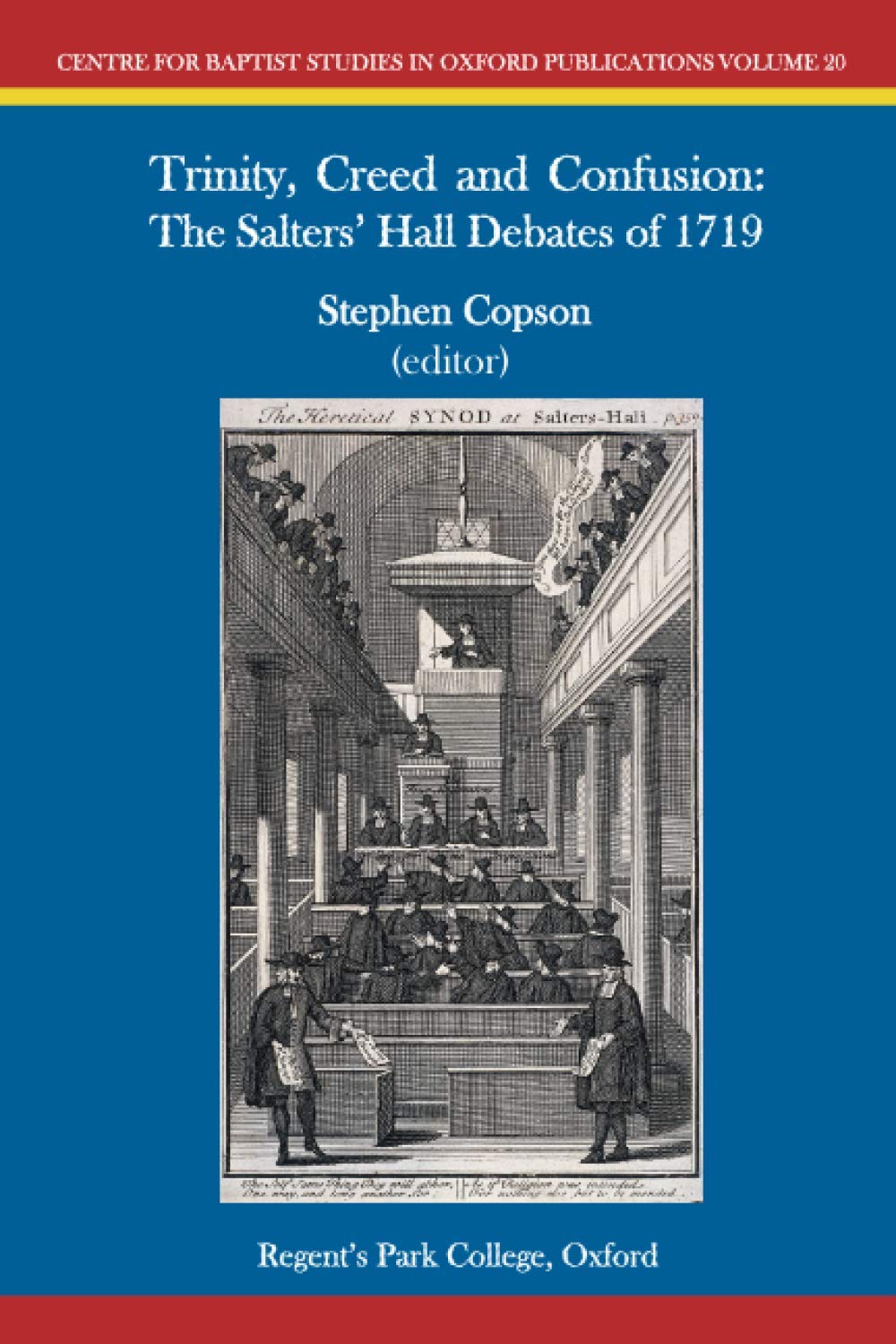
Trinity, Creed and Confusion: The Salters' Hall Debate of 1719 (Centre for Baptist Studies in Oxford)
$23.55
by Stephen L. Copson



The 1710s were tumultuous times in English political history as the last Stuart gave way to the first Hanoverian. It was not a totally smooth transition. This new political reality occasioned a reassessment of political fortunes and allegiances. In this context, the Dissenters hoped for greater recognition and status, whilst still feeling vulnerable. They wanted to be seen as good citizens. As survivors of the era of persecution grew older and died, many of the new generation of ministers had received a better education in the academies, although there was a difference in the three traditions – Presbyterian, Independent, and Baptists both Arminian and Calvinistic. The Salters’ Hall debates were held in this climate. To some the debates were about freedom of conscience, to others doctrinal orthodoxy, and still others sought to parry a threat to Dissenters throwing off the reputation of being political and religious radicals. New theological thinking was set against old truths. By pressing people into taking sides, the debates would prefigure the differing trajectories of the three traditions that would contribute by the end of the century to the growing self-awareness of the distinctiveness of denomination. Using contemporary tracts and subsequent reflection, this volume rehearses the narrative of the events from the theological dispute in Exeter to the arguments in London. It aims to offer a wide-ranging analysis into the motivations and stances of the main participants and so uncover what was thought to be at stake. It also seeks to point beyond the bad-tempered and chaotic debates to see how the episode was viewed by contemporary readers.