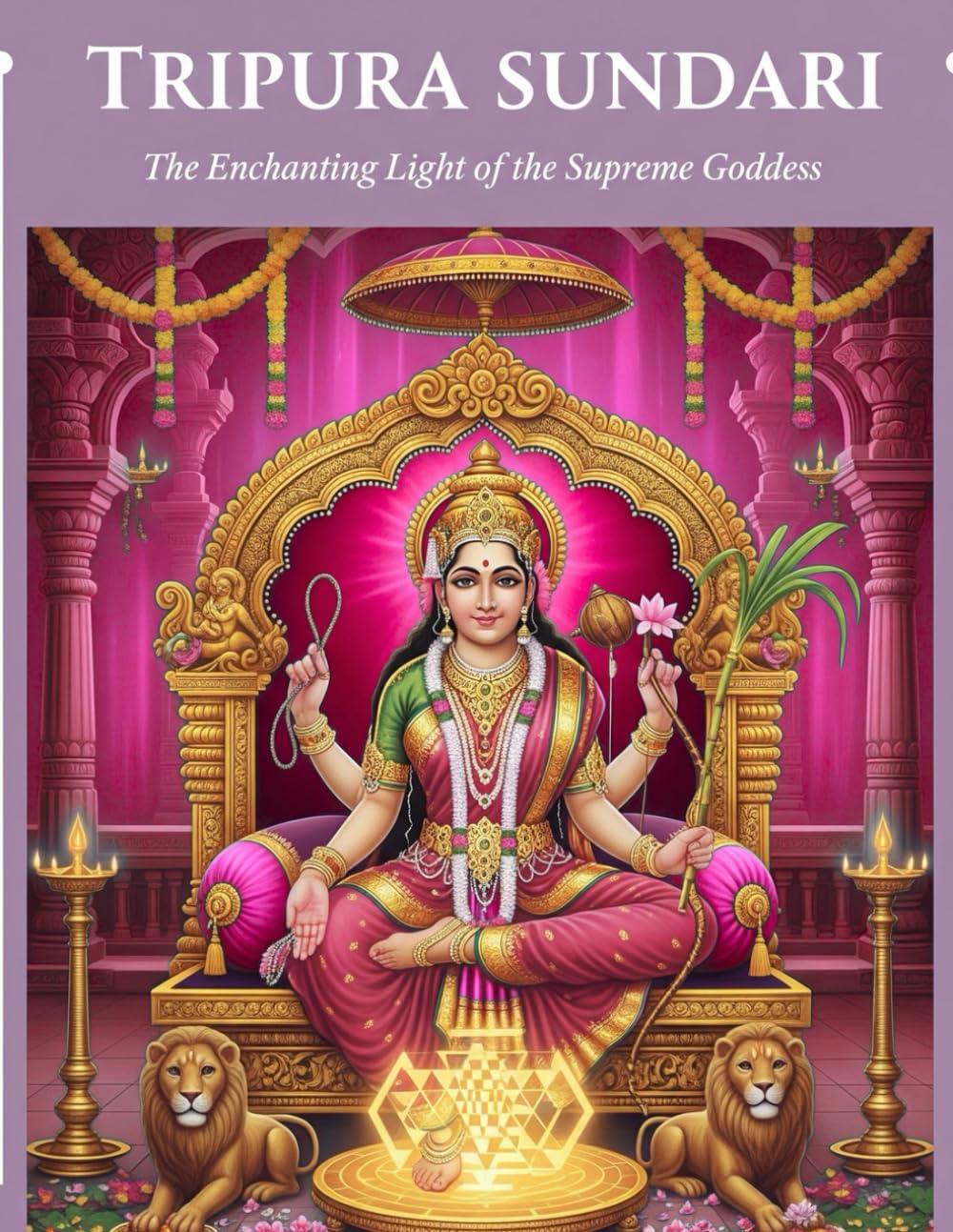
Tripura Sundari: The Enchanting Light of the Supreme Goddess
$10.99
by Mohan Chandra Uprety



Tripura Sundari: The Enchanting Light of the Supreme Goddess is a work that draws readers into the sacred depths of Shaktism, where the Divine Mother reveals herself as the luminous essence of beauty, wisdom, and power. At once a historical exploration, a spiritual reflection, and a guide for seekers, the book presents the many dimensions of Tripura Sundari, one of the most profound and revered manifestations of the eternal feminine. Through richly woven prose, it brings to life the legends, rituals, symbols, and philosophies that have made her worship a living tradition for centuries. The book opens by situating Tripura Sundari within the broader framework of Adi Parashakti, the supreme source of all creation. She is not only the enchanting goddess of beauty but also the embodiment of supreme consciousness that sustains and governs the cosmos. Her place in Shaktism and Hindu philosophy is explained with clarity, showing how her worship bridges the temporal and the eternal, guiding devotees toward an experience of harmony and transcendence. Readers are then led into the mythological narratives that surround her presence, including the story of Sati, the Shakti Peeths, and the significance of the Matabari temple, where her right foot is believed to have fallen. These legends are not presented as distant tales but as living metaphors of transformation, sacrifice, and divine love. The stories connect seekers to the deep spiritual truths encoded in mythology and reveal how her presence has been continuously felt across time. The pilgrimage to Matabari, her principal temple, becomes a central theme, described both in its historical roots and its spiritual power. The temple itself, uniquely situated upon a tortoise-shaped hillock, becomes a symbol of cosmic endurance and divine stability. Devotional practices, offerings, and rituals are vividly described, allowing readers to feel the rhythm of worship and the atmosphere of faith that pervades the site. Through this, the book reveals how pilgrimage is more than physical travel—it is an inner ascent toward divine realization. Equally captivating is the exploration of the temple’s architecture, the sacred idol, and the cultural celebrations that surround her. Each stone, each ritual, and each festival carries meaning, blending artistry and devotion. Navratri and other vibrant celebrations are shown not merely as cultural events but as manifestations of collective reverence and spiritual unity, where song, dance, and prayer converge into sacred expression. The book then turns toward the inward path, offering insights into the meditative practices, chants, and hymns that devotees employ to draw closer to the goddess. It highlights how her energy serves as a transformative force, guiding the mind toward clarity, the heart toward devotion, and the soul toward liberation. Philosophical reflections enrich this section, showing how her iconography, her symbolism, and her mythic presence embody the eternal truths of Shakta philosophy. Finally, the work considers her enduring relevance in the modern world. Far from being confined to the past, Tripura Sundari continues to inspire, protect, and guide those who turn to her. Her influence on art, literature, culture, and the spiritual imagination is profound, and her worship continues to remind seekers of the beauty and strength inherent in the divine feminine. At its heart, Tripura Sundari: The Enchanting Light of the Supreme Goddess is both a devotional offering and a spiritual guide. It is written not only for scholars of Hindu traditions but for all who long to encounter the sacred presence of the goddess in myth, ritual, and personal experience. Each page invites the reader to enter her radiance, to feel her harmony, and to awaken to the eternal truth that she embodies.