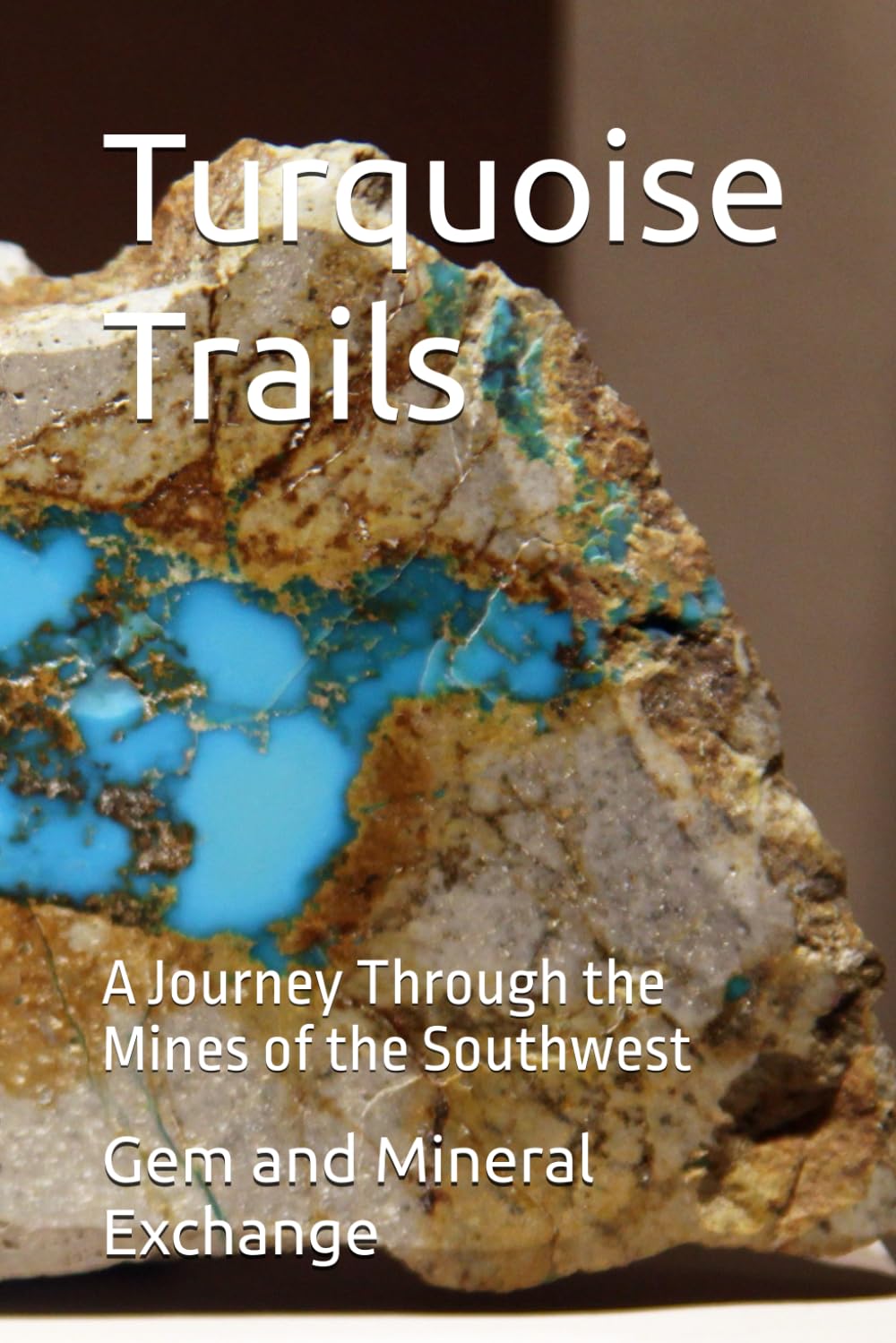
Turquoise Trails: A Journey Through the Mines of the Southwest
$30.00
by Gem And Mineral Exchange



Overview of Turquoise Trails Mines in the Southwest United States The Turquoise Trail is a historic route that connects Albuquerque and Santa Fe in New Mexico, renowned for its rich deposits of turquoise. This area has been significant since ancient times, with turquoise mining dating back to at least 900 A.D. by the Pueblo peoples. The mines here have played a crucial role in the cultural and economic history of the region, influencing trade routes and artistic expressions. Historical Significance The Cerrillos mining district, located near Santa Fe, is one of the oldest turquoise mining areas in North America. It was heavily mined during the late 19th century when demand surged due to its popularity among jewelers, particularly Tiffany & Co., which sought high-quality stones for their jewelry lines. The mines produced turquoise that was traded extensively throughout the Southwest and into Central America, highlighting its importance as both a material and a cultural artifact[1]. Types of Turquoise Turquoise from this region varies significantly in color and quality, influenced by factors such as mineral content and geological conditions. The most sought-after varieties include: Cerrillos Turquoise : Known for its vibrant blue-green hues, it has historical significance due to its use by Native Americans. - Tyrone Turquoise : Found in southwestern New Mexico, this type is characterized by its deep blue color. - Hachita Turquoise : This variety features unique matrix patterns and colors ranging from blue to green[2]. Modern Mining Practices Today, several private claims still operate within the Cerrillos district. Miners like Joe Dan Lowry and Philip Chambless continue to extract turquoise using methods that respect both the land and traditional practices. Lowry's Turquoise Museum educates visitors about the history and significance of turquoise while showcasing various specimens from around the world[3]. Chambless focuses on sustainable practices by sourcing stones directly from his claims without resorting to modern industrial methods. Overview of historical significance related to turquoise mining [El Palacio]↩ - Description of different types of turquoise found in New Mexico [New Mexico Magazine]↩ - Information about Joe Dan Lowry's museum and educational efforts [New Mexico Magazine]↩ - Insights into modern mining practices by Philip Chambless [New Mexico Magazine]↩ - Cultural significance of turquoise in Native American art [New Mexico Magazine]↩ - Economic impact through tourism along the Turquoise Trail [Turquoise Trail Association]