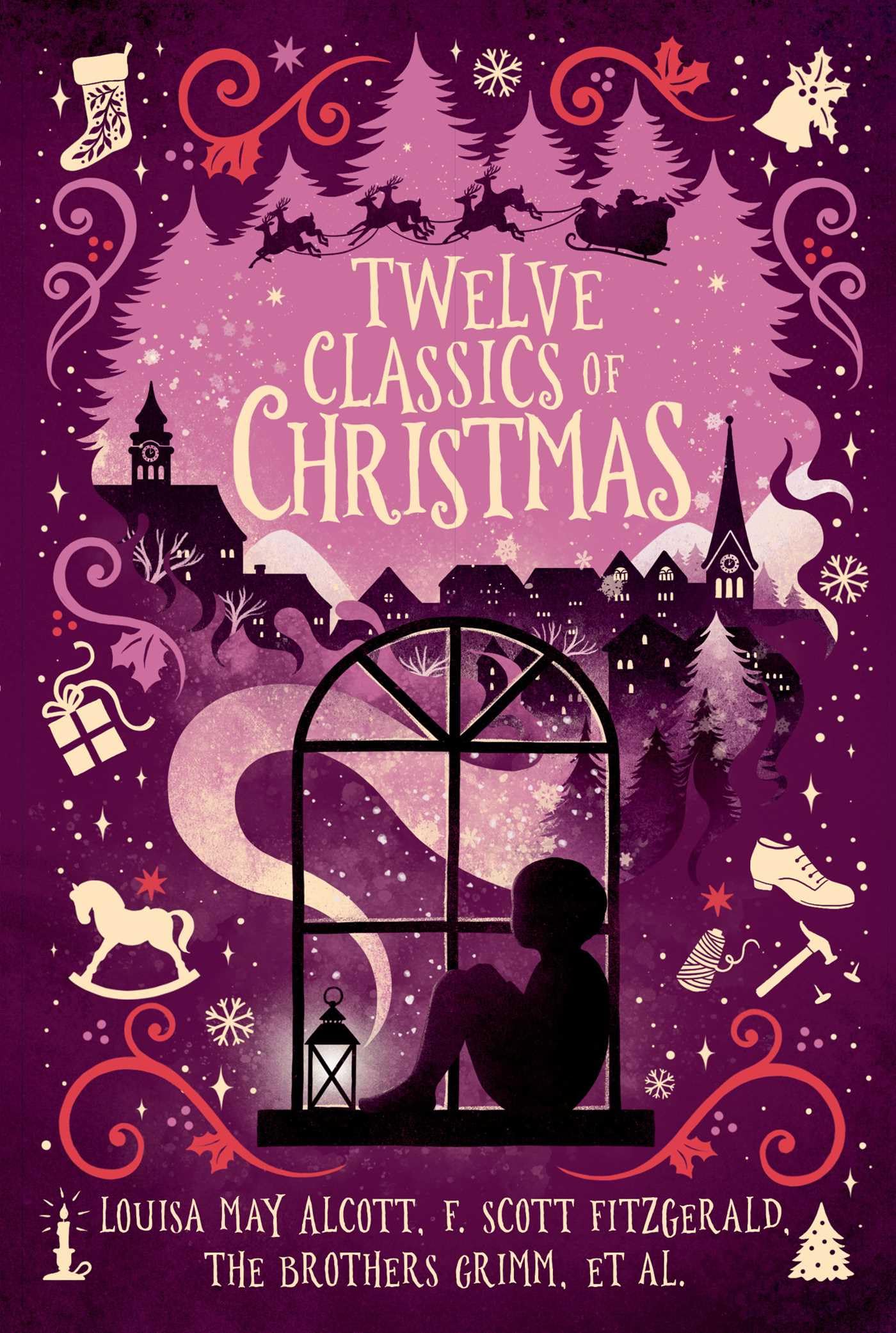



Count down to the holidays with this collection of twelve of the most famous Christmas stories in this cozy anthology. Usher in the holidays with this collection of twelve classic short stories and poems from renowned authors such as Louisa May Alcott, F. Scott Fitzgerald, the Brothers Grimm, and Charles Dickens. From “A Visit from St. Nicholas” to “The Gift of the Magi,” many of these classics full of hope, humor, and holiday magic have been staples of the season for generations. With each one brief enough to be read in one sitting, these tales from Christmases past are the perfect way to welcome the holiday. This cozy collection includes: “A Kidnapped Santa Claus” by L. Frank Baum “The Elves and the Shoemaker” by Jacob and Wilhelm Grimm “The Gift of the Magi” by O. Henry “Tilly’s Christmas” by Louisa May Alcott “Squeaky and the Scare Box” by Georgene Faulkner “Papa Panov’s Christmas Special” by Ruben Saillens, translated by Leo Tolstoy “The Christmas Masquerade” by Mary E. Wilkins Freeman “A Christmas Inspiration” by L. M. Montgomery “A Luckless Santa Claus” by F. Scott Fitzgerald “The Legend of the Babouscka” by Anonymous “The Story of the Goblins Who Stole a Sexton” by Charles Dickens “A Visit from St. Nicholas” by Clement C. Moore A Simon & Schuster author. Chapter One: A Kidnapped Santa Claus Chapter One A Kidnapped Santa Claus by L. Frank Baum Santa Claus lives in the Laughing Valley, where stands the big, rambling castle in which his toys are manufactured. His workmen, selected from the ryls, knooks, pixies, and fairies, live with him, and everyone is as busy as can be from one year’s end to another. It is called the Laughing Valley because everything there is happy. The brook chuckles to itself as it leaps, rollicking, between its green banks; the wind whistles merrily in the trees; the sunbeams dance lightly over the soft grass; and the violets and wildflowers look smilingly up from their green nests. To laugh one needs to be happy; to be happy one needs to be content. And throughout the Laughing Valley of Santa Claus, contentment reigns supreme. On one side is the mighty Forest of Burzee. At the other side stands the huge mountain that contains the Caves of the Demons. And between them the valley lies, smiling and peaceful. One would think that our good old Santa Claus, who devotes his days to making children happy, would have no enemies on all the earth; and, as a matter of fact, for a long period of time he encountered nothing but love wherever he might go. But the demons who live in the mountain caves grew to hate Santa Claus very much, and all for the simple reason that he made children happy. The Caves of the Demons are five in number. A broad pathway leads up to the first cave, which is a finely arched cavern at the foot of the mountain, the entrance being beautifully carved and decorated. In it resides the Demon of Selfishness. At the back of this is another cavern inhabited by the Demon of Envy. The cave of the Demon of Hatred is next in order, and through this, one passes to the home of the Demon of Malice—situated in a dark and fearful cave in the very heart of the mountain. I do not know what lies beyond this. Some say there are terrible pitfalls leading to death and destruction, and this may very well be true. However, from each one of the four caves mentioned there is a small, narrow tunnel leading to the fifth cave—a cozy little room occupied by the Demon of Repentance. And as the rocky floors of these passages are well worn by the tracks of passing feet, I judge that many wanderers in the Caves of the Demons have escaped through the tunnels to the abode of the Demon of Repentance, who is said to be a pleasant sort of fellow who gladly opens for one a little door admitting you into fresh air and sunshine again. Well, these demons of the caves, thinking they had great cause to dislike old Santa Claus, held a meeting one day to discuss the matter. “I’m really getting lonesome,” said the Demon of Selfishness. “For Santa Claus distributes so many pretty Christmas gifts to all the children that they become happy and generous, through his example, and keep away from my cave.” “I’m having the same trouble,” rejoined the Demon of Envy. “The little ones seem quite content with Santa Claus, and there are few, indeed, that I can coax to become envious.” “And that makes it bad for me!” declared the Demon of Hatred. “For if no children pass through the caves of selfishness and envy, none can get to my cavern.” “Or to mine,” added the Demon of Malice. “For my part,” said the Demon of Repentance, “it is easily seen that if children do not visit your caves, they have no need to visit mine; so that I am quite as neglected as you are.” “And all because of this person they call Santa Claus!” exclaimed the Demon of Envy. “He is simply ruining our business, and something must be done at once.” To this they readily agreed; but what to do was another and more