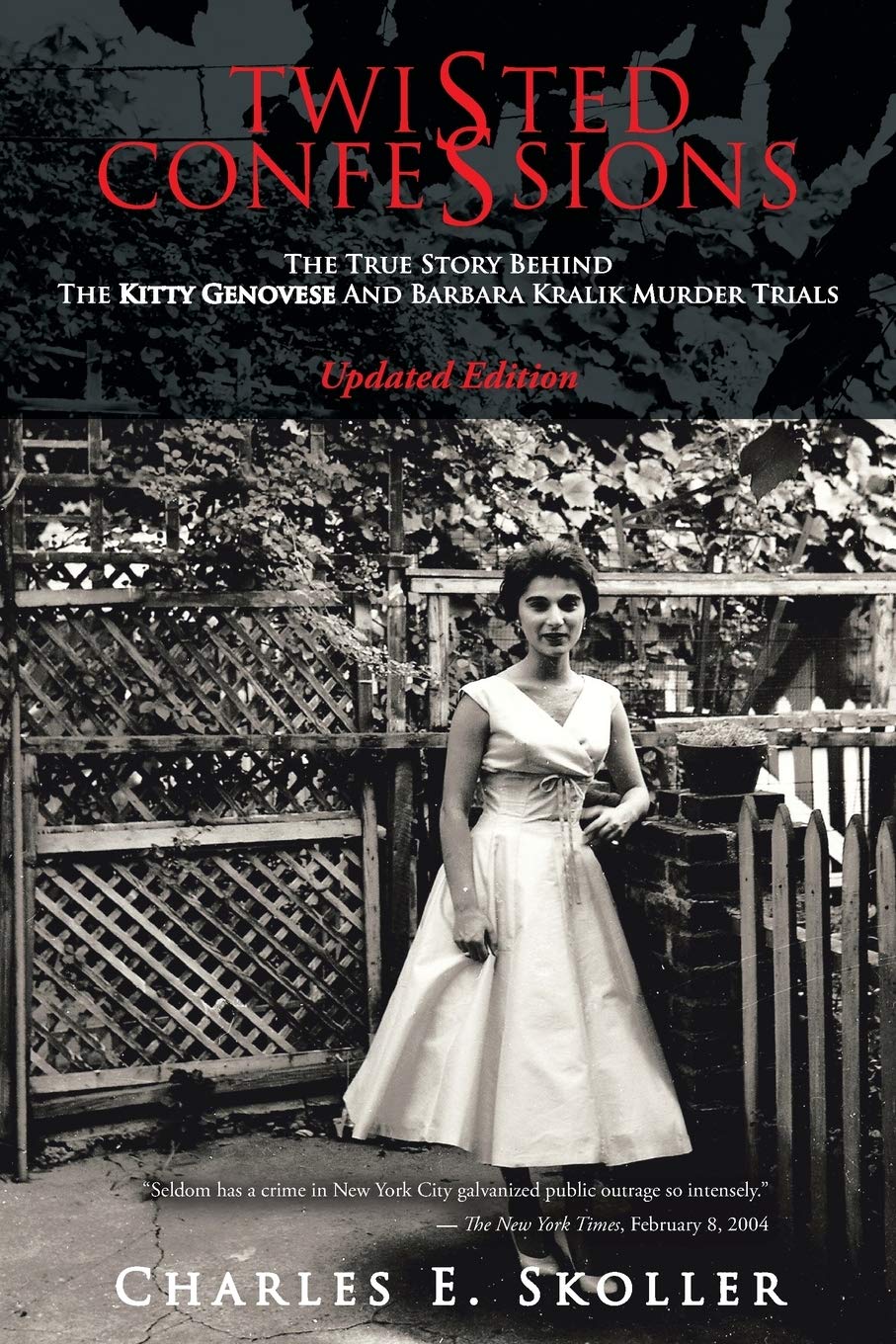
Twisted Confessions: The True Story Behind the Kitty Genovese and Barbara Kralik Murder Trials
$16.95
by Charles E. Skoller



It didn't seem possible. Kitty Genovese had been viciously stabbed to death in Kew Gardens on March 13, 1964, while her neighbors heard her screams from their apartment windows and looked on passively . . . Everyone from coast to coast, it seemed, including President Lyndon Johnson, was weighing in on the failure of Kitty's neighbors to respond to her screams for help. The incident opened up a whole new phenomenon for students of social psychology to explore and puzzle over: the Kitty Genovese syndrome TWISTED CONFESSIONS By Charles E. Skoller AuthorHouse Copyright © 2013 Charles E. Skoller All rights reserved. ISBN: 978-1-4817-4615-1 Contents Acknowledgments............................................................ixPrologue...................................................................xiChapter One................................................................1Chapter Two................................................................9Chapter Three..............................................................15Chapter Four...............................................................21Chapter Five...............................................................31Chapter Six................................................................43Chapter Seven..............................................................53Chapter Eight..............................................................73Chapter Nine...............................................................81Chapter Ten................................................................91Chapter Eleven.............................................................103Chapter Twelve.............................................................117Chapter Thirteen...........................................................123Chapter Fourteen...........................................................131Chapter Fifteen............................................................135Chapter Sixteen............................................................145Chapter Seventeen..........................................................165Chapter Eighteen...........................................................173Chapter Nineteen...........................................................191Chapter Twenty.............................................................205Epilogue...................................................................209 CHAPTER 1 Queens is the largest borough in New York City. In 1963,the native born still thought of it as the "country suburbs," notyet infected by the urban problems of the three neighboringboroughs—Manhattan, Brooklyn, and the Bronx. But Queens waschanging. The farms that had once separated its villages were beingreplaced by apartment buildings, rapid transit lines, and highways.The residents of one-family homes no longer outnumbered apartmentdwellers, with newcomers moving from Brooklyn and the Bronxto escape the blight and crime of those more populated boroughs.Queens was losing the battle to retain its character as a safe andcomfortable residential community. Until the early 1960s, it was homicides in Manhattan, Brooklyn,and the Bronx that monopolized the crime headlines in New York'snewspapers and on the broadcast news. Then the tables turnedwith a string of murders in Queens: Barbara Kralik's in 1963, KittyGenovese's in 1964, and Annie Mae Johnson's that same year. Almostovernight, it seemed, homicides in Queens had become front-pagenews not just across New York City but across the nation as well. Thelion's share of attention went to the Kitty Genovese case, much to theshame and embarrassment of the citizens of Queens. Ironically, thecommunity of Kew Gardens, where Kitty's neighbors had looked onpassively—or with morbid fascination—while she was being hackedto death, housed government offices, including the borough's criminaljustice infrastructure. Kew Gardens and, by association, the one-timecountry suburb of Queens had become synonymous nationwide withimpersonal urban crime and shocking moral indifference. * * * When I went home that night with the DA and police files it wasa baptism by fire. Though I possessed the confidence of youth andhad considerable success with the cases I had prosecuted, there waslittle in my background that guaranteed I would succeed in unravelingthe truth behind these crimes or in putting the killers behind bars. The middle of three sons, I was born in 1932 in Brownsville, alower-middle-class community of mostly Jewish families in Brooklyn.Our neighborhood was secure and crime free. The only disputes werepetty disagreements between friends that broke out during games ofpunch ball and stickball. I can't recall a single crime committed on mystreet, Lincoln Place, and nothing about the insular world there couldhave prepared me for what I would eventually face as a prosecutor. My father, Murray Skoller, was a shoe store manager whohelped unionize retail shoe emp