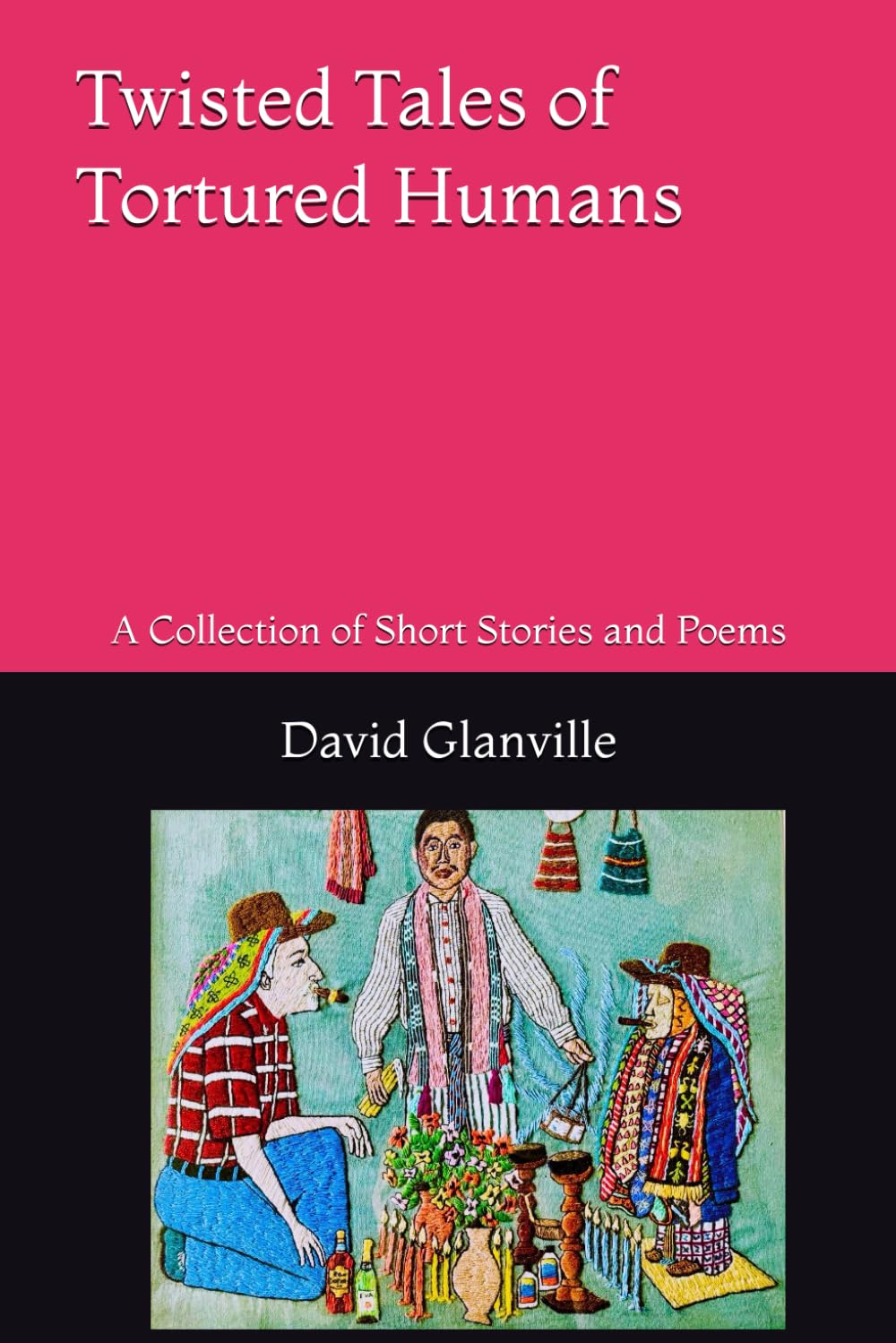
Twisted Tales of Tortured Humans: A Collection of Short Stories and Poems
$13.75
by David Glanville



Most towns in the world have a church, a cemetery, and a dump. Hope, vanity, and deception thrive in the church, and dreams are laid to rest and discarded in the other places. The stories in Twisted Tales of Tormented Humans are an exotic blend of humor and despair, with characters who are noble, ridiculous, greedy, and loving. Only David Glanville could have created them. As you read his wonderful stories, you may notice something unusual about them. Most take place in Guatemala, a fairly uncharted place in literature. Others are set in rural parts of Oregon and California, with characters in the aspiring middle-class—that frontier of respectability—who are elbow to elbow with aspiring drug dealers, pot growers, and lawmen. What is really unusual about these tales is their point of view. They are both cynical and humane, a combination that is hard to pull off. The humor of Mark Twain comes to mind when reading about the scoundrels and fools who make their way through Twisted Tales , flailing, and sometimes succeeding in making a score. The gritty world of Nelson Algren is another inspiration. Not every character in the book is a fool, though; and most aren’t really bad. Many are decent and weren’t born yesterday. But they all inhabit a world of flim-flam. In A Pastor’s Confession to Himself , the narrator realizes, after many years preaching to the faithful and gullible, that he is an atheist. Only then—once he becomes an actor only—does he become really good at his job. In A Bull in Red High Tops a desperate cattle thief hides the tracks of the bull he is walking to market by placing tennis shoes on his hooves. Deception is a norm and a key to success. The characters in Twisted Tales must navigate hypocritical laws or hypocritical religion to survive; or outwit the murderously corrupt Guatemalan army. For many years David Glanville was an innkeeper in the Mayan town of Santiago, on the shore of lake Atitlan in Guatemala. It is one of the most beautiful places in the world. It has a violent history, including a recent civil war. The Mayans were conquered long ago by the sword and sweet promises of the afterlife. Now they endure Ladino rule and other forms of economic and spiritual oppression. Glanville was in a position to observe it all with steely and compassionate eyes. This is why these stories have such a rich mixture of characters and situations: indigenous locals, wealthy Guatemalans from the capital, tourists who skip in and out of the country and sometimes settle there. Every character is an accident come alive. Perhaps it is no coincidence that there were many churches near his inn vying for local souls, and behind it, up the hill, a cemetery, and a dump. Darick Allan