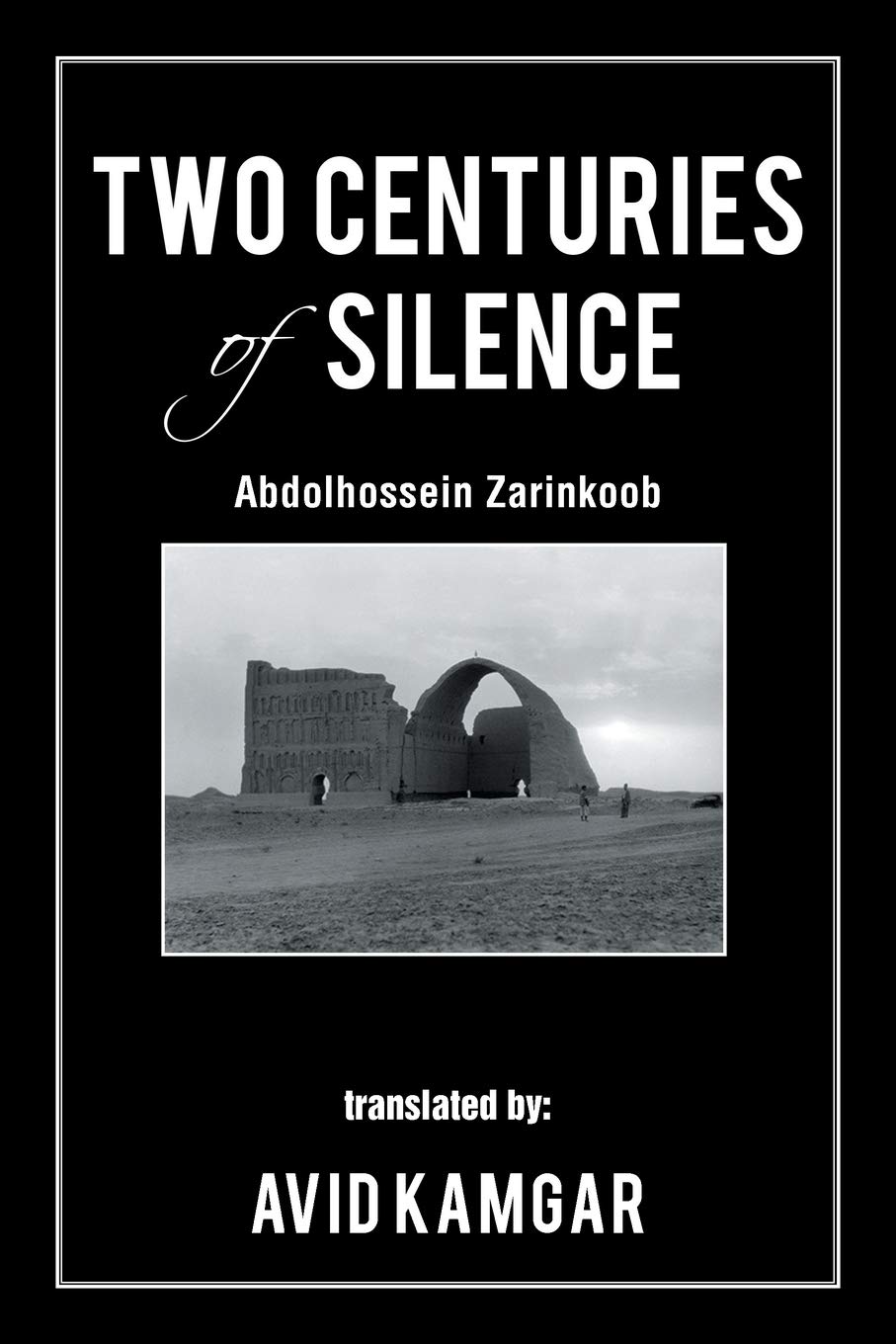



How Farsi language broke its two centuries of silence. This book is the translation of Do Gharn Sokoot , into English by an Iranian scientist and scholar. Two Centuries of silence is the saga of 200 years of struggle by Iranians in order to free themselves from the yoke of Muslim Arabs- elegantly and passionately told by Abdolhossein Zarinkoob. The book elucidates the key reasons for the success of Muslim Arabs in their assault on Iran- a fact that was not written in the stars, nor was it an act of God. For its readers, this translation hopes to shed light on what forms the foundation of today's Iran and help bring some understanding of Iranians and their culture. The fall of Nahāvand in 642 CE marked the end of a glorious fourteenth-century history of Iran-a fascinating and dynamic history spanning the years from 700 BCE to 700 CE. For two centuries thereafter, a brutally long, chilling silence cast its shadow over the history and language of Iran. Professor Zarinkoob explores the reason behind the Sasanian downfall and how the uncouth Bedouins triumphed over an immense and glorious civilization such as that? During these two centuries- about which our recent historians have remained silent-why did Farsi become a "lost" language, obscure and traceless? In the time when Iranian swordsmen revolted against the Arabs under any pretext, fighting the Arabs and Muslims, how did Zoroastrian priests argue and debate in the light of knowledge and wisdom against the Muslim faith? Finally, why a book that tells the tale of a most turbulent period of Iran's history is titles Two Centuries of Silence and not Two Centuries of Chaos and Uproar? Prof. Zarinkoob's colorful narrative unravels these mysteries through Iranian eyes and is delivered here only as they may. Two Centuries of Silence By Abdolhossein Zarinkoob, Avid Kamgar AuthorHouse Copyright © 2016 Avid Kamgar All rights reserved. ISBN: 978-1-5246-2253-4 Contents List of Illustrations, xiii, Translator s preface, xvii, Author's preface to the second edition, xxiii, 1. The Desert Rulers, 1, 2. Storm and Sand, 32, 3. The Extinct Fire, 54, 4. A Language Lost, 84, 5. The Black Banner, 99, 6. Beyond AMUDARYA (Oxus River), 126, 7. The City of One Thousand and One Nights, 140, 8. Tidings of Resurrection, 169, 9. Clash of Beliefs, 219, 10. End of a Night, 251, Index, 269, CHAPTER 1 THE DESERT RULERS Tranquil Days In the days when the awe and majesty of the Sasanian Empire instilled fear in the Byzantine emperors and generals — behind the gates of Constantinople — Arabs, like other people of AnIran, brought their appeals to the doorsteps of Iran's padeshahs (kings). They came needy and helpless to the Sasanian court to seek relief. Before those days too, they had come only submissively to the court of the Persian Kings. Dariush the Great (Darius I) Achaemenid of Persia (r. 522–486 BCE) ruled the Arabian Deserts long before Alexander III of Macedon's (Alexander the Great) time (r. 336–323 BCE), and since his time Arab elders and heads of their tribes been established servants of the Persian Crown. And when prior to the birth of Shapur II (r. 309-379 CE), some of them ventured to plunder Bahrain and the Persian Gulf shores, history witnessed the lesson that Shapur II taught them, which put them in their place. Hira chiefs were mere instruments of Yazdgerd I's (r. 399–420 CE) court and servants of Persia. And in Khosro Anshiravan's (Khosrow I) days (r. 531–579), the desert Arabs of Yemen, like the Arabs of Hira, were Sasanian taxpaying satellites. The arid deserts of Najd and Tahamah did not have enough appeal and repute to tempt Iran's government and troops. In these parched and forebodingly surreal deserts there was no crop or cultivation, no profession, no bazaar or merchandise, and except for a bunch of hungry, barefooted Arabs, who fought over a little water and a patch of grass — like ogres, anywhere they found some — there were no signs of humans. Excluding these deserts, which were not worth taking and retaining, that of the Arab land which was of value, if not a Roman satellite, was under Persian rule. The Arabs that resided in these areas considered the Sasanian Court in Tisfun (Ctesiphon) their "center of universe" and "qibla of hopes." Arab poets like A'asha came to Khosro's doorsteps and reaped wealth and dignity by adulating the Shahanshah (King of Kings). In those days, it would not have crossed anyone's mind that one day the Sasanian crown would wear through and the empire would vanish in the weary hands of Arab lightweights; and those who were proud of being obedient servants to Persians would upturn the kingdom and the king like worthless toys — for whimsical gratification. But exactly at the time when moral and spiritual failings were gnawing at the outward and material power of the Sasanian Empire, a huge and proud moral force — Islam — surged up from inside the Arab sand and grew, until it finally de