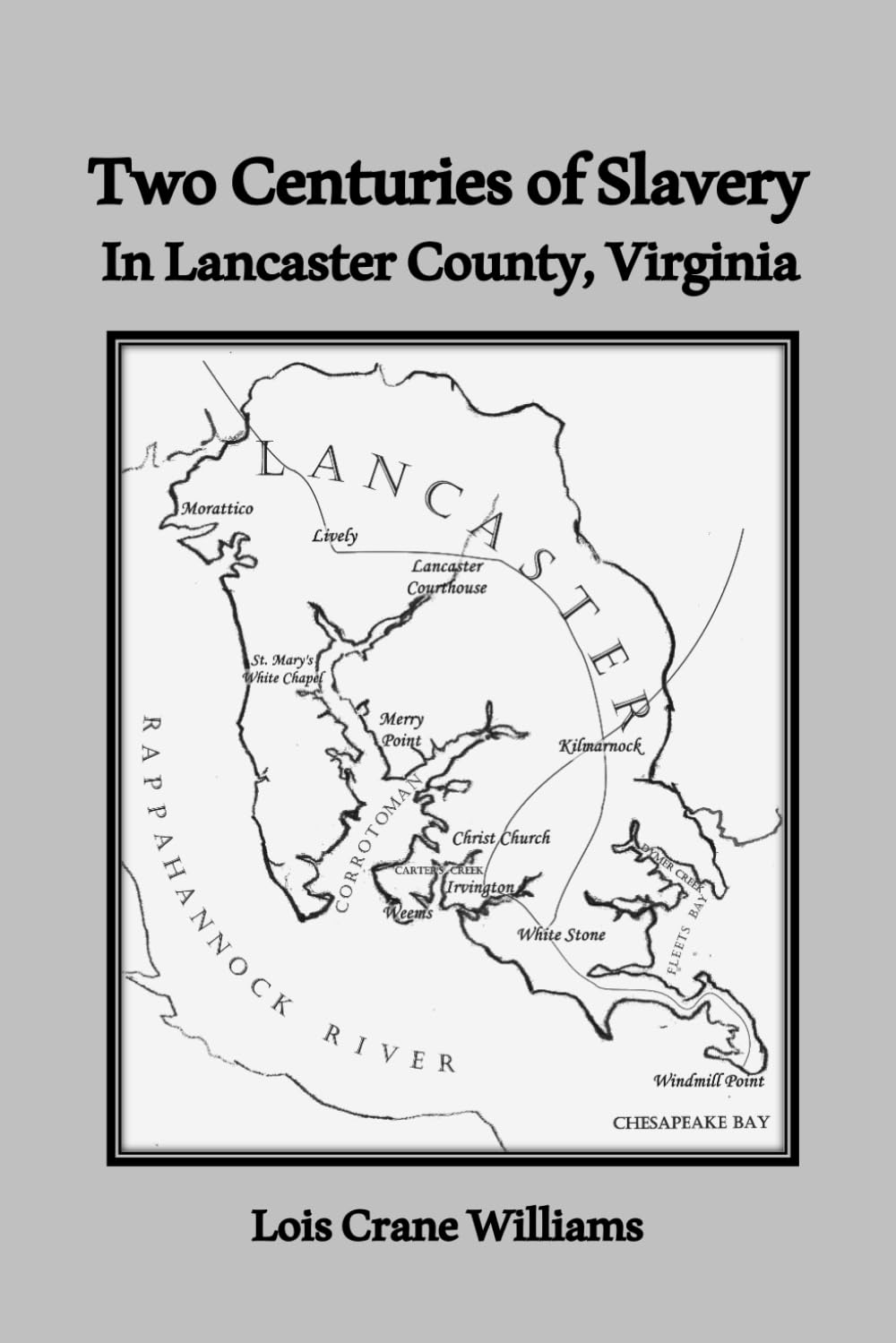



Author Lois Crane Williams’ previous research on tobacco history in early Virginia led her to the Slave Schedule of the 1860 Census, which largely inspired this book. In Two Centuries of Slavery in Lancaster County , Williams compiles a variety of primary records and secondary research concerning enslaved labor in Lancaster County from the mid-1600s to mid-1800s and presents statistics and patterns drawn from the study of these sources. The book describes Lancaster County's intertwined expansion of tobacco culture and slaveholding; includes wartime records of participation of the county’s enslaved and freedmen; discusses slaveholding data revealed by wills and estate records of slave owners; and presents the 1860 Census listing Lancaster County’s 2,809 enslaved persons without a name, contrasted with the 1870 Census identification of named African Americans in their own free households. The book does not take a genealogical approach, but the types of original records and research methods used offer a model for finding similar information about individual families or other locations. Chapter titles are (1) Settling Early Virginia (2) The Carters of Corotoman (3) Court House and Slave Codes (4) Col. James Gordon (5) Tobacco and the Revolution (6) Enslaved and Free Blacks in the War (7) After the Revolutionary War (8) The War of 1812 (9) The Eve of the Civil War (10) Wills and Estates 1835-1865 (11) The Civil War in Lancaster County (12) The 1870 Census. Lois Crane Williams has been a resident at Rappahannock Westminster-Canterbury near Irvington, Virginia, since late 2013. She has published the pamphlet, T obacco: The Crop of Early Lancaster County, and three other books about Lancaster County history— Tobacco Trader on the Corotoman with Ammon Dunton, Jr., The Lees of White Stone with Tom Kinney, and The Lawsons of White Stone and Lawson Bay Farm with Robby Robison as lead author.