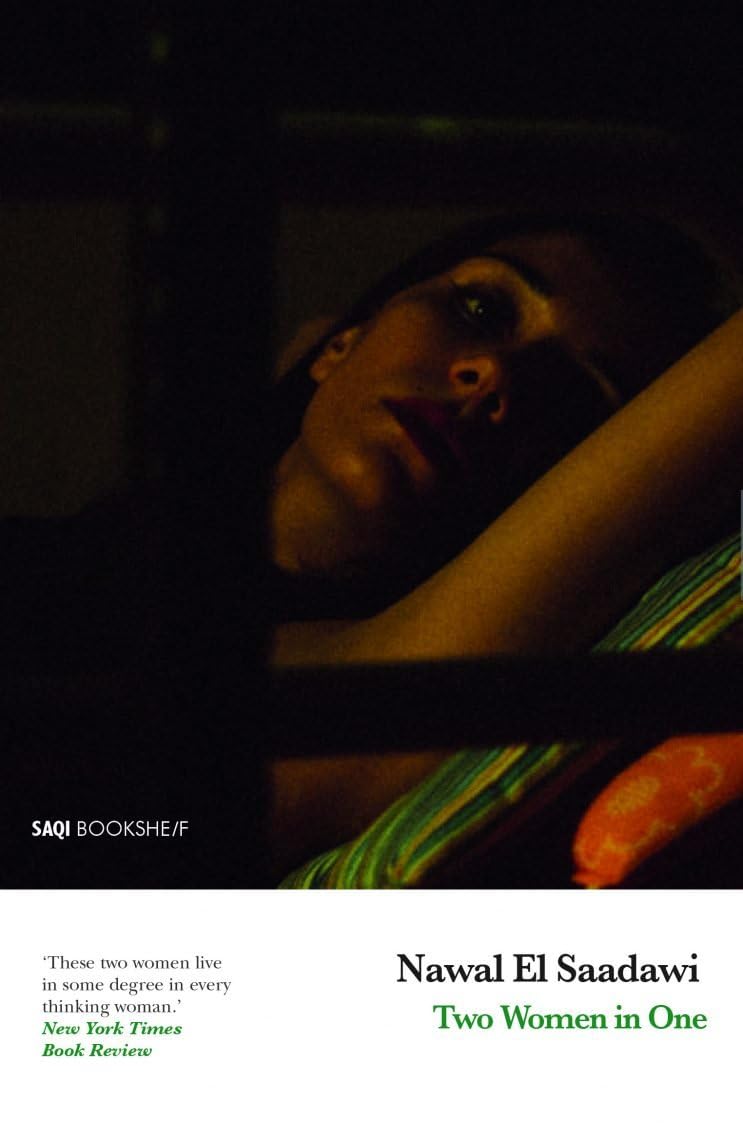



Bahiah Shaheen, an eighteen-year-old medical student and the daughter of a prominent Egyptian public official, finds the male students in her class coarse and alien. Her father, too, seems to belong to a race apart. Frustrated by her hardworking, well-behaved, middle-class public persona, her meeting with a stranger at a gallery one day proves to be the beginning of her road to self-discovery and the start of her realisation that fulfilment in life is indeed possible. ‘These two women live, to some degree, in every thinking woman.’ New York Times Book Review ‘... an intensely told story ... A valuable opportunity to understand more clearly the currents of thought regarding women in a culture vastly different from the West.’ Christian Science Monitor ‘At a time when nobody else was talking, [El Saadawi] spoke the unspeakable.’ Margaret Atwood, BBC Imagine ‘The leading spokeswoman on the status of women in the Arab world’ The Guardian ‘El Saadawi writes with directness and passion’ New York Times ‘A poignant and brave writer’ Marie Claire ‘El Saadawi has come to embody the trials of Arab feminism’ San Francisco Chronicle ‘These two women live, to some degree, in every thinking woman.’ New York Times Book Review ‘... an intensely told story ... A valuable opportunity to understand more clearly the currents of thought regarding women in a culture vastly different from the West.’ Christian Science Monitor ‘At a time when nobody else was talking, [El Saadawi] spoke the unspeakable.’ Margaret Atwood, BBC imagine ‘The leading spokeswoman on the status of women in the Arab world’ The Guardian ‘El Saadawi writes with directness and passion’ New York Times ‘A poignant and brave writer’ Marie Claire ‘El Saadawi has come to embody the trials of Arab feminism’ San Francisco Chronicle Nawal El Saadawi is one of the world’s most influential feminist writers and activists. She is founder and president of the Arab Women’s Solidarity Association and cofounder of the Arab Association for Human Rights. Her works have been translated into over forty languages and are taught at universities worldwide. Deeyah Khan is a Norwegian British documentary film director and human rights activist of Punjabi/Pashtun descent. Deeyah is a two-time Emmy Award winner and the recipient of two BAFTA nominations. Her credits as director and producer include Banaz A Love Story (2012), Jihad: A Story of the Others , and White Right: Meeting The Enemy . She is the founder and CEO of production company Fuuse, and the founder and editor-in-chief of sister-hood Magazine which spotlights the diverse voices of women of Muslim heritage. In 2016 Khan became the inaugural UNESCO Goodwill Ambassador for Artistic Freedom and Creativity. It was the fourth of September. She stood with her right foot on the edge of the marble table and her left foot on the floor, a posture unbecoming for a woman – but then in society’s eyes she was not yet a woman, since she was only eighteen. In those days, girls’ dresses made it impossible for them to stand like that. Their skirts wound tightly round the thighs and narrowed at the knees, so that their legs remained bound together whether they were sitting, standing, or walking, producing an unnatural movement. Girls walked with a strange, mechanical gait, their feet shuffling along while legs and knees remained clamped, as if they were pressing their thighs together to protect something they were afraid might fall. She had always been curious to know just what it was that might fall the minute a girl’s legs were parted. Naturally inquisitive, she would constantly watch the worm-like movement of girls as they walked. She did not look very different from these girls, except that she wore trousers, had long legs with straight bones and strong muscles, and could walk firmly, swinging her legs freely and striding out confi¬dently. She was always surrounded by girls – she went to girls’ schools with classes for girls only. Her name always appeared among those of other girls. Bahiah Shaheen: the feminine ending of her name bound it like a link in a chain into lists of girls’ names. Since the human brain is incapable of perceiving the essence of things, everyone knew her as Bahiah Shaheen and no one ever penetrated her true essence. People were always surprised by the way she walked, keeping a visible distance between her knees. She would pretend not to notice them staring at that gap. She would just keep walking, moving her legs, keeping them apart and putting each foot down with a firmness that she knew did not belong to Bahiah Shaheen. On that day, her eighteenth birthday, she was standing in her usual way: right foot on the edge of the marble table, left foot on the floor. At the time, neither men nor women would assume such a posture. It required a pair of confident legs with flexible muscles and strong, sound bones. Childhood malnutrition had made most boys bow-legged. The most they would dream of doing was