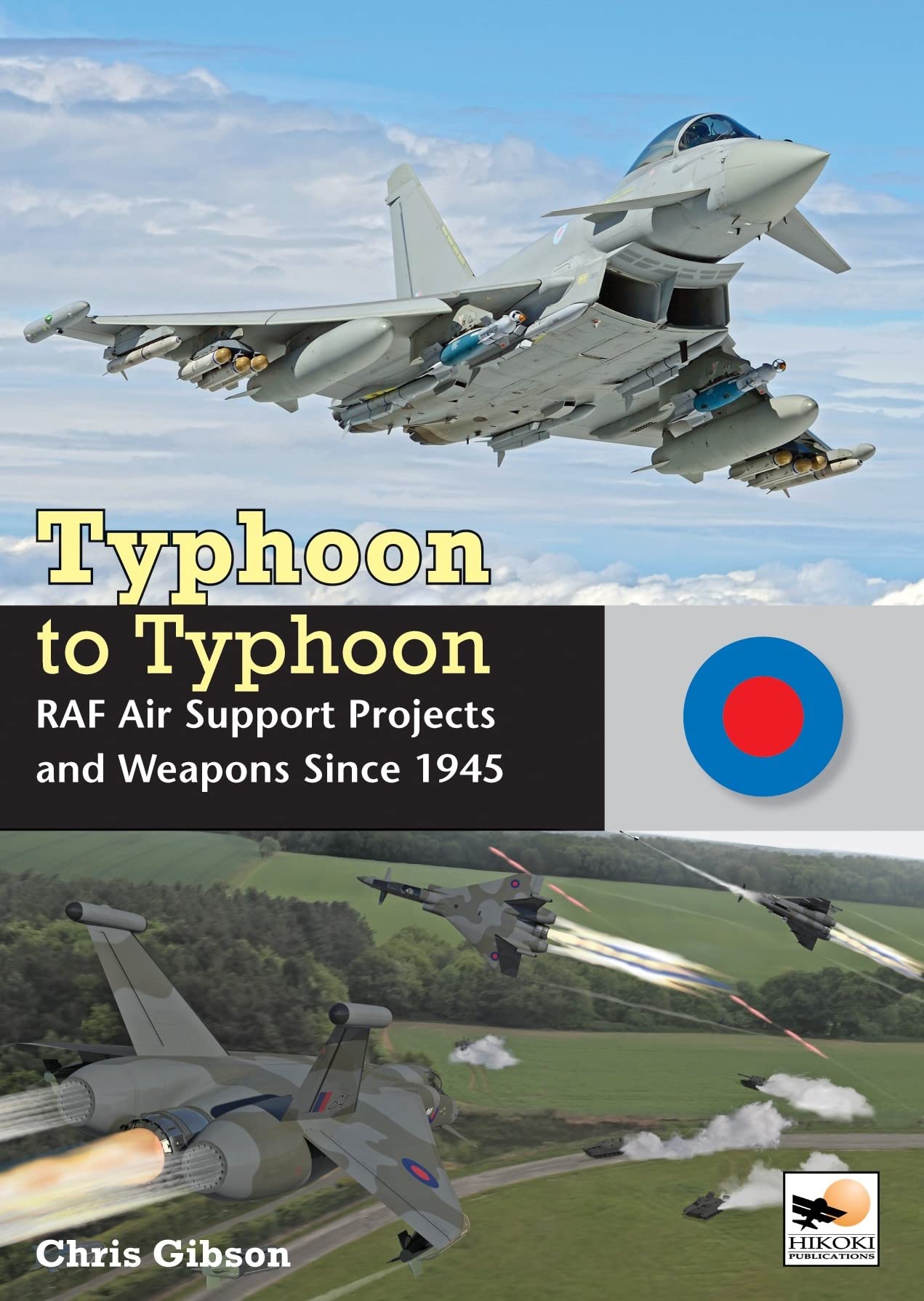



This book examines the RAF's ground attack capabilities, the threats it faced, and the weapons, technologies and aircraft developed to counter those threats from the end of World War II to the present day, moving from the era of the Hawker Typhoon to that of the Eurofighter Typhoon. Throughout the Cold War a major RAF role was to conduct low-level attacks in support of NATO ground forces. Weapons and aircraft developed to carry out this task included the Hawker Typhoon and Hunter. Harriers and Phantoms were later used. With the increase in Warsaw Pact armoured forces and their air defence capability, new weapons and aircraft were required resulting in two roles becoming RAF specialities: counter-air and anti-armour operations. The former saw Buccaneers and Jaguars armed with nuclear weapons and Tornadoes with JP.233 to be used against airfields while the latter saw Harriers, Jaguars and Phantoms with BL.755 cluster bombs and latterly Typhoons with Brimstone, against armour. Another role assigned to the RAF in support of its own, and the Army's, operations was tactical reconnaissance. This equipment evolved from the wet-film cameras of the 1940s and the IR linescan systems of the 1970s to the real-time battle management systems on the Sentinel R.1 in the new century. Thankfully the RAF never went to war in Europe but saw plenty of action around the world, where the aircraft and weapons developed to counter the Soviets were used against enemies old and new. From 1942 the RAF created an effective close support force that operated closely with Allied armies as they closed in on the enemy heartlands in Europe and the Far East. Fighter-bombers, such as Hawker's Typhoon and Hurricane, became key to these operations. Post war, the successful policy of using former interceptors for ground attach continued with the Hawker Hunter filling that role. This changed in the 1960s when the prospect of a major conventional war in Europe prompted the Air Staff and British aircraft companies to examine dedicated air support types such as the Harrier and Jaguar. Alongside the aircraft, weapons were developed to tackle the main targets: the Warsaw Pact tank armies. As Warsaw Pact air forces improved, the air threat was addressed by deep strike types such as the ill-fated TSR.2, followed by Buccaneer and Tornado, initially with nuclear weapons, latterly with weapons such as JP.233 and Storm Shadow for use against airfields. These new weapons could only be used if the targeting information was available, which required a new battlefield surveillance system that entered service as ASTOR. Typhoon to Typhoon reveals how the lessons of World War Two were absorbed and how support for the Army in the field moved from employing retired interceptors in the 1940s to the swing-role aircraft in service in the 2020s. Using recently declassified information, Typhoon to Typhoon examines the design studies and new systems that included the work on AST.396 to replace the Harrier and Jaguar and the tortuous route to the Eurofighter Typhoon. Key weapons such as ALARM, JP.233 and Storm Shadow, plus the technologies that allowed the day/night attack capability that made these new aircraft and weapons effective, are also analyzed. Drawing on research in company and government archives, Typhoon to Typhoon describes how the RAF developed the aircraft and weapons for its close support, interdiction, counter-air and reconnaissance forces from the late war years to today's precision strikes in the Middle East. Illustrated throughout with photographs, drawings and specially commissioned artwork, Typhoon to Typhoon is a unique reference to the aircraft, weapons and technologies developed for air support of the British armed forces since 1945. In 1978 his interest in aircraft took Chris Gibson into the Royal Observer Corps where he represented his group, area and country in aircraft recognition competitions between 1980 and 1991. On the standing down of the ROC in 1991, Chris began researching historical aviation and has written several books on un-built projects, particularly guided weapons.