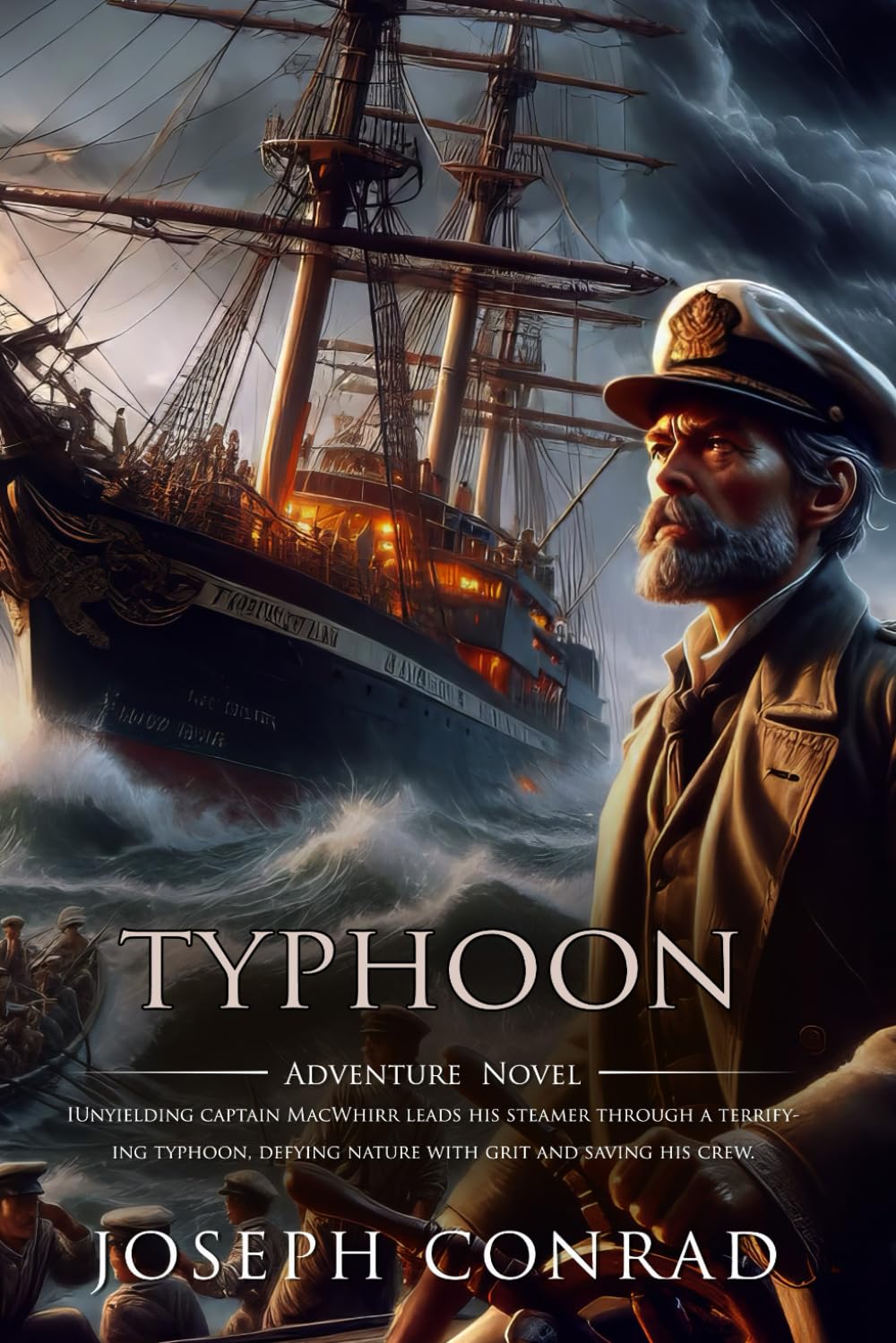



"Typhoon" by Joseph Conrad is a riveting novella that showcases the formidable power of nature and the indomitable spirit of man. Set on the steamer Nan-Shan, the story follows the ship’s crew as they confront a devastating typhoon in the South China Sea. At the heart of the narrative is Captain MacWhirr, whose steadfastness and unyielding adherence to duty provide a stark contrast to the chaos unleashed by the storm. Captain MacWhirr is a man of few words and limited imagination, yet his unwavering commitment to his responsibilities is both his strength and his flaw. Conrad portrays MacWhirr as a character whose simplicity and practicality stand in opposition to the dramatic and unpredictable forces of nature. MacWhirr's stoic nature and lack of emotional depth make him an unlikely hero, but it is precisely these qualities that enable him to guide his ship and crew through the perilous storm. The novella's tension builds as the typhoon approaches, with Conrad's meticulous descriptions immersing the reader in the mounting dread. The crew, initially skeptical of their captain’s ability to navigate the storm, gradually come to rely on his calm and resolute demeanor. Conrad's portrayal of the storm is both vivid and terrifying, capturing the sheer power and unpredictability of the natural world. The Nan-Shan’s battle against the typhoon becomes a gripping struggle for survival, reflecting the broader human experience of facing insurmountable odds. One of the central themes of "Typhoon" is the conflict between human will and the forces of nature. MacWhirr’s determination to stay on course, despite the imminent danger, underscores the human desire to assert control in the face of uncontrollable circumstances. Conrad explores the limits of human endurance and the capacity for leadership under extreme conditions. MacWhirr’s steadfastness, though seemingly rigid, ultimately proves to be a source of strength and stability for his crew. The crew members, each with their own perspectives and fears, add depth to the narrative. Chief Mate Jukes, in particular, undergoes significant development as he transitions from doubt and frustration to respect and admiration for MacWhirr. Jukes’ internal journey mirrors the external chaos of the storm, highlighting the transformative power of crisis and the emergence of unexpected strengths in times of adversity. Conrad’s prose is characterized by its precision and evocative imagery. His ability to convey the physical and emotional impact of the typhoon on the ship and its crew is masterful. The storm becomes a living entity, with its own malevolent intent, challenging the endurance and resilience of those on board. Conrad’s detailed depiction of the ship’s struggle against the relentless waves and wind creates a palpable sense of urgency and suspense. "Typhoon" also delves into broader philosophical questions about fate, duty, and the human condition. Captain MacWhirr’s unshakable sense of duty raises questions about the nature of heroism and the value of steadfastness in the face of overwhelming challenges. Conrad’s exploration of these themes elevates the novella beyond a mere adventure story, inviting readers to ponder the deeper implications of the characters' actions and choices. The novella’s climax, as the Nan-Shan emerges from the storm battered but intact, serves as a testament to human perseverance and the strength of the human spirit. Captain MacWhirr’s triumph is not marked by grand gestures or dramatic changes but by the quiet, relentless pursuit of his duty. This understated heroism is a central aspect of Conrad’s narrative, emphasizing the importance of resolve and integrity.