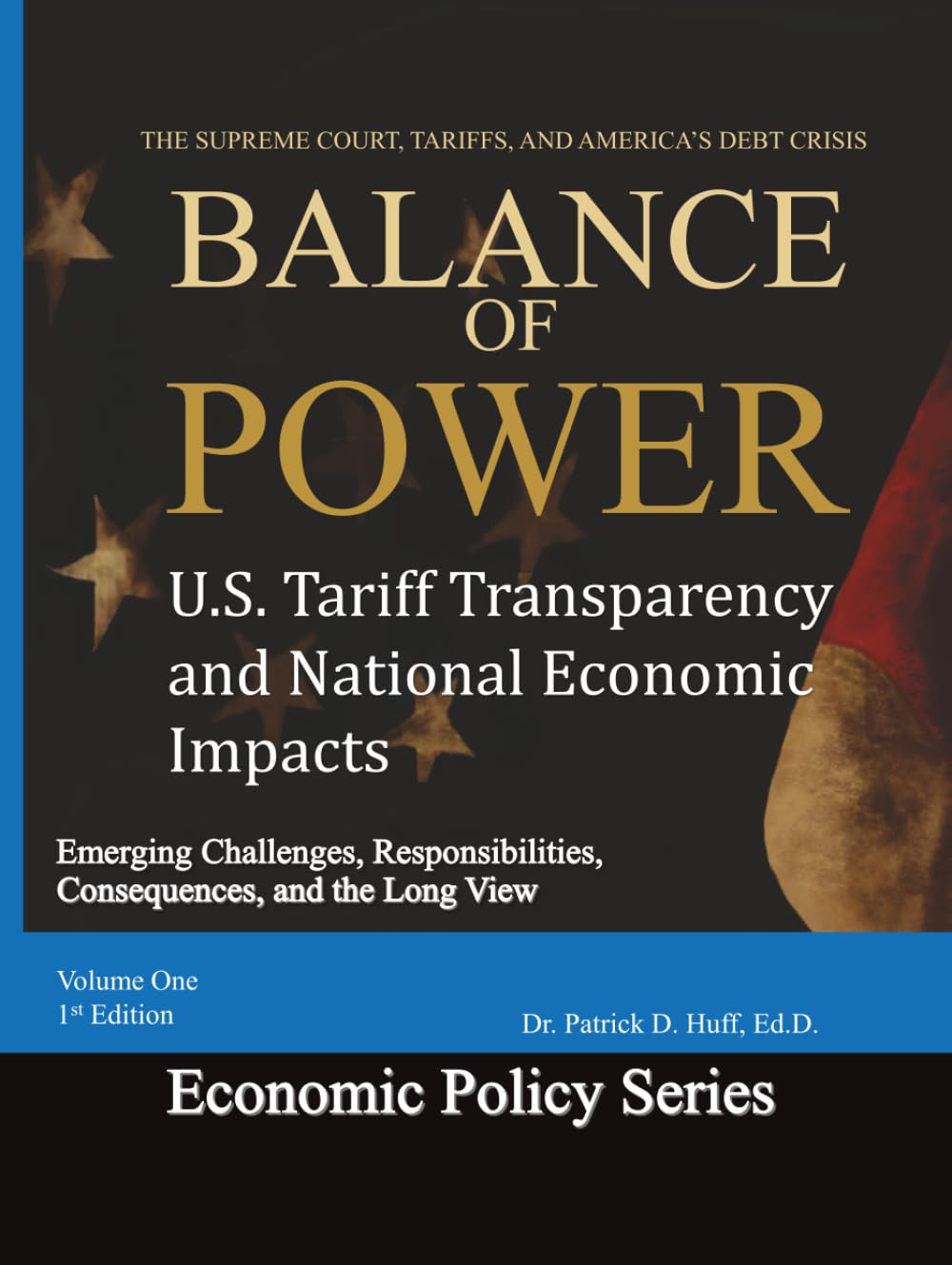
U.S. Tariff Transparency and National Economic Impacts: Emerging challenges, responsibilities, consequences, and the long view
$69.95
by Dr. Patrick D. Huff Ed.D



Tariffs have returned to the center of American economic debate—but few citizens truly understand how they work, who benefits, who pays, and what they mean for the future of the U.S. economy. In U.S. Tariff Transparency and National Economic Impacts , Dr. Patrick D. Huff and his research team examine one of the most misunderstood tools of national economic policy. Drawing on historical precedent, constitutional authority, and modern macroeconomic analysis, this study investigates how tariff programs influence domestic industries, trade balances, inflation dynamics, employment, and federal revenues. The book explores the legal foundations of U.S. tariff authority, including congressional and executive powers, and analyzes the broader economic consequences of tariff policy in a globalized marketplace. Through careful examination of measurable national economic indicators, the research separates political rhetoric from economic reality, offering readers a clearer understanding of how tariffs function within the larger framework of fiscal policy, national debt, and long-term economic sustainability. More importantly, this work addresses a critical question facing the United States today: Can tariff policy meaningfully influence the nation’s fiscal future, or are deeper structural economic reforms required? Written for policymakers, economists, students, and engaged citizens, this volume provides a transparent and accessible examination of the economic forces shaping America's trade policy and its long-term implications for national prosperity. At a time when global trade relationships are shifting, and the national debt continues to grow, understanding tariff policy is no longer optional—it is essential.