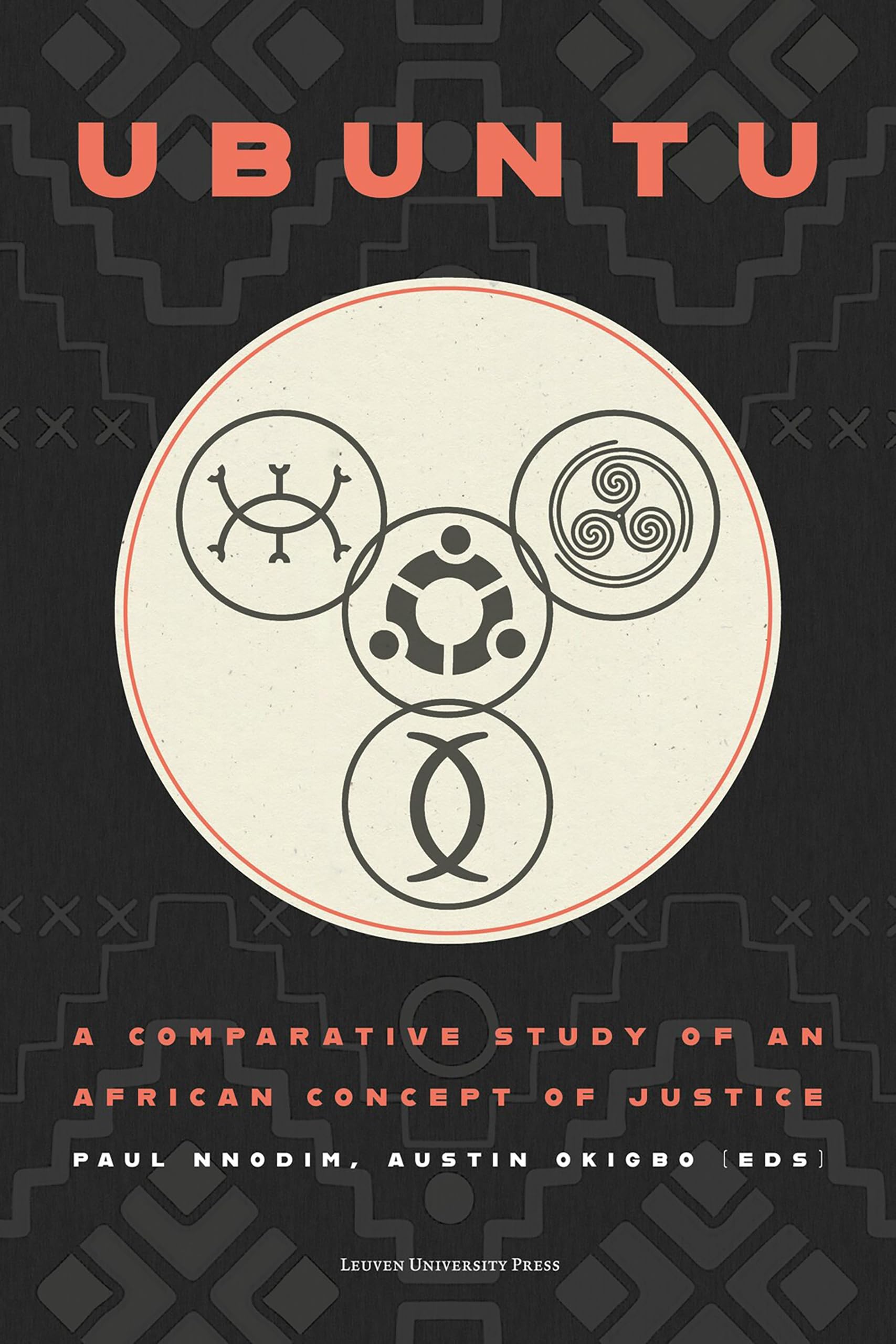



Ubuntu is an African philosophical tradition that embodies the ability of one human being to empathize with another. It is the quintessence of African humanism, communalism, and belonging. As the late Archbishop Desmond Tutu anticipated, Ubuntu resonated with the moral intuition of the majority of black South Africans in the 1990s. As a result, it became the foundational ethical basis for articulating a new post-apartheid era of reconciliation and forgiveness in the face of a history marked by brutal racial violence. Yet Ubuntu, as a philosophy or ethical practice which has arguably come to represent African humanism and communalism, has not been sufficiently assimilated into contemporary philosophical scholarship. This anthology weaves interdisciplinary perspectives into the discourse on African relational ethics in dialogue with Western normative ideals across a wide range of issues, including justice, sustainable development, musical culture, journalism, and peace. For the first time in contemporary philosophical scholarship, it describes the philosophy of Ubuntu for both African and non-African scholars. Comprehensively written, this book will appeal to a broad audience of academic and non-academic readers. This book will be made open access within three years of publication thanks to Path to Open. Contributors: Aboubacar Dakuyo (University of Ottawa), Brahim El Guabli (Williams College), Leyla Tavernaro-Haidarian (University of Johannesburg), Damascus Kafumbe (Middlebury College), Joseph Kunnuji (University of the Free State), David Lutz (Holy Cross College, Notre Dame), Thaddeus Metz (University of Pretoria), Emmanuel-Lugard Nduka (media practitioner), Levi U.C. Nkwocha (University of Saint Francis, Fort Wayne). 'Ubuntu: A comparative study of an African concept of justice' is an important and thought-provoking book. It challenges Western assumptions about justice and introduces Ubuntu as a philosophy grounded in connection, healing and community involvement in dispute resolution. While its insights are profound, the book occasionally struggles to bridge theory and practice. Still, its greatest strength lies in broadening the conversation around justice - inviting scholars and policymakers to consider a more humane and interconnected approach to governance. For Ubuntu to have a lasting impact on global justice discourse, however, it must move beyond academic debate and into real-world application. - Gabagambi, J. J., The International Journal of Restorative Justice, 8(2), 370-373. https: //doi.org/10.1163/25890905-00802005 The volume offers a valuable exploration of Ubuntu, tracing its development from precolonial African societies through colonial disruptions to postcolonial applications. It ultimately issues a powerful call for the rejuvenation of Ubuntu as an ethical compass for African societies and potentially the world. - Oyinade Adekunle, Canadian Journal of African Studies / Revue Canadienne Des Études Africaines, 59(3), 655-657. https: //doi.org/10.1080/00083968.2025.2555664 'Ubuntu', as propounded in this book, significantly contributes to the decolonization of knowledge production (in practice) by centering an alternative epistemic register to the dominant Western philosophies in scholarship. The book brings back in the 'human touch' in the academic literature in ways that amplify Africans' lived experiences and challenge the liberal individualistic worldviews that are prevalent in today's capitalistic societies. Geoffrey Lugano, Kenyatta University This anthology brings together diverse perspectives and disciplinary approaches ranging from philosophy, restorative justice, comparative literature to media studies and musicology, to highlight the multi-faceted aspects of an African relational ethic: Ubuntu. The authors also present a dialogue with Western ethical paradigms and make a convincing case that Ubuntu gives us a welcome antidote to hegemonic liberal individualism in the realm of deliberative discourses concerning (social) justice. Mechthild Nagel, SUNY Cortland 'Ubuntu', as propounded in this book, significantly contributes to the decolonization of knowledge production (in practice) by centering an alternative epistemic register to the dominant Western philosophies in scholarship. The book brings back in the 'human touch' in the academic literature in ways that amplify Africans' lived experiences and challenge the liberal individualistic worldviews that are prevalent in today's capitalistic societies. -- Geoffrey Lugano, Kenyatta University Paul Nnodim is a professor of philosophy at Massachusetts College of Liberal Arts. Austin Okigbo is an associate professor of ethnomusicology, African Studies, and global health at the University of Colorado Boulder.