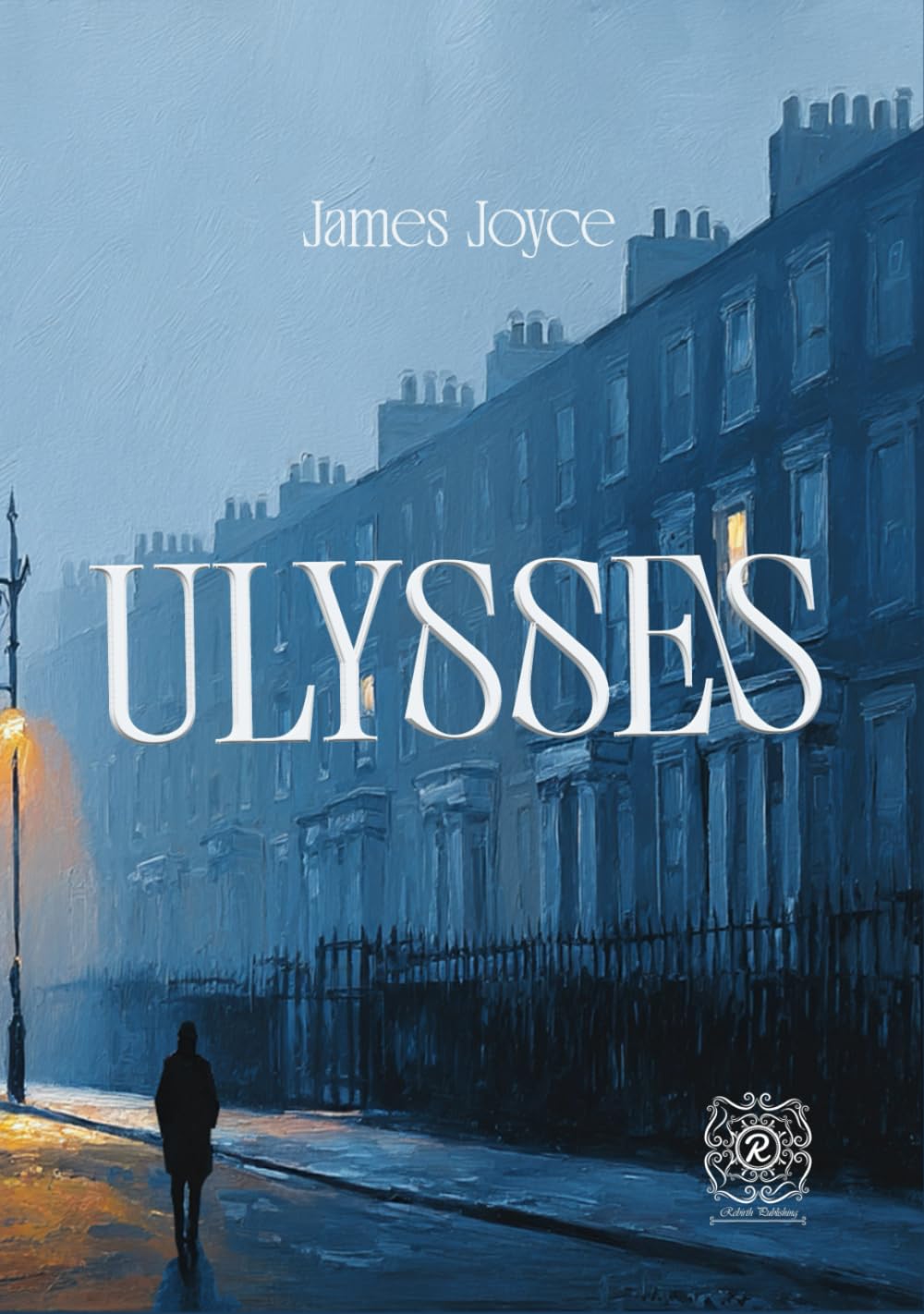



JAMES JOYCE'S ULYSSES A Literary Revolution That Transformed the Modern Novel When Ulysses first appeared in its complete form on February 2, 1922—the author's 40th birthday—it arrived not with the conventional fanfare of major publishing houses but through the courageous determination of Sylvia Beach, proprietor of the Parisian bookshop Shakespeare and Company. That initial limited edition of 1,000 copies would become the opening salvo in a literary revolution whose reverberations continue to shape our understanding of what fiction can achieve. Set during a single day—June 16, 1904—in Dublin, Ireland, Ulysses follows the wanderings and internal musings of Stephen Dedalus, a young intellectual; Leopold Bloom, a middle-aged Jewish advertising canvasser; and Molly Bloom, Leopold's wife. Through their intersecting journeys, Joyce crafts not merely a story but an entire world—one that captures the complexity of human consciousness with unprecedented depth and precision. The novel that was once banned for obscenity in the United States until Judge John M. Woolsey's landmark 1934 ruling is now recognized as perhaps the defining literary achievement of the twentieth century. Its technical innovations—from stream-of-consciousness narration to shifting narrative styles—have influenced generations of writers, while its humane vision continues to move readers with its profound understanding of the human condition. This edition features both an illuminating foreword and a comprehensive afterword that contextualizes Joyce's masterpiece for contemporary readers, exploring its revolutionary publication history, its formal innovations, and its enduring significance in world literature. FROM THE FOREWORD: Historic Publication : The complete novel first appeared on Joyce's 40th birthday, published by Sylvia Beach through her bookshop Shakespeare and Company in a limited edition of 1,000 copies - Legal Battles : Previously serialized in The Little Review (1918-1920), Ulysses faced obscenity charges that led to its suppression in the United States and United Kingdom for more than a decade - Stylistic Revolution : Each of the novel's eighteen episodes employs different narrative techniques, ranging from newspaper headlines to catechism, theatrical script to unpunctuated stream-of-consciousness - Mythic Framework : Joyce structured his modern Dublin narrative as a parallel to Homer's Odyssey , transforming ancient heroism into modern humanity - Censorship Overcome : Judge John M. Woolsey's landmark 1934 ruling found that Ulysses was not obscene, allowing its legal publication in the United States FROM THE AFTERWORD: Global Influence : Joyce's innovations have inspired writers worldwide, from Latin American magical realists to postcolonial African novelists - Dublin Reimagined : Joyce transforms his native city into both a precisely detailed physical setting and a symbolic landscape where personal memory and cultural history converge - Ethical Vision : Through Leopold Bloom's humane perspective, Joyce presents an ethics of attention and empathy that transcends sectarian divisions - Democratic Approach : The novel's multiple styles and perspectives ensure that no two readers experience it in precisely the same way - Living Legacy : A century after its publication, Ulysses continues to generate new meanings and resonances To read Ulysses is to participate in one of literature's great adventures—a journey that challenges, delights, and ultimately transforms. Whether encountering Joyce's masterpiece for the first time or returning to its inexhaustible depths, readers will find in these pages a work that, like consciousness itself, proves endlessly generative, endlessly surprising, and endlessly alive.