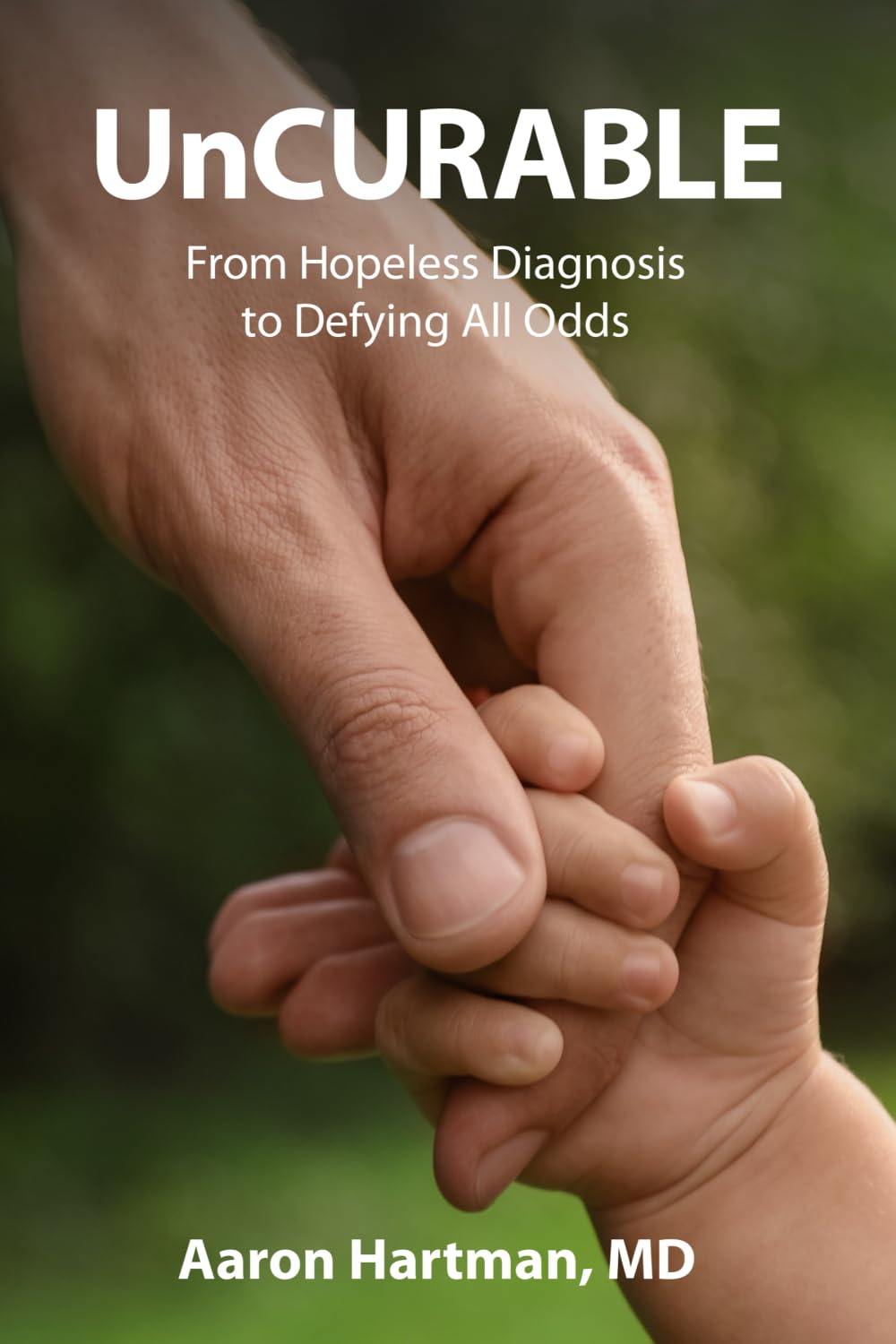



Your doctor said it's incurable. Now what? When physicians told Dr. Aaron Hartman his adopted daughter would remain a vegetable, he faced every parent's nightmare. Born with devastating brain damage after prenatal drug exposure, Anna wasn't supposed to see, walk or speak. Her diagnosis of cerebral palsy was pronounced “uncurable.” The medical system offered only surgeries, feeding tubes and lowered expectations. But his daughter Anna had other plans. UnCURABLE: From Hopeless Diagnosis to Defying All Odds reveals the hidden revolution in functional medicine that helped Anna beat impossible odds—and shows how you can access these same breakthroughs. Inside, you'll discover: Why 80% of chronic conditions have overlooked root causes (and how to find yours) - The three pillars that account for 80% of healing, without expensive treatments - How to navigate medical gaslighting and become your own advocate - The “Triangle of Health” system used by elite athletes, now accessible to everyone - Why medical error is the third leading cause of death (and how to protect yourself) - How your diet can heal disease through targeted nutrition protocols - Holistic approaches to curing diseases that conventional medicine overlooks From reversing autoimmune conditions to recovering from mystery illnesses, Dr. Hartman's patients prove daily that “uncurable” doesn't mean “untreatable.” Written by a traditionally trained medical doctor who might be expected to dismiss alternative medicine, UnCURABLE provides a firsthand, medically sound path for those seeking solutions when conventional medicine falls short. This isn't another alternative medicine book. It's your blueprint for working with science—not against it—to unlock your body's remarkable capacity to heal. I can still remember the first time I saw Anna—it's etched into my mind like it happened just yesterday. We had just stepped into her foster home where she was receiving care. There she was, on the floor of the living room, sitting in a Bumbo chair placed gently on a Winnie the Pooh blanket, her tiny body leaned forward, unable to support itself. A patch covered her "strong" right eye—not because it was injured, but because the left eye had suffered birth trauma so severe it no longer functioned, so it was a struggle for her eyes to track together. Her delicate hands were curled inward, held tightly to her chest—all symptoms of the lingering, visible imprint of the brain damage she'd endured over a year ago during birth. Despite everything, she had the cutest little smile. The only word she could say was "hi." She was about 12 months old at that time, and I had no idea how profoundly this moment would change my life. Meeting Anna would not only change me, but it would also shape my family, influence how my family grew and ultimately transform my medical practice and how I cared for patients. Anna had been diagnosed with cerebral palsy, an incurable condition caused by brain damage before birth. But that wasn't all. Her birth mother had used crystal meth throughout her entire pregnancy, and Anna had suffered a stroke before she was even born. She had no pigment in the back of her eyes and was functionally blind for the first years of her life. She spent those early months in a drug-induced coma, not interacting with the outside world other than when being fed. An earlier MRI showed that she had agenesis of the corpus callosum—meaning the part of the brain that connects the left and right hemispheres hadn't formed properly. When I first met her, I didn't fully grasp the severity of her condition. All I knew was that she had an incurable disorder and was about to lose her home. My wife, Becky, had been Anna's occupational therapist ever since she left the hospital. Like many medical foster children, Anna was facing yet another upheaval—her foster home was closing, and she needed a new place to live. Becky asked me if we would be willing to open our home to this little girl who had nowhere else to go. As a person of faith, this was a defining moment. I had always professed to believe in caring for the orphaned and the homeless, and now I was being given the opportunity to live out those beliefs. Meanwhile, Becky saw something that no one else did: a spark in Anna—something neither the doctors nor the therapists, nor even I, could see. Becky told me, "She's going to be okay." Looking back, I realize that I thought "okay" meant that her condition would somehow disappear and that she would become a normal, typical child. In hindsight, that was incredibly naïve. But I trusted Becky, and I had my faith. So, we took Anna into our home. As a doctor, I knew it'd be rough. My brain cataloged the challenges ahead—sleepless nights, medical complexities and mounting bills. I have to admit that in the beginning, my heart wasn't immediately wrapped around this little girl. My connection to Anna was forged through battle—the daily struggle of coaxing one more bite into her