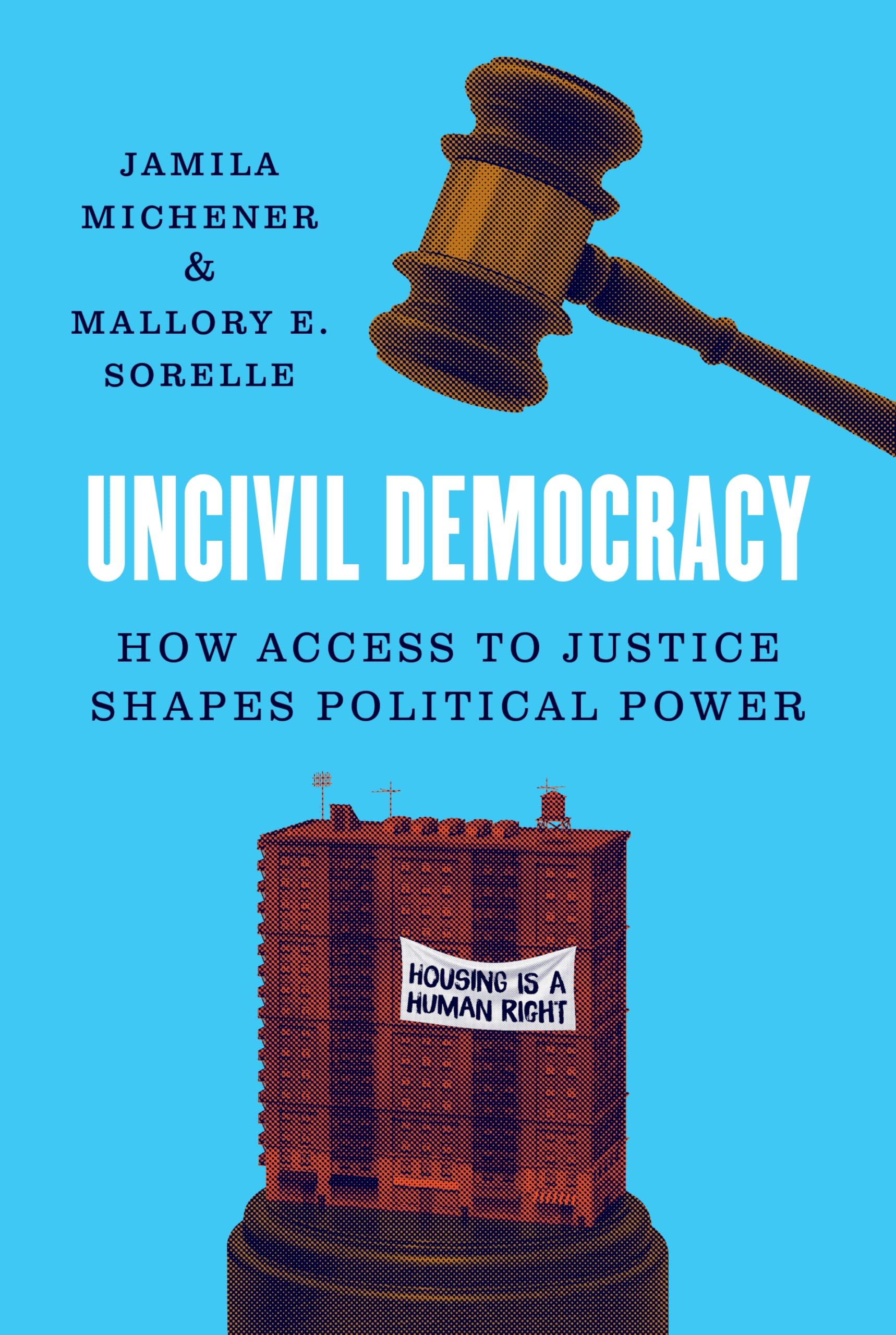
Uncivil Democracy: How Access to Justice Shapes Political Power (Princeton Studies in American Politics)
$29.95
by Jamila Michener



How the civil legal system undermines the political lives of marginalized communities Each year, as many as 250 million Americans face civil legal problems like eviction, debt collection, and substandard housing. These problems are disproportionately shouldered by racially and economically marginalized people, particularly women of color. Civil courts and legal aid organizations are supposed to protect their rights, yet more than 90 percent of low-income people receive inadequate or no legal assistance. Instead, access to justice is reserved for those who can afford its high price. For those who can’t, the repercussions can be devastating, from homelessness and loss of public benefits to broken families and diminished health. Uncivil Democracy looks at the US civil justice system through the eyes of the people whose very citizenship is indelibly shaped by it. Jamila Michener and Mallory SoRelle show how civil legal problems, and the institutions meant to address them, greatly erode trust in the legal system among marginalized communities, undermining their broader sense of democratic citizenship and political standing. While legal representation offers vital protections, increased access to justice through an ever-growing supply of lawyers does not address the structural problems that generate demand for lawyers in the first place. Looking at cases involving unfair evictions and substandard housing, Michener and SoRelle demonstrate how community groups such as tenants’ unions can fill this justice gap and provide the means to build political power that transforms the conditions that create precarity. Drawing on eye-opening qualitative evidence and a wealth of historical and survey data, Uncivil Democracy explains why collective organizing holds the greatest promise for altering the systems that create civil legal problems and exercising the political power necessary for meaningful change. “Amid soaring inequality and rising threats from within, this vital book uncovers both the hurdles and the hope of democracy as a grass roots project, showing how people recognizing their shared interests can come together to build power for action and change.” —Rebecca L. Sandefur, sociologist and MacArthur Fellow “ Uncivil Democracy is the rare book that provides a holistic investigation of how people interact with the political system, combining humane storytelling, meticulous analysis, and brilliant insights. A must-read not only for its examination of the politics of civil injustice but also for its theoretical perspectives on how to study politics.” —Hahrie Han, Johns Hopkins University Jamila Michener is associate professor of government and public policy at Cornell University and the author of Fragmented Democracy: Medicaid, Federalism, and Unequal Politics . Mallory E. SoRelle is the Tony and Teddie Brown Associate Professor of Public Policy at Duke University and the author of Democracy Declined: The Failed Politics of Consumer Financial Protection .