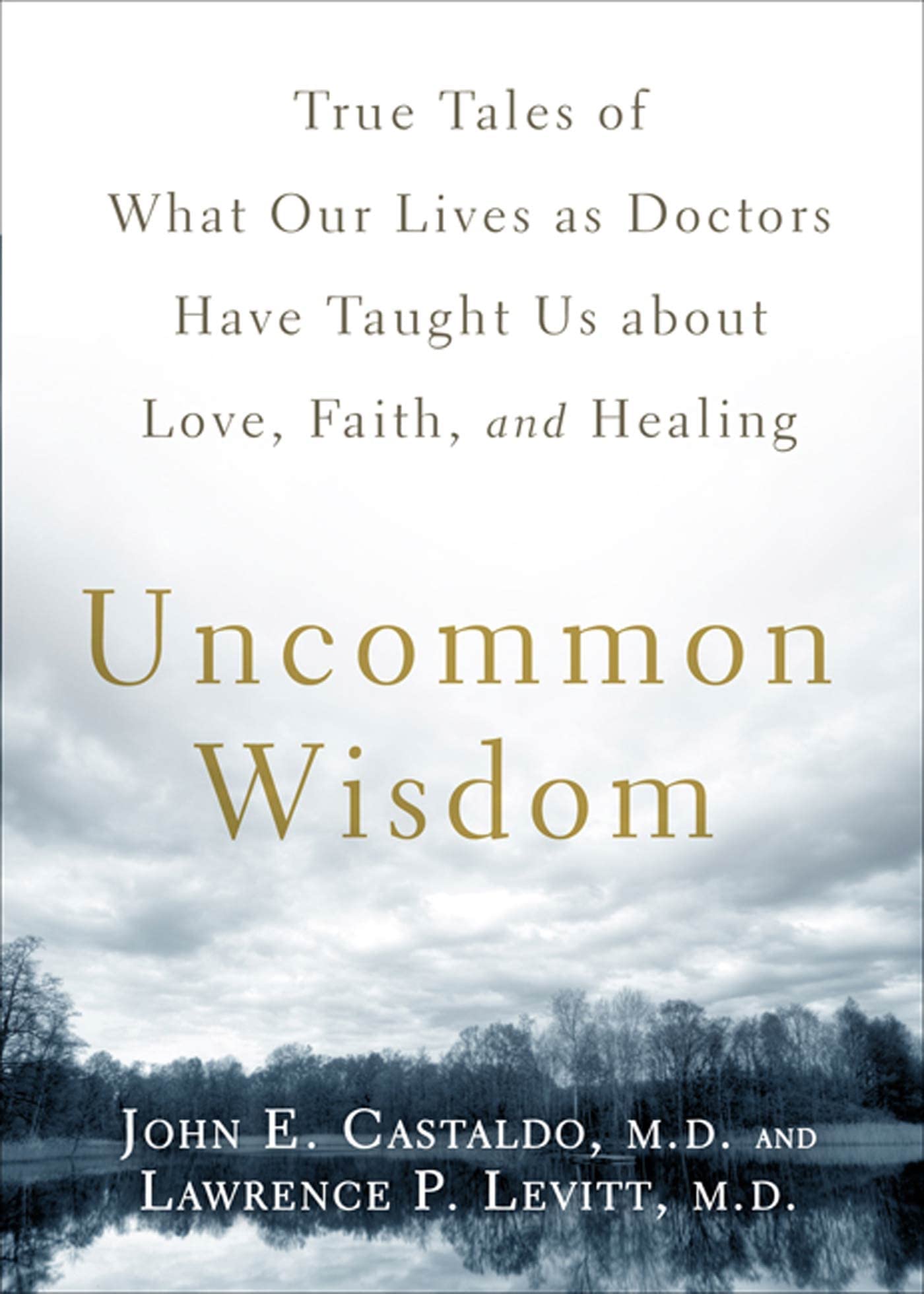
Uncommon Wisdom: True Tales of What Our Lives as Doctors Have Taught Us About Love, Faith and Healing
$22.43
by John Castaldo



In light of the escalating costs of healthcare in the U.S. and the on-going debate about appropriate health insurance reform, it's easy to forget about the human side of medicine and the importance of the doctor-patient relationship. In Uncommon Wisdom , neurologists John Castaldo and Lawrence Levitt share what they have learned in their many years as doctors, not just from tests and labs, but from years of listening and learning from their patients. These 16 tales show doctors as human beings: flawed and full of doubt, wonder, and reverence about what it means to be alive. The stories remind us that the medical profession should be about treating people with the dignity they deserve and that medical miracles don't always involve medicine. These doctors find cures, solve mysteries, and glean many lessons from listening deeply to their patients. JOHN E. CASTALDO, MD, is the chief of the division of neurology at Lehigh Valley Hospital in Allentown, PA. LAWRENCE P. LEVITT, MD, is professor of clinical medicine at Penn State College of Medicine and senior consultant in neurology emeritus at Lehigh Valley Hospital. Encountering Leonard "Mrs . Pool ?" I spoke softly to the frail, gray-haired woman lying motionless on the bed. There was no response. "Mrs. Pool?" I ventured again. "Can you tell me how you're feeling?" The sheets stirred slightly. "Very weak," she finally whispered. She reached out to touch my hand, mumbled something unintelligible, and drifted off to sleep again, ending my interview before it really got started. I was a first-year resident at Memorial Sloan-Kettering Cancer Center in New York City, and feeling frankly overwhelmed. I knew that Dorothy Pool had been recently diagnosed with lung cancer and had traveled to our hospital from her home in Allentown, Pennsylvania, after becoming suddenly and unaccountably weaker. Her doctors in Allentown couldn't figure out the source of her precipitous decline, which is why her husband, Leonard, had been advised to bring her to Sloan-Kettering. We were their last hope. Mr. Pool was sitting on a chair across from his wife's bed, looking up at me with a mixture of sadness and stoicism. I could imagine him thinking: "Too young, too inexperienced. Wasting our time." If Mr. Pool was thinking that, I said to myself, he was probably right. I was twenty-seven years old and green to the gills, stuffed with textbook knowledge but not much experience with actual patients, much less their families. My first impulse was to flee the room, just to get away from the sadness in his eyes. "Dr. Levitt?" I heard him say. "Could we talk a moment?" Apprehensively, I sat down in the green vinyl chair opposite him. I expected him to start peppering me with questions. Exactly what do you plan to do to get to the bottom of my wife's sudden deterioration? What treatments will you try? What are her chances? But Leonard Pool just looked at me and smiled. "It's good of you to help us," he said simply. A lean, fit man with alert hazel eyes, he appeared to be in his early sixties, several years younger than his wife. He was dressed in corduroys and a plaid flannel shirt, and had the look of someone who'd worked outdoors his whole life. "We will certainly try," I said, with more confidence than I felt. "Perhaps you could tell me a bit more about your wife's condition." Nodding, he told me that Dorothy had been diagnosed with lung cancer earlier that year, after three decades of chain smoking. "I tried to get her to stop, but ..." He trailed off, shaking his head. But after she'd undergone a round of radiation, he continued, she'd recovered some of her energy. She'd been going out with friends, taking walks in the countryside, even traveling to visit her sister in Detroit. Then, two weeks ago, she became suddenly and overpoweringly exhausted, "as if all the energy had been just scooped out of her," Mr. Pool said. "She got so weak she could barely stand." As he said this, he let out a deep sigh and stared out the window into the hospital parking lot. His hands, ropy with veins, gripped the sides of the chair. Somehow, I got the distinct sense that he was picturing his wife's death. For the second time in ten minutes, I wanted to run out of the room. It all felt like too much responsibility, not just to diagnose and treat this woman's strange symptoms but to know that so much feeling--a lifetime of love and protectiveness, I guessed--hung in the balance. What if we couldn't help her? "Well," I said awkwardly, "try not to worry." Brilliant, Levitt, I thought. Why shouldn't this man worry? "We'll do our best to help Mrs. Pool," I added lamely. I couldn't take this anymore. I got up from my chair, made some feeble excuse, and escaped out into the hall. Over the next two days, I worked with my attending physician, Dr. William Geller, to try to figure out the cause of Dorothy Pool's mysterious weakness. We ordered up blood tests, a routine step following a hospital admission, but