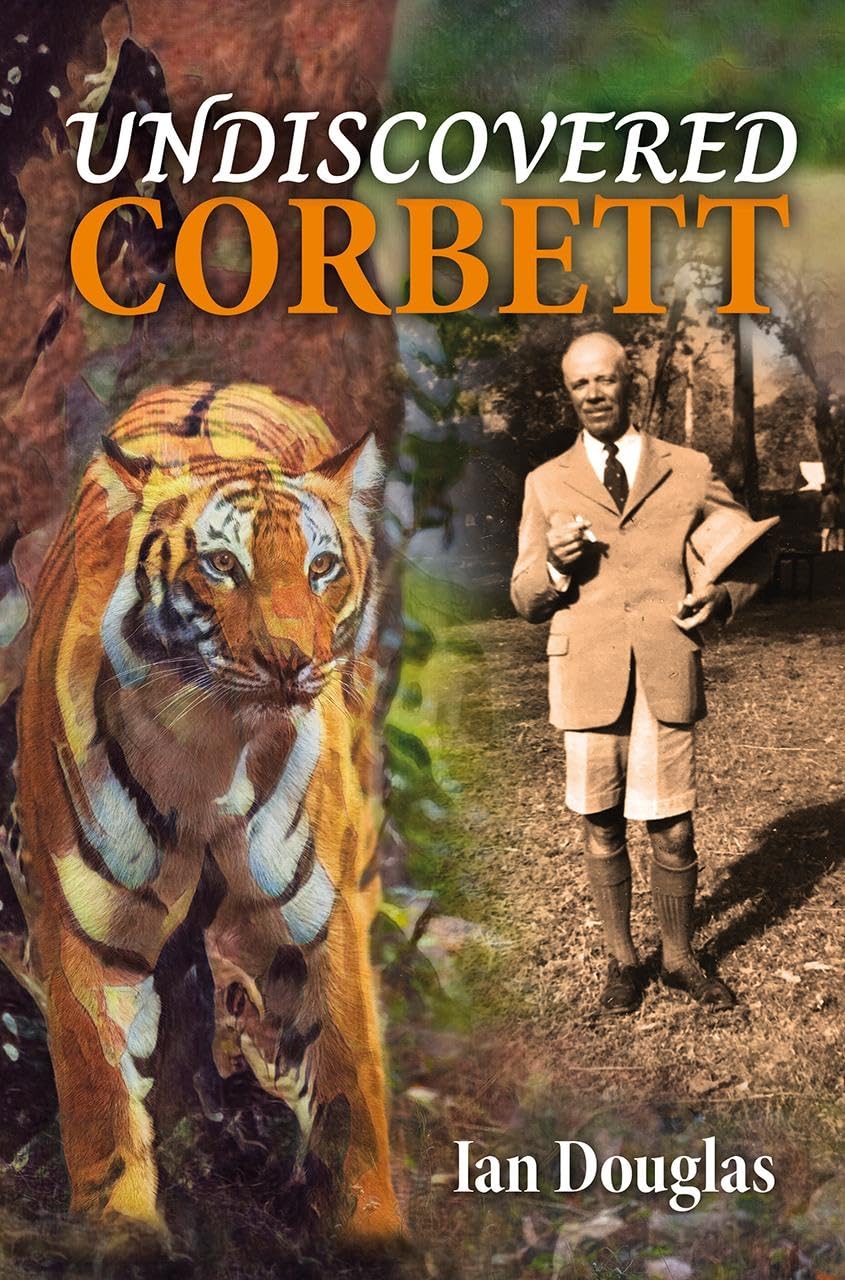



Jim Corbett was the local hero of northern India in the 1920s and 30s when he tracked down the man-eating tigers and leopards who had killed hundreds of poor villagers. His exploits still thrill thousands of readers all round the world today, and his enthusiasts will welcome Ian Douglas’ new biography packed with 90 previously unpublished photographs, private letters and reports which throw new light on Corbett. His friendships, his fishing, his guns, his accounts of the tiger tracking and his views on the jungle he so loved are all here. 'Bedtime reading just got a bit more exciting.' -- Sporting Shooter 'Jim Corbett’s thrilling and moving title.' -- Fieldsports magazine Ian Douglas has worked for 40 years in nature conservation in the UK, Europe and Asia, with a particular interest in the birds and mammals of forests and wetlands. Ian has been a regular visitor to India for 50 years, His lifelong fascination for all things Jim Corbett has involved decades of research culminating in this new book Undiscovered Corbett. He is married to Debora and lives in Morpeth, Northumberland. In terms of his legacy, we have Jim’s books and Corbett National Park, and seventy years after his death, that would be enough to be grateful for. But Jim was in his quiet way a great advocate for wildlife and what might now be expressed as a better way of looking at the natural world. This was ground-breaking at the time and it arose from his deep understanding and feeling for the forests with which he was so familiar. The world was changing, and the way we viewed it had also to change. His books continue in print to this day, to be read and, in the words of author of Tracking Jim Prosenjit Das Gupta, ‘remain an almost inexhaustible source of enjoyment’, for generations both old and young whether as an escape for tired minds, or as an inspiration from Jim’s undoubted kindness, they remain as relevant today as ever before. Considered as works on the natural history of the forests and wildlife of India and the result of his many years of first-hand experience, they stand as classics. Jim referred to himself in his self-effacing way as an ‘amateur writer’. He was certainly also a gifted communicator, able to take us with him page after page, as he walked through the forests he loved. And the tiger still roams those forests. India led the way with Project Tiger, and with hunting banned, the decline was halted and tiger numbers began to recover, still rising to this day. Challenges remain with the threats of poaching, encroachment from the pressures of population growth and grazing of domestic stock, and changing weather patterns; but public opinion has shifted. Visitors to the parks now come in such numbers to view the tigers and other wildlife that they themselves have become the latest challenge. It is perhaps appropriate to close with Jim’s last words to Maggie: ‘Always be brave, and try to make the world a happier place for others to live in’