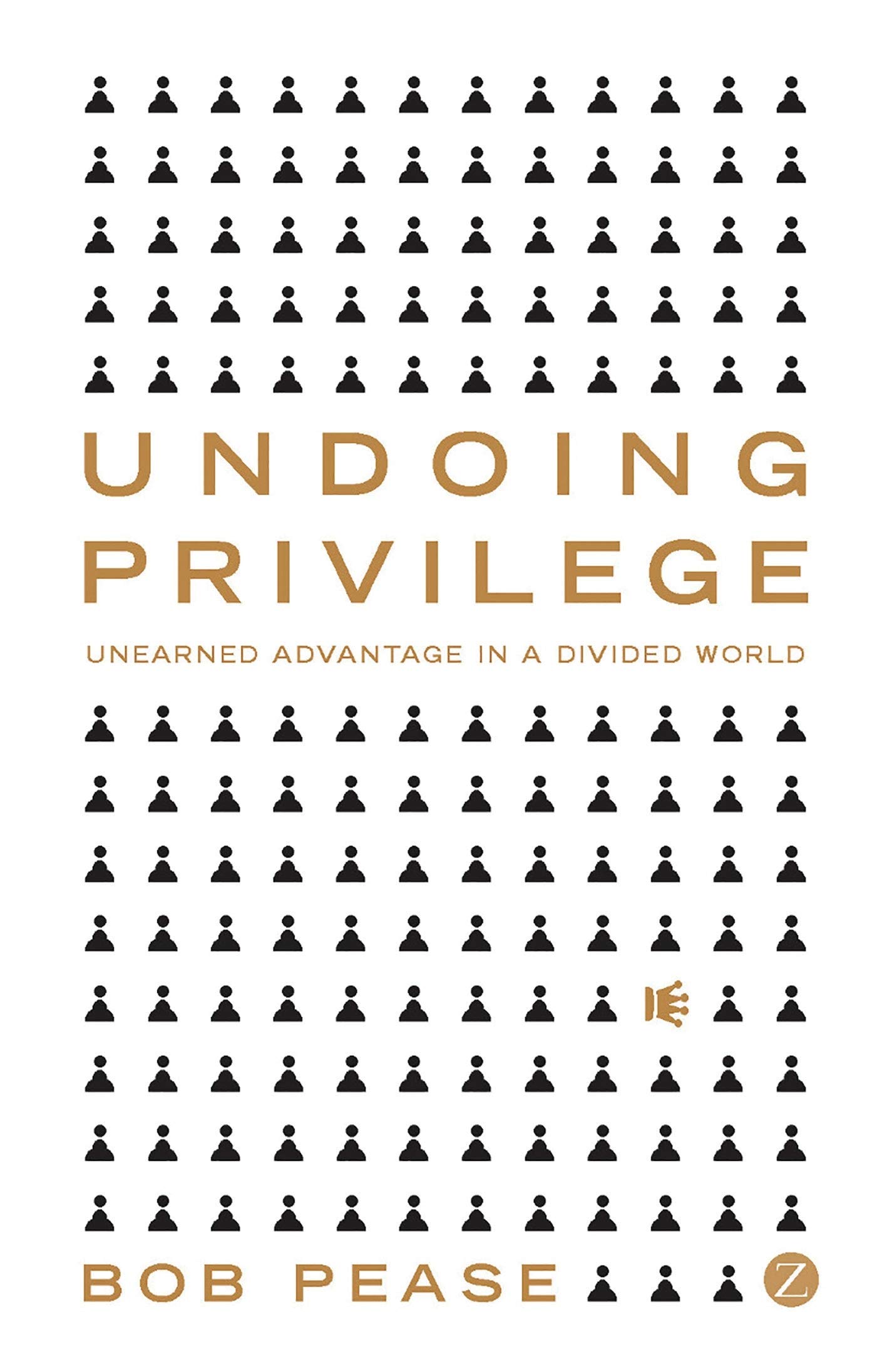



For every group that is oppressed, another group is privileged. In Undoing Privilege, Bob Pease argues that privilege, as the other side of oppression, has received insufficient attention in both critical theories and in the practices of social change. As a result, dominant groups have been allowed to reinforce their dominance. Undoing Privilege explores the main sites of privilege, from Western dominance, class elitism, and white and patriarchal privilege to the less-examined sites of heterosexual and able-bodied privilege. Pease points out that while the vast majority of people may be oppressed on one level, many are also privileged on another. He also demonstrates how members of privileged groups can engage critically with their own dominant position, and explores the potential and limitations of them becoming allies against oppression and their own unearned privilege. This is an essential book for all who are concerned about developing theories and practices for a socially just world. “It should be essential reading for anyone committed to social justice.” ― Abby Ferber, The Matrix Center for the Advancement of Social Equity and Inclusion “Undoing Privilege confronts major taken-for-granted dimensions of privilege: Western, class, gender, race, sexual, embodied. It also outlines ways to undo all this, in theory, practice and indeed activism - a huge task that makes for a very important book, written with brevity and humility.” ― Jeff Hearn, author of The Gender of Oppression “This is a scholarly, well-written book that attempts to portray a refreshingly new viewpoint about challenging and confronting an unequal and unjust world order. The author's transparent sincerity, humility and acute awareness about one's privileged position are embedded throughout the narrative.” ― Ravindra R.P., India Bob Pease is Chair of Social Work in the School of Health and Social Development at Deakin University in Geelong, Australia. He has published widely in the fields of masculinity studies and critical approaches to social work practice and is the author or co-editor of ten previous books. His most recent co-edited books are the International Encyclopedia of Men and Masculinities (2007), Migrant Men: Critical Studies of Masculinities and the Migration Experience (2009) and Critical Social Work: Theories and Practices for a Socially Just World (2nd edition 2009). He has been involved in profeminist masculinity politics for many years and actively engaged in campaigns to end men's violence against women. Undoing Privilege Unearned Advantage in a Divided World By Bob Pease Zed Books Ltd Copyright © 2010 Bob Pease All rights reserved. ISBN: 978-1-84813-029-6 Contents Acknowledgements, vi, Preface, viii, PART ONE Theoretical and conceptual foundations, 1 Oppression, privilege and relations of domination, 3, 2 The matrix and social dynamics of privilege, 17, PART TWO Intersecting sites of privilege, 3 Western global dominance and Eurocentrism, 39, 4 Political economy and class elitism, 62, 5 Gender order and the patriarchal dividend, 86, 6 Racial formations and white supremacy, 108, 7 Institutionalised heterosexuality and heteroprivilege, 128, 8 Ableist relations and the embodiment of privilege, 149, PART THREE Undoing privilege, 9 Challenging the reproduction of privilege from within, 169, Bibliography, 189, Index, 221, CHAPTER 1 Oppression, privilege and relations of domination We live in an unequal world structured along the relational divisions of class, race, gender, sexuality and other social divisions. How that inequality is understood and the extent to which it is justified has been the subject of a considerable amount of debate in popular culture and in the social sciences. Numerous books have documented various forms of social inequality in Western societies, including economic inequality, status inequality, sex and gender inequality, racial and ethnic inequality and inequalities between different countries. Many of these books concerned with sociological inquiry have also examined the sources of social and political inequality in modern capitalist societies and the ways in which social and political arrangements reproduce those inequalities. To help understand the costs of inequality, other key concepts in the social sciences have also been used to explain the dynamics of modern capitalist societies, including: social exclusion, social divisions, social problems, discrimination, disadvantage, powerlessness, exploitation, oppression and, to a lesser extent, the concept of elites. While each of these concepts is important in illustrating the structural dimensions of unequal social relations and examining the costs of these relations for marginalised and oppressed groups, they do little to address the role played by those of us who benefit most from existing social divisions and inequalities. Nor do most of these books examine how these inequalities are reproduced