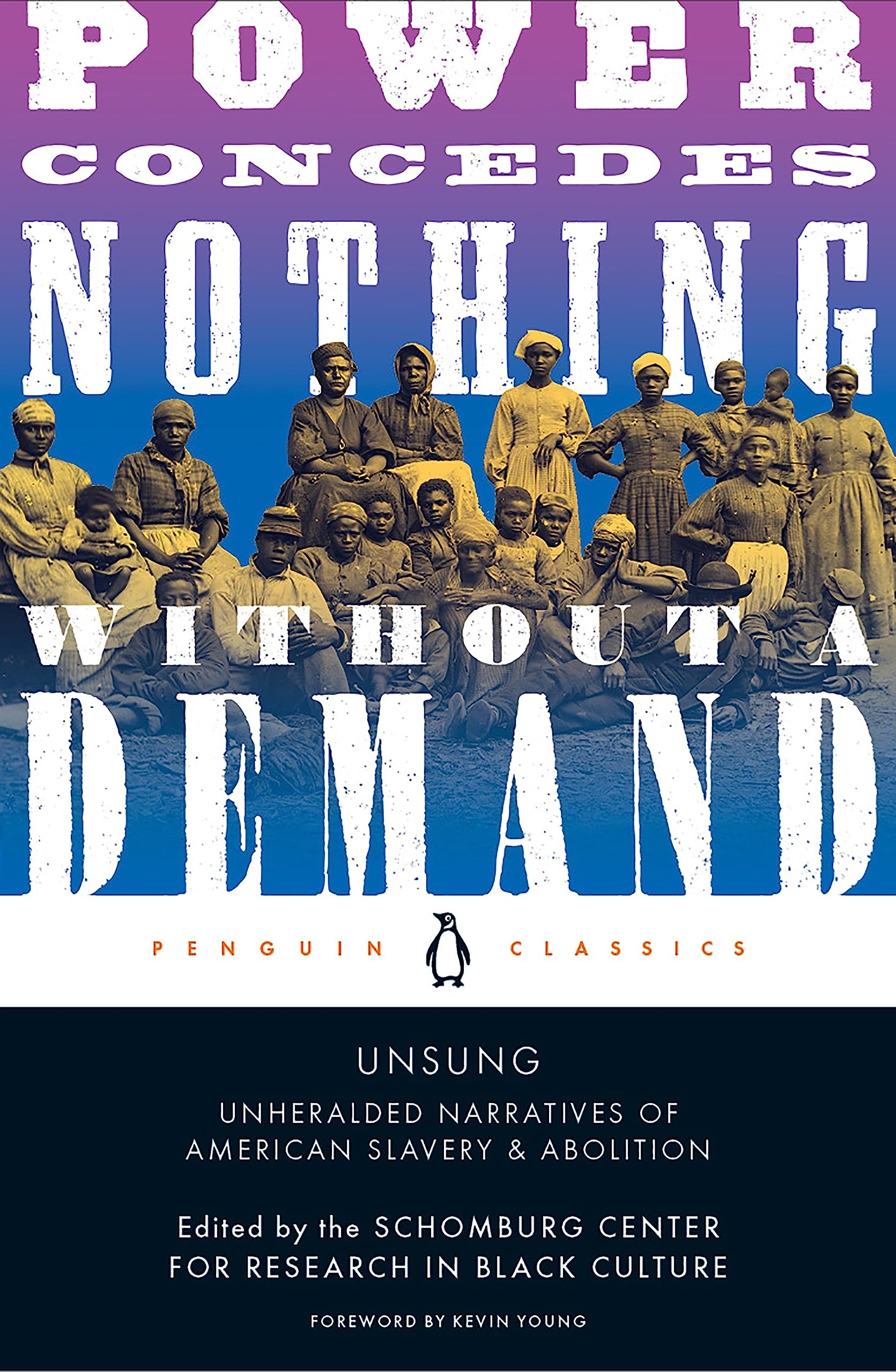
Unsung: Unheralded Narratives of American Slavery & Abolition (Schomberg Center for Research in Black Culture)
$8.98
by Schomburg Center



A new historical anthology from transatlantic slavery to Reconstruction, curated by the Schomburg Center. Unsung makes the case for focusing on the histories of Black people as agents and architects of their own lives and ultimate liberation, with a foreword by Kevin Young and introduction by Michelle D. Commander This is the first Penguin Classics anthology published in partnership with the Schomburg Center, a world-renowned cultural institution documenting black life in America and worldwide. A historic branch of NYPL located in Harlem, the Schomburg holds one of the world's premiere collections of slavery material within the Lapidus Center for Historical Analysis of Transatlantic Slavery. Unsung will place well-known documents by abolitionists alongside lesser-known life stories and overlooked or previously uncelebrated accounts of the everyday lives and activism that were central in the slavery era, but that are mostly excised from today's master accounts. Unsung will also highlight related titles from founder Arturo Schomburg's initial collection: rare histories and first-person narratives about slavery that assisted his generation in understanding the roots of their contemporary social struggles. Unsung will draw from the Schomburg's rich holdings in order to lead a dynamic discussion of slavery, rebellion, resistance, and anti-slavery protest in the United States. “As comprehensive a collection as now exists and one that should be required reading in history and literature courses.” — Kirkus , starred review “Remarkable anthology...As a whole, this collection showcases the vastness of Black thinking and writing, and nicely complements works by Martha S. Jones and Stephanie E. Jones-Rogers. Complete with a list of suggestions for further reading, this winning anthology is a must for all interested in Black history, but unsure where to start.” — Library Journal , starred review “This anthology highlights the overlooked role that enslaved people played in emancipation.” — The New York Times Book Review “The song sung in these pages is not solely an aria to agency or a tragic chorus about limits; it is both. It perseveres in the mission described in Arturo Schomburg’s 'The Negro Digs Up His Past' as excavating history to 'restore what slavery took away.' It shouts against the silencing alluded to in the Unsung title. Like the Harlem Renaissance and the Schomburg Center, Unsung is a work of both history and art.” — Washington Post Michelle Commander is Associate Director and Curator of the Lapidus Center for the Historical Analysis of Transatlantic Slavery at the Schomburg Center. She is the author of Afro-Atlantic Flight: Speculative Returns and the Black Fantastic and Avidly Reads Passages. Kevin Young is Director of the Schomburg Center and Poetry Editor for the New Yorker . His most recent book of poetry, Brown , and his nonfiction book Bunk , were both named New York Times Notable Books and longlisted for the National Book Award. Bunk was also a finalist for the National Book Critics Circle Award. Daniel Horsmanden In 1741, the British colony of New York was at the height of panic. Fires had raged throughout Manhattan for several weeks, leading lawmakers to question whether depraved members of the enslaved community, recently arrived immigrants, or other agitators were in their midst. In what was eventually deemed to be a certain "Negro plot" in which enslaved people sought vengeance for their condition, authorities rounded up, jailed, and tried two hundred enslaved people and ten white men who were the suspected architects of the terror. Nearly half of the enslaved people were found guilty and either hanged, exiled to plantations outside America, or burned at the stake. Others were summarily tossed into a dungeon beneath city hall, where they were intimidated into "confessing" to their crimes and asked to implicate others in the alleged scheme to burn down the city. Four white defendants were hanged and seven others were pardoned and banned from ever stepping foot in New York. Daniel Horsmanden (1691-1778), the judge who was appointed to investigate the fires and a possibly related robbery, compiled the testimonies, evidence, and a thorough list of those found guilty within this document. It remains unclear whether the "guilty" parties were truly culpable. What is certain is that stories of Black rebellion across the Atlantic World were persistent and increased white paranoia. Enslavers responded to real and imagined conspiracies in increasingly violent ways, as they realized that their prior efforts to tamp down resistance had been futile. Indeed, rebellious enslaved people would go on to fight for their dignity and often attempted to self-liberate, refusing to be held in the bonds of slavery forever. From The New-York Conspiracy; or, A History of the Negro Plot, with the Journal of the Proceedings Against the Conspirators at New York in the Years