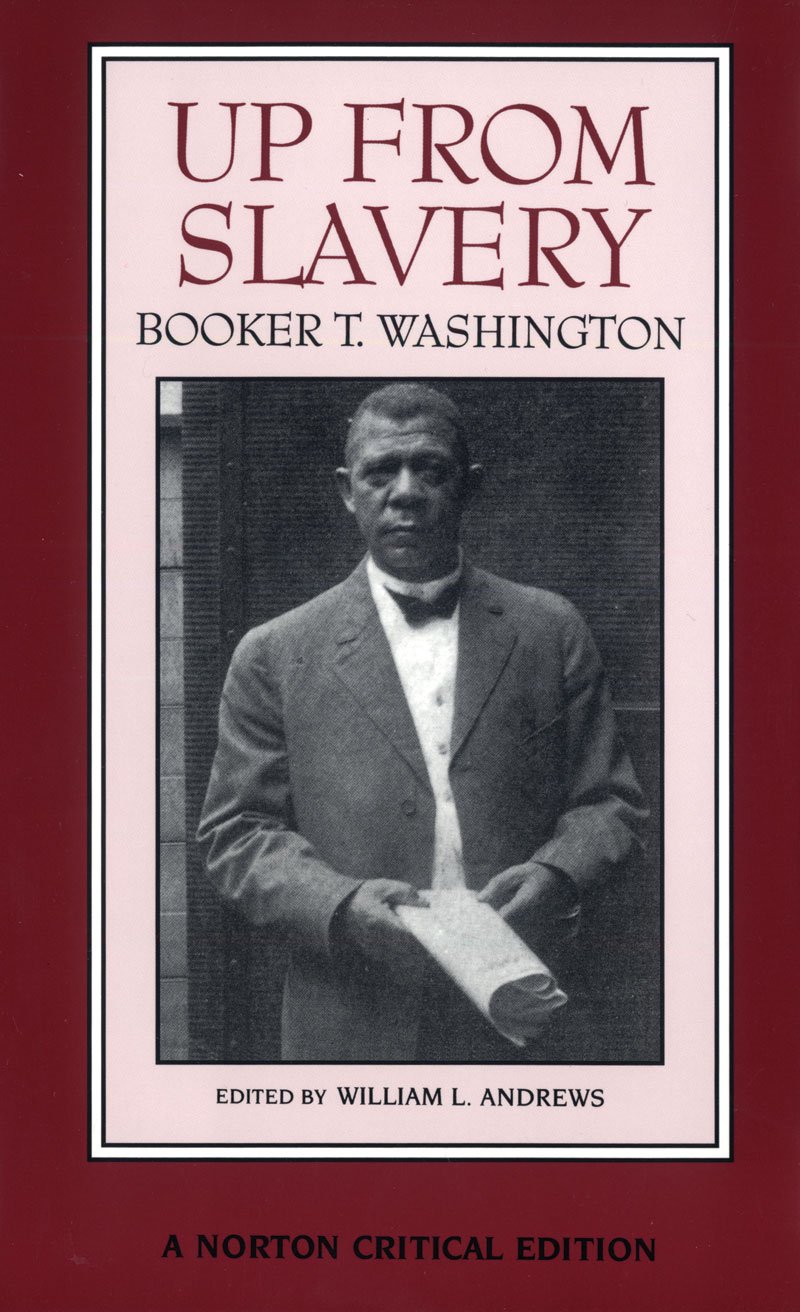
Up from Slavery: An Authoritative Text, Contexts, and Composition History, Criticism
$39.53
by Booker T. Washington



"Contexts and Composition History" includes a selection of letters between Washington and his editor, Lyman Abbott, that reveals the process by which Up From Slavery was planned and written. Reviews from The Nation, North American Review, and Colored American Magazine offer examples of contemporary reaction to the book. An excerpt from My Larger Education includes Washington's impressions of Frederick Douglass and of his African American critics (among them W. E. B. Du Bois) and reveals his reaction to the mounting criticism of his social, economic, and political programs during the last years of his life."Criticism" offers a collection of eight essays that present a variety of perspectives on Up From Slavery by W. E. B. Du Bois, Kelly Miller, August Meier, Louis R. Harlan, Sidonie Smith, James M. Cox, Houston A. Baker, Jr., and William L. Andrews. Together, these essays represent ninety years of the best critical and historical analysis of Up From Slavery and its author.A Chronology and Selected Bibliography are included. BOOKER TALIAFERRO WASHINGTON was born into slavery in 1856 on a plantation in Franklin County, Virginia. After Emancipation, his family moved to Malden, West Virginia, where he labored as a child in a salt furnace and coal mine. His hunger for formal education led him to enroll at the Hampton Normal and Agricultural Institute, founded in 1868 to train freedmen as teachers. At age twenty-five, he was appointed principal of the newly established Tuskegee Institute in Alabama. In more than three decades as the school’s director, he became the most influential African American educator and intellectual of his day. Unlike the younger W. E. B. Du Bois, who argued that academic excellence and political activism would win full civil rights for black people, Washington advocated a nonconfrontational strategy of racial uplift and self-help. His gradualist approach informed the Tuskegee curriculum, which focused on preparing African Americans for trades and professions. An advisor to presidents and the recipient of honorary degrees from Harvard and Dartmouth, Washington wrote several books, including Up from Slavery (1901), Working with the Hands (1904), and T he Story of the Negro (1909). William L. Andrews is E. Maynard Adams Professor of English at the University of North Carolina at Chapel Hill. He is general editor of Wisconsin Studies in Autobiography and The Literature of the American South: A Norton Anthology , and co-editor of The Oxford Companion to African American Literature and The Norton Anthology of African American Literature . Other works include the Norton Critical Edition of Up From Slavery; The Literary Career of Charles W. Chesnutt ; To Tell a Free Story: The First Century of Afro- American Autobiography, 1760–1865 ; Sisters of the Spirit; The Curse of Caste by Julia C. Collins; Life of William Grimes, the Runaway Slave ; and Slave Narratives after Slavery .