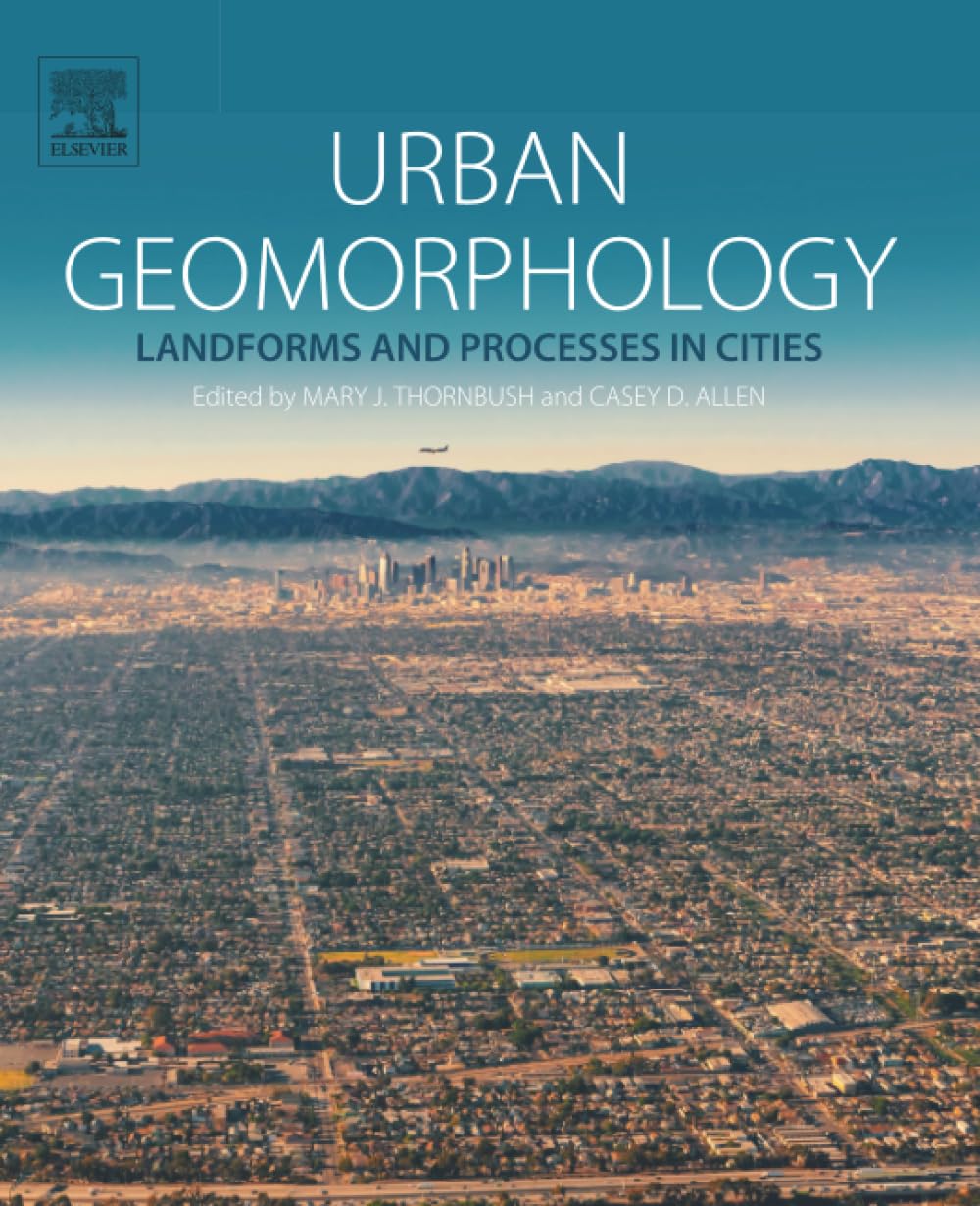



Urban Geomorphology: Landforms and Processes in Cities addresses the human impacts on landscapes through occupation (urbanization) and development as a contribution to anthropogenic geomorphology or "anthropogeomorphology." This includes a focus on land clearance, conservation issues, pollution, decay and erosion, urban climate, and anthropogenic climate change. These topics, as well as others, are considered to shed more light on the human transformation of natural landscapes and the environmental impacts and geomorphological hazards that environmental change can encompass. Its multidisciplinary approach is appropriate for audiences from a range of disciplines and professions, from geologists, conservationists, and land-use planners to architects and developers. Urban Geomorphology not only transcends disciplines, but also covers varied spatial-temporal frameworks and presents a diverse set of approaches and solutions to human impacts and geomorphological hazards within urban landscapes. Features a cross-disciplinary perspective, highlighting the importance of the geosciences to environmental science, engineering, and public policy - Focuses on the built environment as the location of concentrated human impacts and change - Provides an international scope, including case studies from urban areas around the world A multidisciplinary reference book that examines human impacts on urban landscapes Dr. Mary J. Thornbush is a trained geomorphologist and currently a member of Oriel College. Her research in urban geomorphology began in 2002, when she undertook urban work in environmental geomorphology as part of Geography and the Environment at the University of Oxford for her doctoral thesis investigating Traffic pollution and urban limestone weathering: central Oxford, England (2005). The study was revisited most recently from an urban sustainability perspective in Vehicular Air Pollution and Urban Sustainability: An Assessment from Central Oxford, UK (2015) and was included in a special issue entitled Geography, Urban Geomorphology and Sustainability in the journal Area (2015). Since 2007, Dr. Thornbush has participated in a cross-disciplinary study on rock weathering in urban churchyards that has also contributed to urban geomorphology in books such as Photographs Across Time: Studies in Urban Landscapes (2015), Heritage Stone Conservation in Urban Churchyards: Merging Necrogeography, Historical Archaeology, and Geomorphology (2018). Though well-regarded in the fields of geomorphology, rock/cultural stone decay, and humanistic geography, Dr. Casey D. Allen’s passion rests in helping people explore and discover landscapes as Traditional and Romantic Geographers. A first-generation college student and award-winning teacher-scholar with broad interests, he has been as a professional academic advisor, created and supervised several successful academic and support programs, was selected as a Fulbright Scholar, National Science Foundation Fellow, and Early Career Scholar in Geographic Education, and held various faculty and administrative positions at several universities – including earning tenure at the University of Colorado before serving as Lecturer of Earth/Environmental Science for the Faculty of Science and Technology at The University of the West Indies Cave Hill campus in Barbados. Along with his penchant for travel, Dr. Allen also retains interests and expertise in soils and biological soil crusts, landscape/geoarchaeology, rock art, botany, and regional studies. Follow him on Twitter (@caseallen) and see his website (caseallen.com) for more.