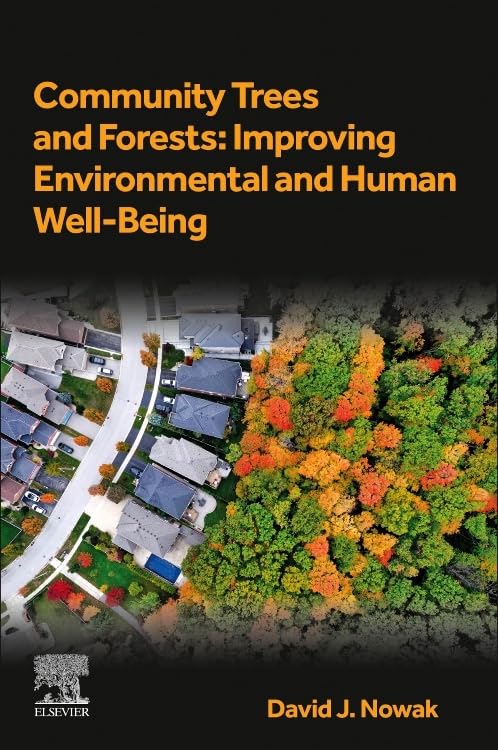



Improving Environmental and Human Health with Community Trees and Forests provides the latest and most comprehensive information on community forests globally, how these trees improve human health and well-being, the value of community trees, and what local land managers, from the lot to regional scale, could do to improve the benefits provided by community trees. It offers a complete understanding of the benefits and costs associated with trees in cities and how these benefits occur. This book facilitates the creation of sustainable community forests that provide optimal benefits to individuals and society. It takes a systems approach, focusing on the forest population rather than the individual tree, and providing information on the best tree species and designs to produce optimal effects. The book is divided into three major sections: The Basics, Urban Forest Benefits, and Improving the Urban Environment with Trees. It covers how cities affect our local environment, the monetary value of trees, and specific steps that land managers should follow to manage and improve their local tree and forest population. This comprehensive resource is valuable for city forest and park managers, policy makers, regional managers, and non-profit groups. Offers specific recommendation on species selections and designs to enhance tree benefits and urban forestry - Promotes an understanding of how trees produce multiple benefits that affect the health and well-being of community members - Provides concrete steps readers can take to enhance their understanding of their local forests and promote better forest management and funding in their communities Presents the most comprehensive information on community forests and how to harness their benefits to promote health and wellbeing Improving Environmental and Human Health with Community Trees and Forests provides the latest and most comprehensive information on community forests globally, how these trees improve human health and well-being, the value of community trees, and what local land managers, from the lot to regional scale, could do to improve the benefits provided by community trees. It offers a complete understanding of the benefits and costs associated with trees in cities and how these benefits occur. It will summarize, in simple terms, what we know about urban trees and forests, and how decision-makers can improve their local environment using trees. This book facilitates the creation of sustainable community forests that provide optimal benefits to individuals and society. It takes a systems approach, focusing on the forest population rather than the individual tree, and providing information on the best tree species and designs to produce optimal effects. It is divided into three major sections: 1) The Basics, 2) Urban Forest Benefits, and 3) Improving the Urban Environment with Trees. The first helps readers understand how cities affect our local environment, how urban forests vary across the world and within a city, the goals of urban forest management and forest sustainability, and more. The second section focuses on the benefits and costs of urban forests, including the monetary value of trees. The last section focuses on specific steps that land managers should follow to better understand, manage, and improve their local tree and forest population for current and future generations. Decisions made today can have profound impacts on forest and community health well into the future. Readers of a variety of backgrounds―from city forest and park managers, to policy makers, regional managers, non-profit groups, and more―will find this book a valuable resource for helping them make those decisions. Dr. David Nowak is a retired Senior Scientist of the U.S. Forest Service. He has authored 400 publications and led teams developing the i-Tree software suite that quantifies the benefits and values from vegetation globally. He has given over 600 presentations across the world. His awards include International Union of Forestry Research Organization’s Scientific Achievement Award, International Society of Arboriculture’s L.C. Chadwick Award for Arboricultural Research and R.W. Harris Author’s Citation, J. Sterling Morton Award – Arbor Day Foundation’s highest honor, U.S. EPA Office of Research and Development Honor Award, American Forests Urban Forest Medal, Distinguished Science Award: Northeastern Research Station, and Cecil Konijnendijk Award for Outstanding Research on Urban Forestry and Urban Greening. He was also a contributing member of Noble Peace Prize winning Intergovernmental Panel on Climate Change. He is ranked in the top 1% of all scientists (all fields) globally and ranked #2 among 24,000+ forest researchers worldwide.