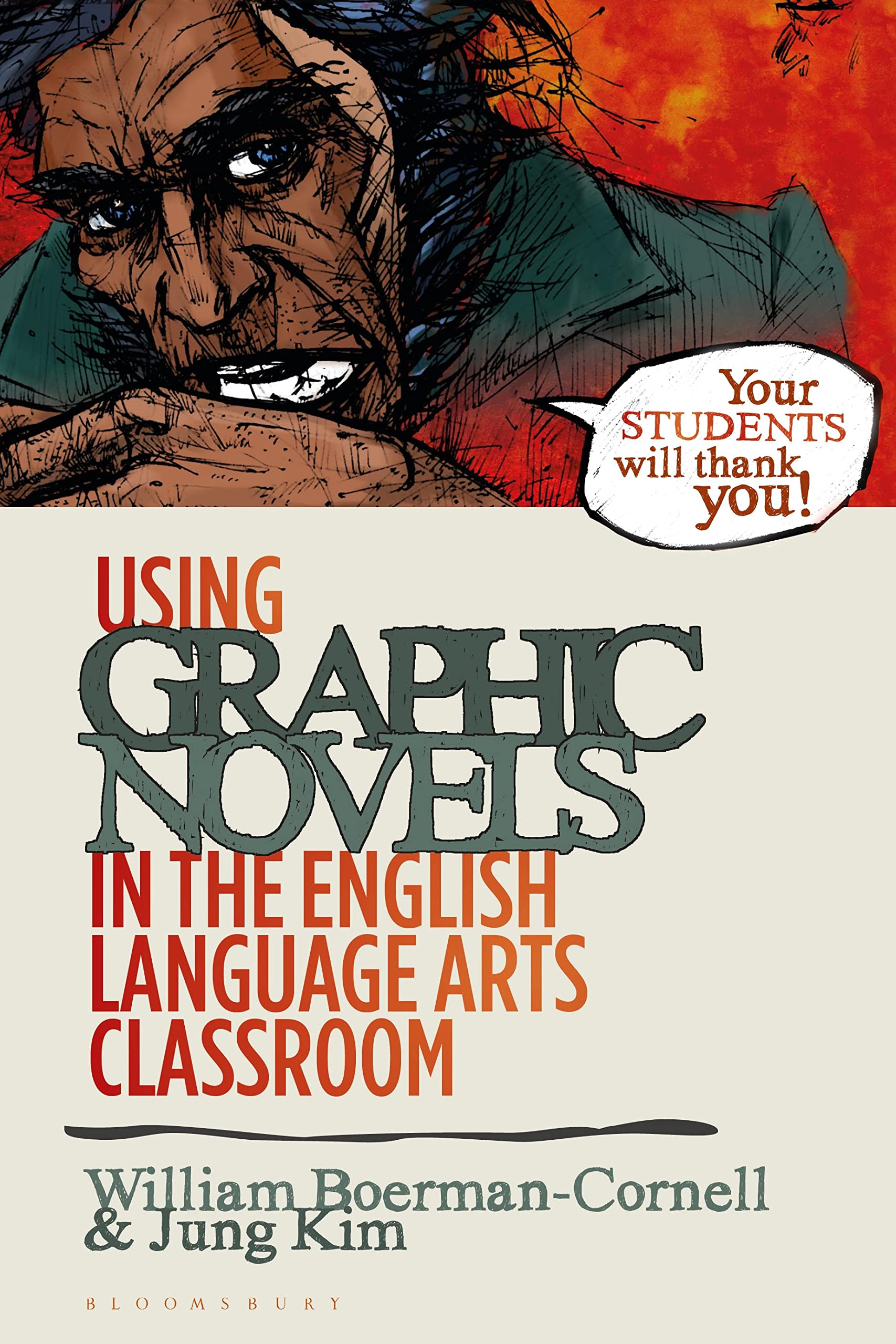
Using Graphic Novels in the English Language Arts Classroom
$34.95
by William Boerman-Cornell



Shortlisted for the UK Literacy Association's Academic Book Award 2021 There is an increasing trend in teachers using graphic novels to get their students excited about reading and writing, using both original stories and adaptations of classic works by authors such as Homer, Shakespeare, and the Brontes. However, there is surprisingly little research available about which pedagogies and classroom practices are proven to be effective. This book draws on cutting-edge research, surveys and classroom observations to provide a set of effective methods for teaching with graphic novels in the secondary English language arts classroom. These methods can be applied to a broad base of uses ranging from understanding literary criticism, critical reading, multimodal composition, to learning literary devices like foreshadowing and irony. The book begins by looking at what English language arts teachers hope to achieve in the classroom. It then considers the affordances and constraints of using graphic novels to achieve these specific goals, using some of the most successful graphic novels as examples, including Maus ; Persepolis; The Nameless City; and American Born Chinese and series such as Manga Shakespeare . Finally, it helps the teacher navigate through the planning process to figure out how to best use graphic novels in their own classroom. Drawing on their extensive teaching experience, the authors offer examples from real classrooms, suggested lesson plans, and a list of teachable graphic novels organized by purpose of teaching. To explain the boundless potential of graphic novels in language arts classrooms, one must first explain and justify the format for unfamiliar readers. Boerman-Cornell and Kim pull off both feats in this fount of practical and timely educational guidelines that even skeptics will find applicable. The authors discuss using graphic novels as lenses to analyze narrative structure or adaptation, as well as pairing titles with prose works. Graphic novels also offer an opportunity to study multimodal composition. The academic foundations buttressing the authors' suggestions range from sections on literary criticism and Louise Rosenblatt's transactional theory to Scott McCloud's categories of interaction between words and pictures. Visual cues in the margins, full-color excerpts, and generous provision of example texts lead to a fusion of the theoretical and the practical. The authors offer sample unit breakdowns for different subject matter, including their original framework, called GRAPHIC, for approaching graphic novels from a variety of angles. The works cited at the end of each chapter, as well as the annotated bibliography of 120-plus additional recommendations, form a comprehensive reading list for understanding and teaching the format as well as a golden shopping list for libraries. There is not a scrap of information that is not codified into curricular advice. VERDICT This book is a gift to educators, radiating with the authors' infectious enthusiasm and wealth of experience.-Thomas Maluck, Richland Lib., SCα(c) Copyright 2011. Library Journals LLC, a wholly owned subsidiary of Media Source, Inc. No redistribution permitted. “[A] fount of practical and timely educational guidelines that even skeptics will find applicable … There is not a scrap of information that is not codified into curricular advice. VERDICT: This book is a gift to educators, radiating with the authors' infectious enthusiasm and wealth of experience.” ― School Library Journal “Bill Boerman-Cornell and Jung Kim take the reader through the selection of texts, the planning of teaching, and the building of a community of others passionate about teaching with graphic novels. The extensive appendix of curated works alone is worth the price of the book.” ― Susan Cridland-Hughes, Associate Professor, Clemson University, USA “An excellent resource for middle grades, lower-secondary and upper-secondary teachers, as well as teacher educators and student teachers of English. It gives clear, careful, and timely advice on how, and perhaps more importantly why, graphic novels should be used in English language classrooms to support language learning and interdisciplinary aims ... Anyone who is interested in encouraging English learners to engage with multimodal texts or is even looking for a contemporary graphic novel they themselves might enjoy, would benefit from reading this book. The cover says, 'your students will thank you', and that is very likely true.” ― Children's Literature in English Language Education William Boerman-Cornell is Professor of Education at Trinity Christian College, USA. Jung Kim is Associate Professor of Literacy at Lewis University, USA.