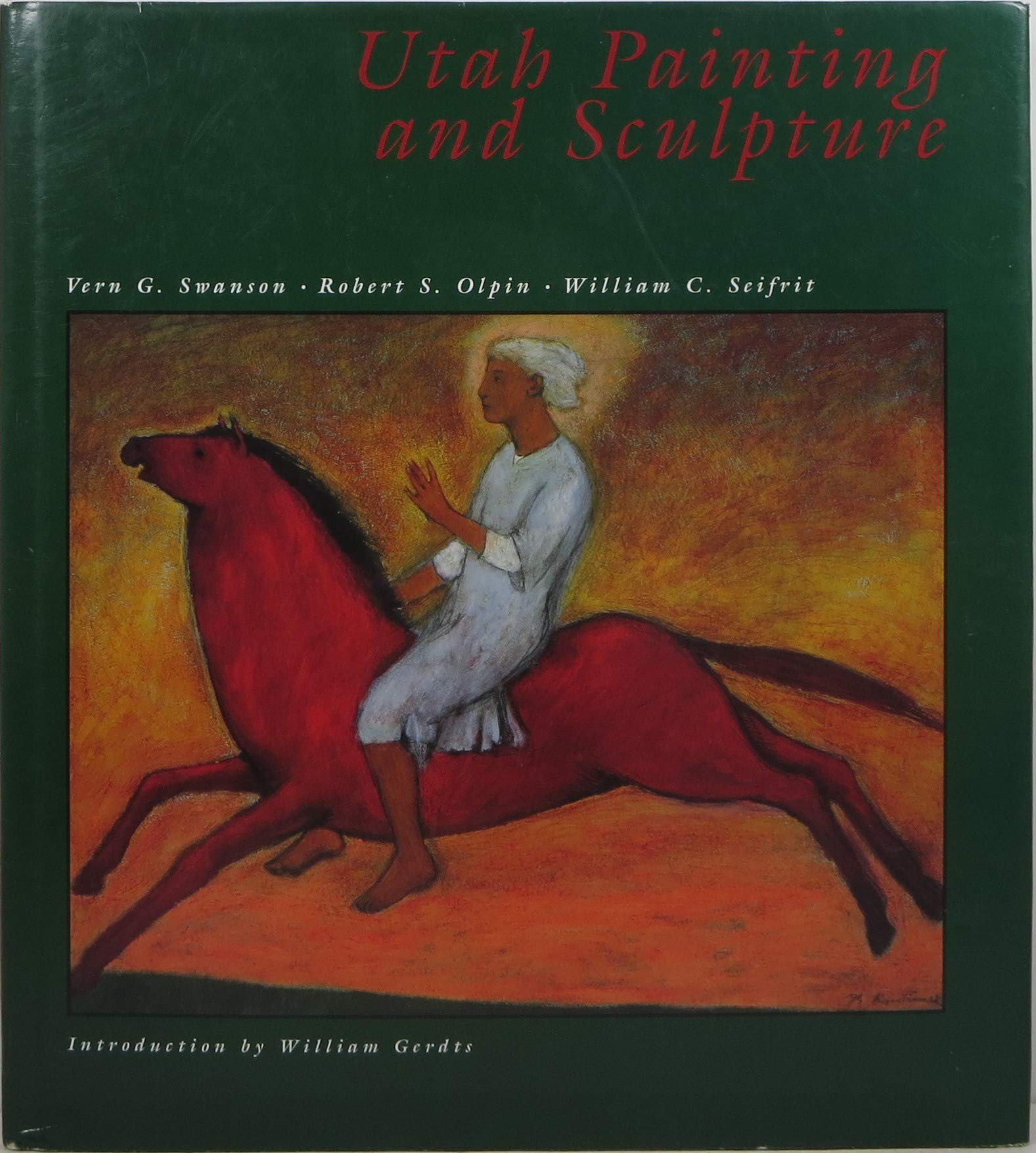



10 3/4 X 12 In, 320 Pp, 156 Color Plates 63 Black & White Photographs With Magnificence and Vivid Imagery, This Stunning Revision of Utah Art Traces Utah's Artist and Their Creations From The First European Settlements In 1847 Through The Current Generation. In The 1800's Talented Young Men and Women Were Sent East and To Paris By The Lds Chruch To Study and Bring The Ideas of The Mainstream Art World Back To Utah. The Results Were Fascinating. Today Utah's Visual Artists Magnify This Tradition. This revised edition further reveals the exceptional quality and diversity of Utah's visual arts tradition. Over 150 color plates bring Utah's masterpieces to life, with more than 100 of these color plates new to this revised volume. Additional black-and-white photographs take the reader into the artists' world. The text is authoritative but full of personal detail and cultural insight. It traces the distinguished progress of Utah painting and sculpture from pioneer origin to full contemporary flowering, and it places Utah--with California and New Mexico--among three great aret centers of the western United States.The first permanent European settlers in the territory of Deseret established an early emphasis on art, theater, and literature, and recognized a need for education and travel to broaden the frontier perspective.Each new generation responded to the larger international art scene. Mahonri Young argued art theory with Gertrude Stein. John Willard Clawson received criticism from Claude Monet. Fauvism captured Waldo Midgeley and Philip Barkdull. George Dibble experimented with cubism in the thirties. Don Olsen, a high school teacher, spent his summers hobnobbing with the abstract expressionists in New York. One enduring motif is the grandeur of Utah's landscape; it was this that brought Thomas Moran, Albert Bierstadt, Maynard Dixon, Birger Sandzen, and other to Utah to paint its landscapes and influence its artists. John Hafe, J. T. Harwood, and LeConte Stewart used landscape as a primary source of inspiration. And many contemporary painters--Ken Baxter, Harrison Groutage, Frank Huff, Earl Jones, Doug Snow, and others--testify to its enduring power. This revised edition further reveals the exceptional quality and diversity of Utah's visual arts tradition. Over 150 color plates bring Utah's masterpieces to life, with more than 100 of these color plates new to this revised volume. Additional black-and-white photographs take the reader into the artists' world. The text is authoritative but full of personal detail and cultural insight. It traces the distinguished progress of Utah painting and sculpture from pioneer origin to full contemporary flowering, and it places Utah--with California and New Mexico--among three great aret centers of the western United States. The first permanent European settlers in the territory of Deseret established an early emphasis on art, theater, and literature, and recognized a need for education and travel to broaden the frontier perspective. Each new generation responded to the larger international art scene. Mahonri Young argued art theory with Gertrude Stein. John Willard Clawson received criticism from Claude Monet. Fauvism captured Waldo Midgeley and Philip Barkdull. George Dibble experimented with cubism in the thirties. Don Olsen, a high school teacher, spent his summers hobnobbing with the abstract expressionists in New York. One enduring motif is the grandeur of Utah's landscape; it was this that brought Thomas Moran, Albert Bierstadt, Maynard Dixon, Birger Sandzen, and other to Utah to paint its landscapes and influence its artists. John Hafe, J. T. Harwood, and LeConte Stewart used landscape as a primary source of inspiration. And many contemporary painters--Ken Baxter, Harrison Groutage, Frank Huff, Earl Jones, Doug Snow, and others--testify to its enduring power. William C. Seifrit, a well known scholar, has written extensively about Utah's pioneer period. Robert S. olpin, Ph.D. a professor of Art History, has been a consultant to organizations like the National Gallery and Vose Galleries. Vern Swanson is director of the Springfield Museum of Art in Utah. Forward Introduction I would like to preface this introduction with a disclaimer--I am not a Utahn and certainly not a specialist on the subject of Utah art such as Drs. Olpin, Seifrit, and Swanson, who are the authors of this incisive, remarkable text. I have been honored with the opportunity to contribute this short essay because of my researches and publications dealing with regional painting throughout this nation, in the hope that I might offer some observations concerning Utah painting and sculpture as it developed within the context of American art as a whole. Used Book in Good Condition