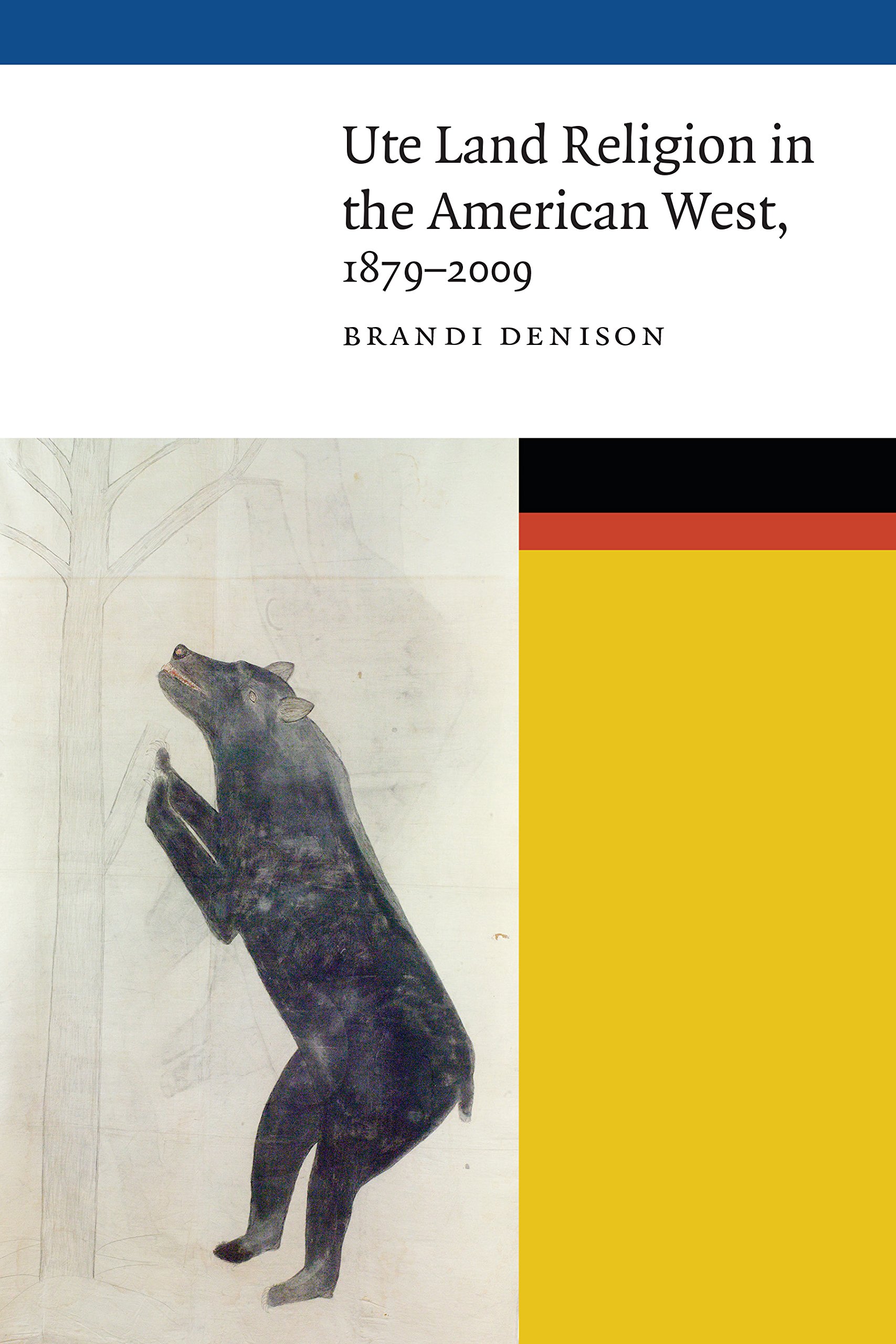
Ute Land Religion in the American West, 1879–2009 (New Visions in Native American and Indigenous Studies)
$65.00
by Brandi Denison



Ute Land Religion in the American West, 1879–2009 is a narrative of American religion and how it intersected with land in the American West. Prior to 1881, Utes lived on the largest reservation in North America—twelve million acres of western Colorado. Brandi Denison takes a broad look at the Ute land dispossession and resistance to disenfranchisement by tracing the shifting cultural meaning of dirt , a physical thing, into land , an abstract idea. This shift was made possible through the development and deployment of an idealized American religion based on Enlightenment ideals of individualism, Victorian sensibilities about the female body, and an emerging respect for diversity and commitment to religious pluralism that was wholly dependent on a separation of economics from religion. As the narrative unfolds, Denison shows how Utes and their Anglo-American allies worked together to systematize a religion out of existing ceremonial practices, anthropological observations, and Euro-American ideals of nature. A variety of societies then used religious beliefs and practices to give meaning to the land, which in turn shaped inhabitants’ perception of an exclusive American religion. Ultimately, this movement from the tangible to the abstract demonstrates the development of a normative American religion, one that excludes minorities even as they are the source of the idealized expression. "A welcome edition to the library of anyone interested in the history of the Ute."—Curtis Martin, Southwestern Lore “Beautifully written, clear, and compelling. [This book] is grounded on a solid understanding of history, while also providing insightful interpretation and theoretical nuance.”—Suzanne Crawford O’Brien, professor of religion and culture at Pacific Lutheran University and author of Coming Full Circle: Spirituality and Wellness among Native Communities in the Pacific Northwest Published On: 2016-09-10 “This terrific book shows how white settlers in Colorado used the construct of ‘Ute Land Religion’ to justify their appropriation of Native land, how Ute people both resisted and participated in that invention, and how the category of religion has functioned in the making and remaking of the American West.”—Tisa Wenger, author of We Have a Religion: The 1920s Pueblo Indian Dance Controversy and American Religious Freedom Published On: 2016-09-10 Brandi Denison is an assistant professor of religious studies in the Department of Philosophy and Religious Studies at the University of North Florida. Ute Land Religion in the American West, 1879–2009 By Brandi Denison University of Nebraska Press and the American Philosophical Society Copyright © 2017 Board of Regents of the University of Nebraska All rights reserved. ISBN: 978-0-8032-7674-1 Contents List of Illustrations, List of Maps, Acknowledgments, Introduction: Religion, Memory, and the American West, 1. Plowing for Providence: Nathan Meeker's Folly, 2. Of Outrageous Treatment: Sexual Purity, Empire, and Land, 3. She-towitch and Chipeta: Remembering the "Good" Indian, 4. Abstracting Ute Land Religion: Fiction and Anthropology on the Reservation, 5. Remembering Removal: Enacting Religion and Memorializing the Land, 6. The Limits of Reconciliation: Ute Land Religion, Hunting Rights, and the Smoking River Powwow, Conclusion: The Burden of Dirt and the Politics of Memory, Notes, Bibliography, Index, CHAPTER 1 Plowing for Providence Nathan Meeker's Folly On a warm fall day in 1881 the United States Cavalry marched fourteen hundred Ute men, women, and children out of their Colorado home. The cavalry had given them two hours to pack what they could carry. Everything else was left behind. Among the possessions the Utes were forced to leave was their herd of fifteen hundred horses. The horrors of removal belied a peaceful history with the United States government, as Ute leaders had negotiated and signed treaties that designated twelve million acres of western Colorado for Utes. The treaties were broken less than a decade later. To many white Coloradoans, "removal" — or, to use an anachronistic but a more accurate phrase, ethnic cleansing — was the just, moral response to increased contact between the settlers and Utes. Lawmakers and United States citizens concluded that the Utes must go, as one Denver newspaper proclaimed. Most white Coloradoans agreed that this violation of treaties was moral and just, not a symptom of greed. Although potential settlers had heralded western Colorado as an untapped agricultural, pastoral, and mining promised land, initial survey reports dismissed the region as an arid desert, plagued with alkaline soil and unsuitable for farming. While land lust infected many would-be pioneers, the desire for Ute land was only one factor in the ethnic cleansing. Examined through another set of lenses, white greed for western Colorado was rooted in the proper use of land and, in particular, the