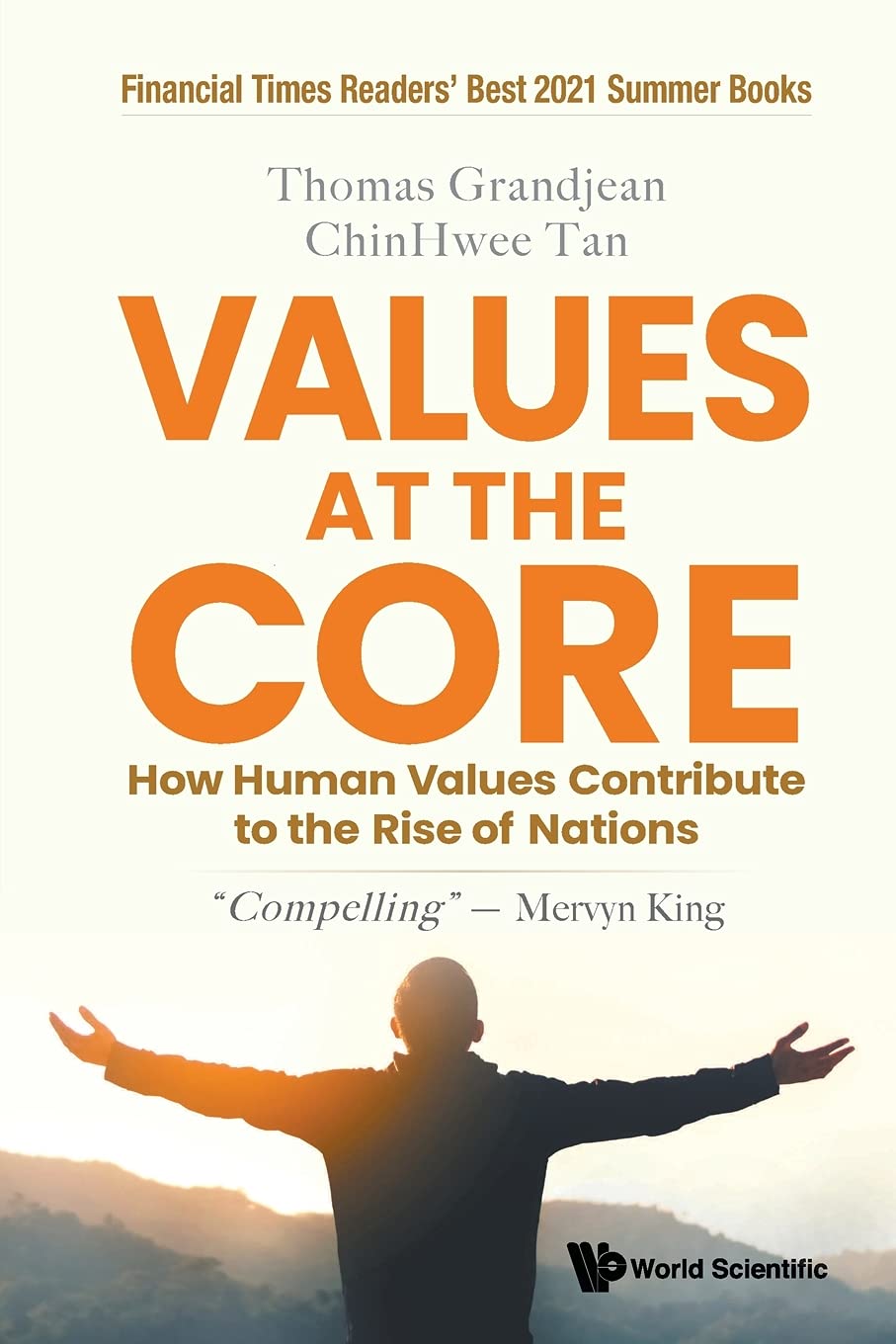
Values At The Core: How Human Values Contribute To The Rise Of Nations
$28.00
by Thomas Grandjean



Throughout the history of mankind, the rise of societies, whether civilizations, nations, or communities, has been a story of human achievement. From the rise of the Akkadian empire in ancient Mesopotamia to the re-emergence of modern China, people constitute the basic denominator upon which societies build their success. The way people around the world think and behave is guided by a complex system of values. These values constitute key factors in the way economies are structured and their potential for further growth. To a large extent, they explain why Japan has gone through multiple lost decades; why Nordic countries accept the highest tax rates in the world, making their societies much more equal; why China has such a large trade surplus with the United States; or why some nations become stuck in a middle-income trap. It is these values, coupled with the right policies, that ultimately determine the destiny of nations. In this book, we explore how the combination of human values and policies affects national economic outcomes. We focus on certain key values conducive to growth: are people of a given nation, on average, hardworking, thrifty? Do they trust each other? Are they risk-takers? The harder people work, the higher the growth potential. Different savings patterns determine, to a large extent, whether a country will grow through investments and exports or consumption, and have generated large global imbalances over time. Trust goes a long way in explaining wealth and income inequalities and the role that governments can play in minimizing those inequalities. Economies with highly risk-averse citizens will stall. We also identify policies which have the greatest impact on economies. Political stability, much more so than any form of governance, is a precondition for growth. Free markets imply a process of creative destruction, free and fair competition, and a level playing field among companies. An educated workforce is a vital enabler of higher productivity and innovation. Corruption can seriously derail growth once it becomes endemic. Sound fiscal and monetary policies stabilize an economy as it goes through cycles and can greatly contribute to a more equal society and a more robust financial sector. "A highly readable book that provides important messages both for business and government leaders." -- Esko Aho, Former Prime Minister of Finland "Using vivid examples from around the world, Grandjean and Tan show that values play a crucial role in shaping the economic success of a country ― a compelling antidote to the usual litany of purely economic factors." -- Lord Mervyn King, Former Governor of the Bank of England "A practical analysis of the vital indicators which measure the health and vitality of a society." -- George Yeo, Former Foreign Minister of Singapore "A brave attempt to combine cultural values with economics. Definitely worth a read." -- Mark Machin, President, Canada Pension Plan Investment Board "Elucidates how values come to shape economies and humanity." -- Subra Suresh, President of Nanyang Technological University, Singapore "A compelling case that human values are a critical determinant of economic prosperity. An invaluable analysis!" -- Jean-Baptiste Michau, Professor of Economics, Ecole, Polytechnique, Paris, France "A radically different perspective." -- Amelia Xiao Fu, Chief Economist, Bank of China International "Warrants wide readership." -- Sir Paul Tucker, Harvard Kennedy School and Author of Unelected Power Throughout the history of mankind, the rise of societies, whether civilizations, nations, or communities, has been a story of human achievement. From the rise of the Akkadian empire in ancient Mesopotamia to the re-emergence of modern China, people constitute the basic denominator upon which societies build their success. The way people around the world think and behave is guided by a complex system of values. These values constitute key factors in the way economies are structured and their potential for further growth. To a large extent, they explain why Japan has gone through multiple lost decades; why Nordic countries accept the highest tax rates in the world, making their societies much more equal; why China has such a large trade surplus with the United States; or why some nations become stuck in a middle-income trap. It is these values, coupled with the right policies, that ultimately determine the economic destiny of nations. In this book, we explore how the combination of human values and policies affects national economic outcomes. We focus on certain key values conducive to growth: are people of a given nation, on average, hardworking, thrifty? Do they trust each other? Are they risk-takers? The harder people work, the higher the growth potential. Different savings patterns determine, to a large extent, whether a country will grow through investments and exports or consumption, and have generated large global imbalances over time. Trus