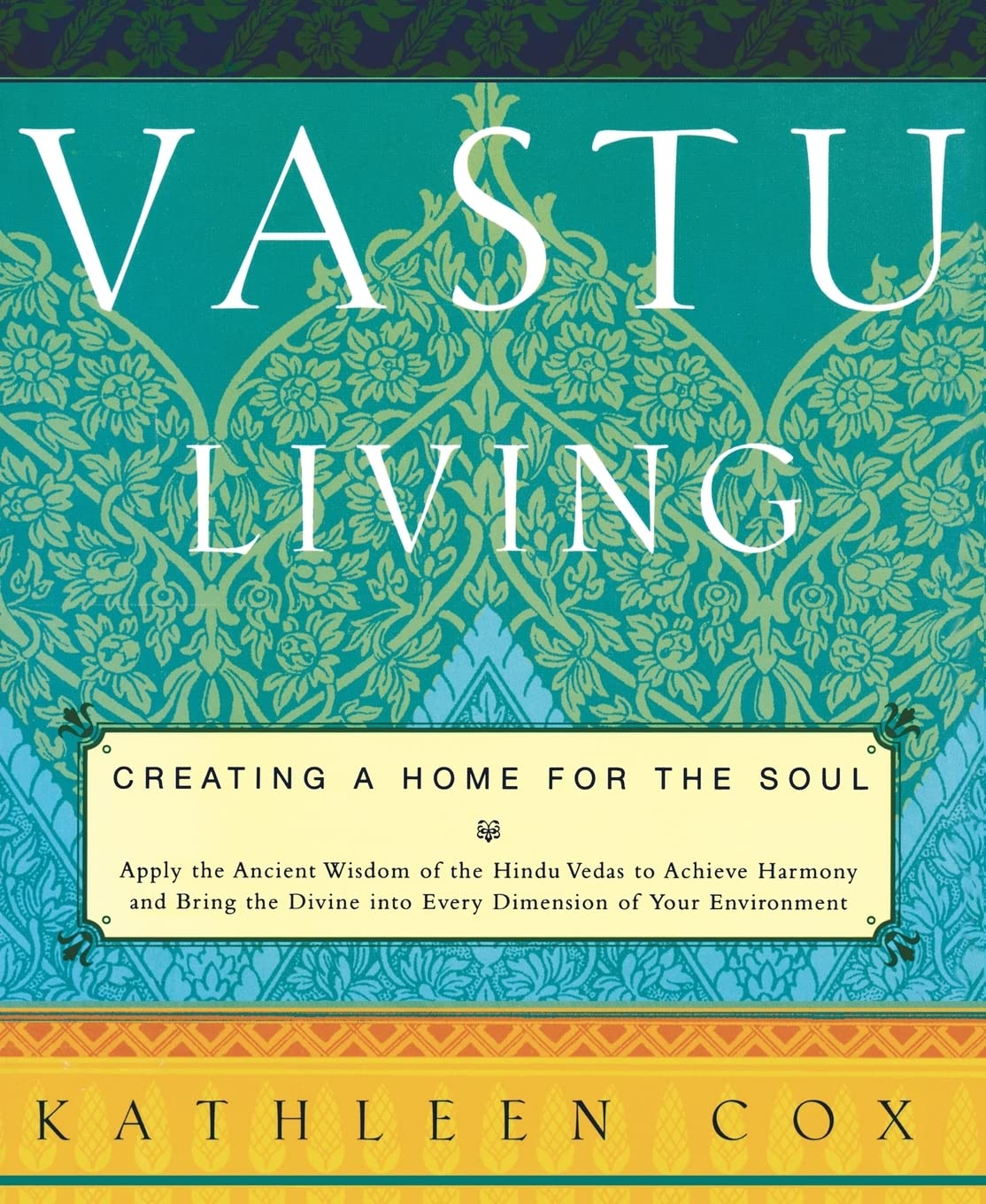



Feng shui, the ancient Chinese art and science of finding harmony with nature, has become widely adopted in the West. Like Buddhism, which migrated from India eastward, feng shui is recognized by Eastern scholars as having originated not in China but in India, where it is referred to as Vastu Shastra, or the science of architecture. In Vastu Living, Kathleen Cox introduces readers to the art, science, and practice of vastu. Cox explains vastu's origins in the Vedas, its relationship to the Hindu gods, its principles and guidelines, and its traditional uses. Vastu Living shows readers how to practice vastu at home and in the workplace--from understanding its teachings on room layout and furniture placement to bringing the divine into every dimension of one's environment. Much like the Chinese feng shui , Indian vastu is an ancient practice of spiritual philosophy and science. By analyzing the orientation of your home and placing your furnishings in an arrangement that best fits your constitution, you can introduce more harmony and tranquility to your life. Vastu Living is designed to help you discover which primary element you most identify with (fire, air, earth, or water) and to create a living or working space that will both inspire and calm you. Author Kathleen Cox, a longtime proponent of vastu and an expert on Indian culture, says "an orderly and harmonious space leads to an orderly and harmonious inner life, which is so necessary for the good health of the body, mind, and soul--and by extension, of everything that exists around us." In the first half of the book, Cox explains the key concepts of vastu , including descriptions of Indian deities, the elements from which the universe was created, and the positive and negative forces that are in everyone's lives. "Unless our home is conducive to inward thinking," Cox says, "we can never really find an everlasting inner peace." The second half of the book tackles the practicalities of applying vastu to your home and office. Diagrams are included to help you map your space and to consider how to rearrange your furniture (or even swap entire rooms) for an optimal flow of energy and a content soul. Cox quietly and convincingly champions this blend of spirituality and efficiency. Well written and thoughtful, Vastu Living is an excellent introduction to millenniums-old Indian wisdom. --Dana Van Nest Vastu, based on the Hindu Veda texts, is the ancient Hindu system for "organizing the spaces in which we live and work for optimum harmony"Da system from which Feng Shui is often said to derive. The book is divided into two parts, with the first part explaining the principles that make up Vastu and the second describing how to incorporate its principles to create a harmonious environment in the home or office. Purchase if there is an interest in a holistic, spiritual approach to interior design. Copyright 2000 Reed Business Information, Inc. ...an easy, hands-on method of bringing natural beauty, balance, and serenity to your home... , apartment, office or other structure... -- Swami Sada Shiva Tirtha, author of The Ayurveda Encyclopedia Kathleen Cox, has written extensively about India's culture since 1986. A resident of New Delhi for most of the 1990s, she has contributed to many publications, including the Wall Street Journal, the Los Angeles Times, Travel and Leisure (Asian Edition), Harper's Bazaar, and the Times of India. She was the principal contributor for many editions of Fodor's India and she wrote the original edition of Fodor's The Himalayan Countries. She has researched Vedic traditions for over a decade. She lives in New York City, where she consults and lectures on vastu living. Used Book in Good Condition