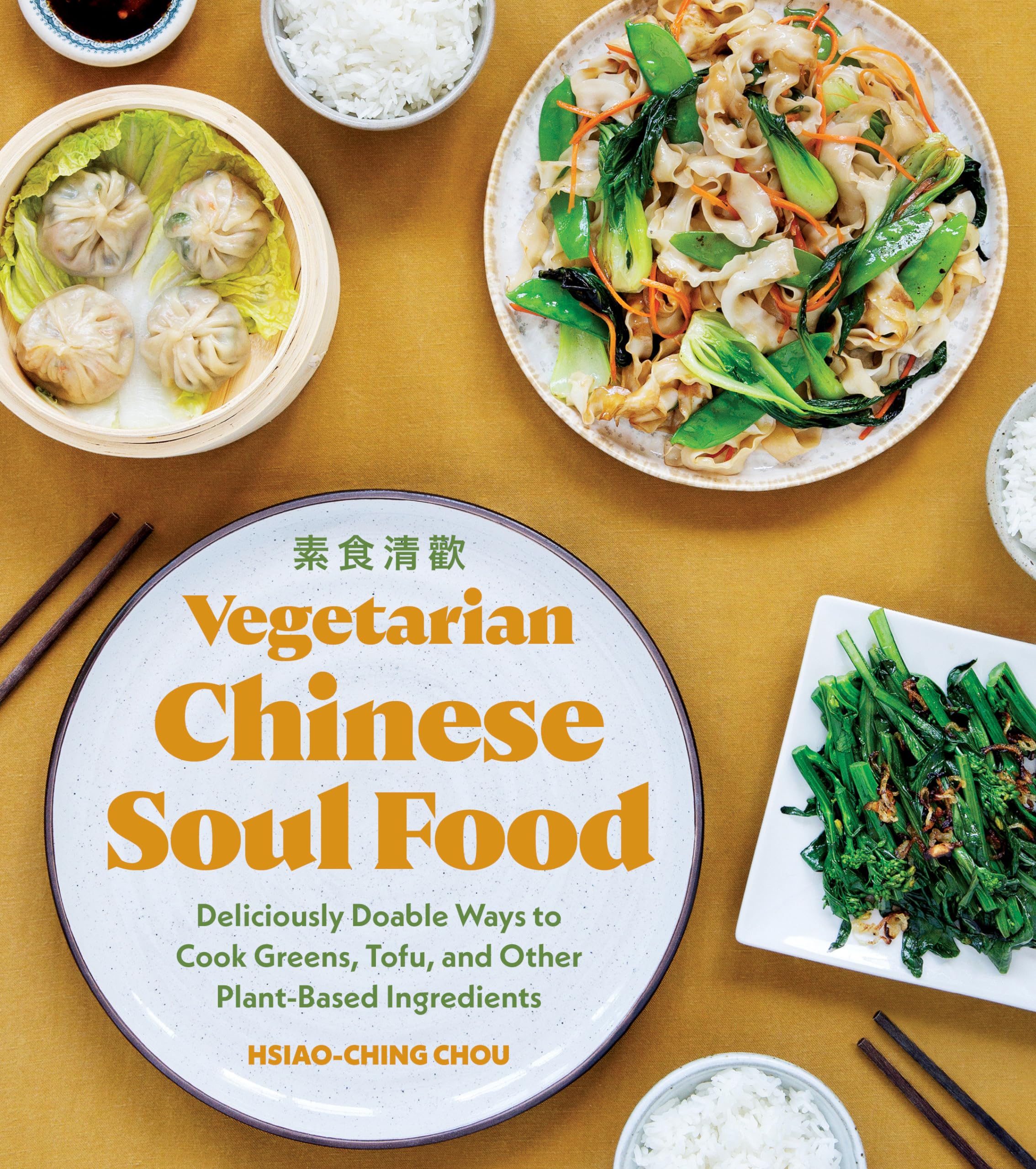
Vegetarian Chinese Soul Food: Deliciously Doable Ways to Cook Greens, Tofu, and Other Plant-Based Ingredients
$24.95
by Hsiao-Ching Chou



Learn to make vegetarian Chinese food with 75 soulful, plant-based recipes even the most basic cooks can make at home! Chinese Soul Food drew cooks into the kitchen with the assurance they could make Chinese cuisine at home. Author Hsiao-Ching Chou’s friendly and accessible recipes work for everyone—including average home cooks. In this new collection, you’ll find 75 vegetarian recipes divided into 9 chapters: • Dumplings —Chou’s specialty! • Dim Sum and Small Bites • Soups and Braises • Steamed Dishes • Rice and Noodles such as • Tofu • Eggs • Salads and Pickles You’ll also find helpful information on essential equipment, core Chinese pantry ingredients (with acceptable substitutions), how to season and maintain a wok, and other practical tips. Whether you’re a vegetarian or simply reducing the amount of meat in your daily diet, these foolproof Chinese comfort food recipes can be prepared any night of the week. As the author likes to say . . . any kitchen can be a Chinese kitchen! Named One of Delish's 10 Best Cookbooks of 2021 "[Hsiao-Ching Chou's] sole regret about her first cookbook, [ Chinese Soul Food ], is that she didn’t include more vegetarian recipes. Her second one— Vegetarian Chinese Soul Food —comes right when we could use more vegetables after overdoing the COVID-19 stay-home holidays. [Chou] concentrates on accessible assistance: mostly straightforward recipes, wok-buying advice, a guide to pantry ingredients, a vegetable tutorial and more." —Seattle Times "Hsiao-Ching Chou’s new cookbook is an exercise in exceptional approachability." —Seattle Met magazine "In this compact book Hsiao-Ching Chou, a Seattle-area cooking instructor who’s particularly popular for her dumpling classes, demonstrates the astonishing diversity and appeal of Chinese vegetarian cooking." —Kitchen Arts & Letters "Above all, Vegetarian Chinese Soul Food is another example of the author’s passion for sharing China’s storied cuisine. She’s committed to encouraging people to try their hands at creating exciting home-cooked meals that will leave them satisfied and perhaps a little surprised at their own abilities. Once again Chou proves that any kitchen can be a Chinese kitchen—even a vegetarian one." —International Examiner "The beauty of [this] cookbook, and Chinese cooking in general, is that it’s forgiving." —Pittsburgh Post-Gazette Hsiao-Ching Chou is an award-winning food journalist, a cooking instructor, and communications consultant. She is a member of the James Beard Foundation cookbook committee and Les Dames d'Escoffier. Chou has been a guest on local and national shows, including Public Radio's The Splendid Table, the PBS documentary The Meaning of Food, and the Travel Channel's Anthony Bourdain: No Reservations. In her spare time, she teaches popular everyday Chinese home cooking classes at the Hot Stove Society. She lives with her family in Seattle. Vegetables are essential in Chinese cooking. Whether a mound of stir-fried greens, a burbling clay pot of tofu and cabbage, or a side of spicy pickles, vegetable dishes are put together with as much thought as any meat or seafood dish. Balance of seasonality, flavors, textures, and sometimes curative properties guides the preparation. Even those who eat meat are biased toward having an abundance of vegetables. Many dishes include meat only as an accompaniment. Being vegetarian in the Chinese culture is not perceived as a character flaw. Not only is vegetarianism accepted, but the industry for producing plant-based products and meat substitutes has a long history. That is due in large part to Chinese Buddhist monks and nuns who adhere to a vegan diet that also excludes pungent ingredients, such as alcohol, garlic, onions, leeks, and chives. Not all followers of Buddhism subscribe to a vegetarian diet, however. But temple vegetarian cuisine is well known and even revered. Culturally, meat has always been considered a luxury because it’s expensive. During Lunar New Year, serving a broad selection of meats and seafood represents wealth, abundance, and good fortune. Historically, the advent of meat and seafood substitutes made from plant-based ingredients has meant that those who couldn’t afford meat or those who have chosen to be vegetarian for health or religious reasons could also share in the symbolism, especially when it comes to “lucky foods” served during the Lunar New Year reunion feast. Using bean curd and wheat gluten to create meat substitutes goes back to imperial China and has been around for over a thousand years. I have noticed recently at the Chinese market where I shop here in the Seattle area that there are more products marketed toward vegetarians. For example, the same hoisin sauce that I’ve always used now has a bottle label listing it as vegetarian. It’s the same naturally vegetarian sauce, just a different label. My mother and I scrutinized the label and finally surmised that the “veg