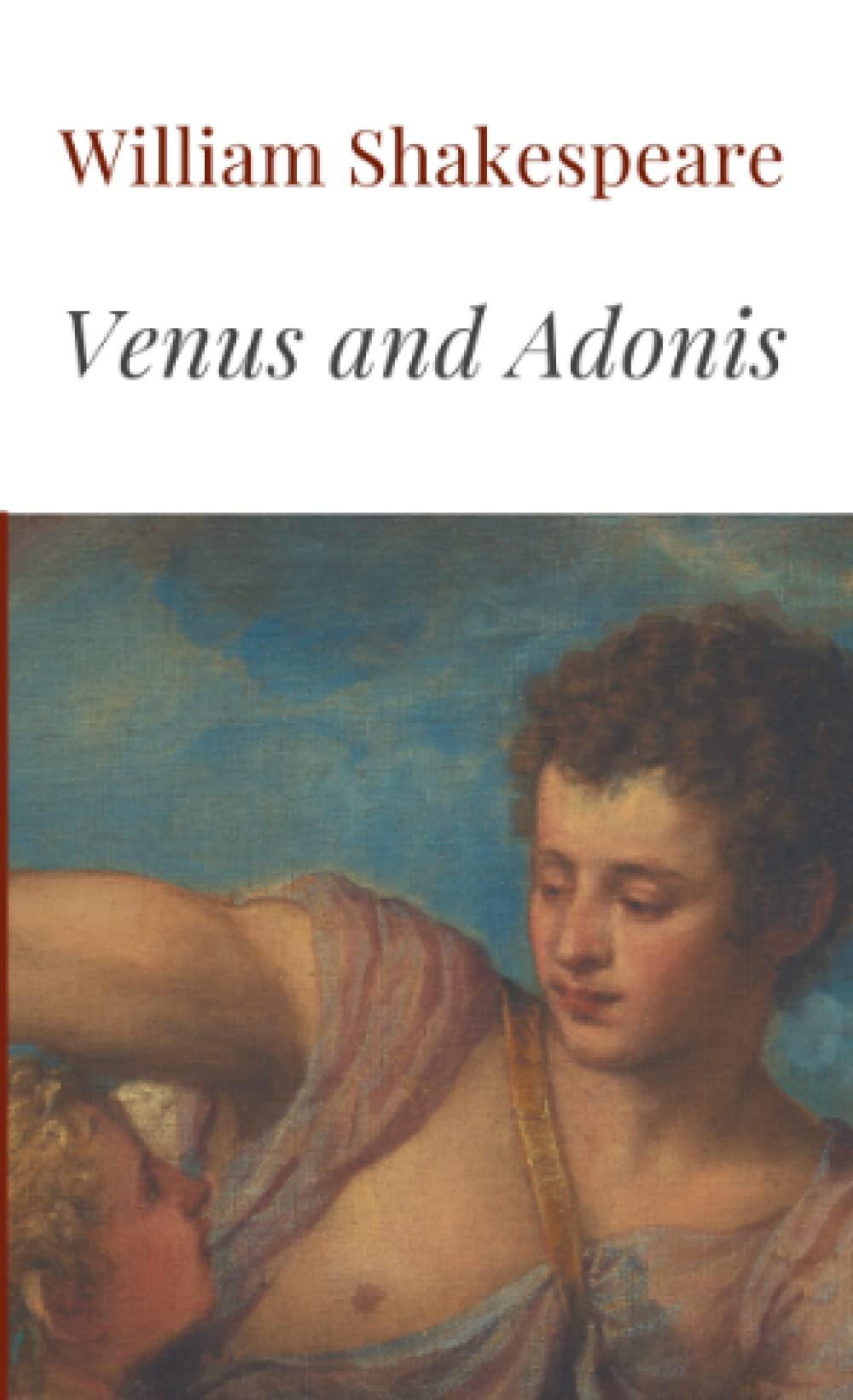



Venus and Adonis is a classic work of literature written by William Shakespeare in 1593. It is an epic narrative poem that tells the story of the relationship between the goddess Venus and the mortal Adonis. The poem is written in a Renaissance style and uses vivid imagery, classical allusions, and rhetorical devices to express the passionate love between the two characters. The poem focuses on the theme of unrequited love, as Adonis rejects Venus’ advances despite her pleas and protestations. Venus is portrayed as the embodiment of love and beauty, while Adonis is a proud and determined youth who resists her advances. Through the poem, Shakespeare explores the power dynamics between men and women, and the complex emotions associated with love. The poem is divided into three books, each containing five hundred lines. The first book introduces the characters and sets the stage for the story. It begins with Venus finding Adonis in the forest and ends with her pleas for him to stay with her. The second book focuses on Venus’ pleas and Adonis’ stubbornness in rejecting her. The third book finds Venus coming to terms with the fact that Adonis will not stay with her, and the poem ends with her lamenting the loss of her beloved. Venus and Adonis is an important work of literature in the canon of William Shakespeare. It is a timeless tale of love and loss and has inspired many works of art and literature since its publication. It is a must-read for all classical literature enthusiasts, and is sure to impress any reader with its beautiful language and vivid imagery. This pocket edition is based on the original Cambridge editions, first published for the general public in the 1860s, and is designed for reading ease -- the size of a standard mass market paperback, it is convenient enough to fit in your pocket, briefcase, or purse, but it features font size sufficient for easy reading and paper durable enough for reading again and again. William Shakespeare (1564-1616) was an English poet, playwright, and actor, widely regarded as the greatest writer in the English language and the world's pre-eminent dramatist. His surviving works, including some collaborations, consist of about 38 plays, 154 sonnets, two long narrative poems, and several other poems. His plays have been translated into every major living language and are performed more often than those of any other playwright. Born and raised in Stratford-upon-Avon, Warwickshire, England, Shakespeare attended King's New School in Stratford, where he learned Latin and a little Greek and read the Roman dramatists. He married Anne Hathaway, with whom he had three children: Susanna, and twins Hamnet and Judith. Between 1585 and 1592, he began a successful career in London as an actor, writer, and part-owner of a playing company called the Lord Chamberlain's Men, later known as the King's Men. He wrote many of his known plays between 1589 and 1613. His early plays were mainly comedies and histories and these works remain regarded as some of the best work produced in these genres. Shakespeare's later works included tragedies such as Hamlet, Othello, King Lear, Macbeth and Antony and Cleopatra. He was a respected poet and playwright in his own day, but his reputation did not truly rise to the heights it is today until the 19th century. Today, his works are amongst the most widely performed and read in the world. Shakespeare's influence on theatre can be seen in the development of the English language, the use of soliloquies and asides, and the popularity of the romance genre. He is often credited with popularizing the sonnet form in English literature, and many of his works are still studied and performed today. He is widely regarded as the greatest writer in the English language and the world's preeminent dramatist.