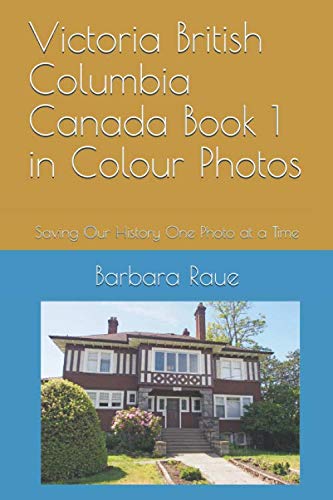
Victoria British Columbia Canada Book 1 in Colour Photos: Saving Our History One Photo at a Time (Cruising Canada)
$18.80
by Mrs Barbara Raue



Throughout the 1820s and 1830s, the Hudson’s Bay Company (HBC) was headquartered out of Fort Vancouver located on the north shore of the Columbia River. From there the HBC controlled nearly all trading operations in the region. The Fort’s influence reached from the Rocky Mountains to the Hawaiian Islands, from Alaska into Mexican-controlled California. At its pinnacle, Fort Vancouver managed over 34 outposts and 24 ports through 600 employees and six ships.The American President (1845-1849) James K. Polk had his eye on the Oregon Territory and Mexican California. Polk encouraged large numbers of settlers to travel west over what became known as the Oregon Trail, then claimed the U.S. had a legitimate claim to the entire Columbia/Oregon district though was prepared to draw the border along the 49th parallel. The dispute was settled by the Treaty of Washington in 1846 which established the border between British North America and the United States along the 49th parallel from the Rocky Mountains to the sea, with Vancouver Island retained as British territory. The Treaty of Washington effectively destroyed the geographic logic of the HBC’s Columbia Department with Fort Vancouver as its headquarters. The Company subsequently moved its headquarters north to Fort Victoria in 1846, which had been founded three years earlier by James Douglas in anticipation of the treaty.Fort Victoria measured 330 feet by 300 feet and had a single bastion in the southwestern corner near what is now Fort and Broughton. The fort was enlarged to accommodate more warehouses and a second bastion was built.In 1849 the British government created the Colony of Vancouver Island. The HBC was given a 10-year contract to manage the colony, and James Douglas moved from Fort Vancouver to take charge of the operations.Victoria is the capital city of British Columbia, located on the southern tip of Vancouver Island off Canada's Pacific coast. Victoria is the southernmost major city in Western Canada, and is about 100 km (60 mi) from British Columbia's largest city of Vancouver on the mainland. Named for Queen Victoria, the city is one of the oldest in the Pacific Northwest, with British settlement beginning in 1843. The city has retained a large number of its historic buildings, in particular its two most famous landmarks, Parliament Buildings (finished in 1897 and home of the Legislative Assembly of British Columbia) and the Empress Hotel (opened in 1908). The city's Chinatown is the second oldest in North America after San Francisco’s. The region's Coast Salish First Nations peoples established communities in the area long before European settlement, which had large populations at the time of European exploration.Known as "The Garden City", Victoria is an attractive city and a popular tourism destination. Victoria is popular with boaters with its rugged shorelines and beaches. Victoria is also popular with retirees, who come to enjoy the temperate and usually snow-free climate of the area as well as the usually relaxed pace of the city.