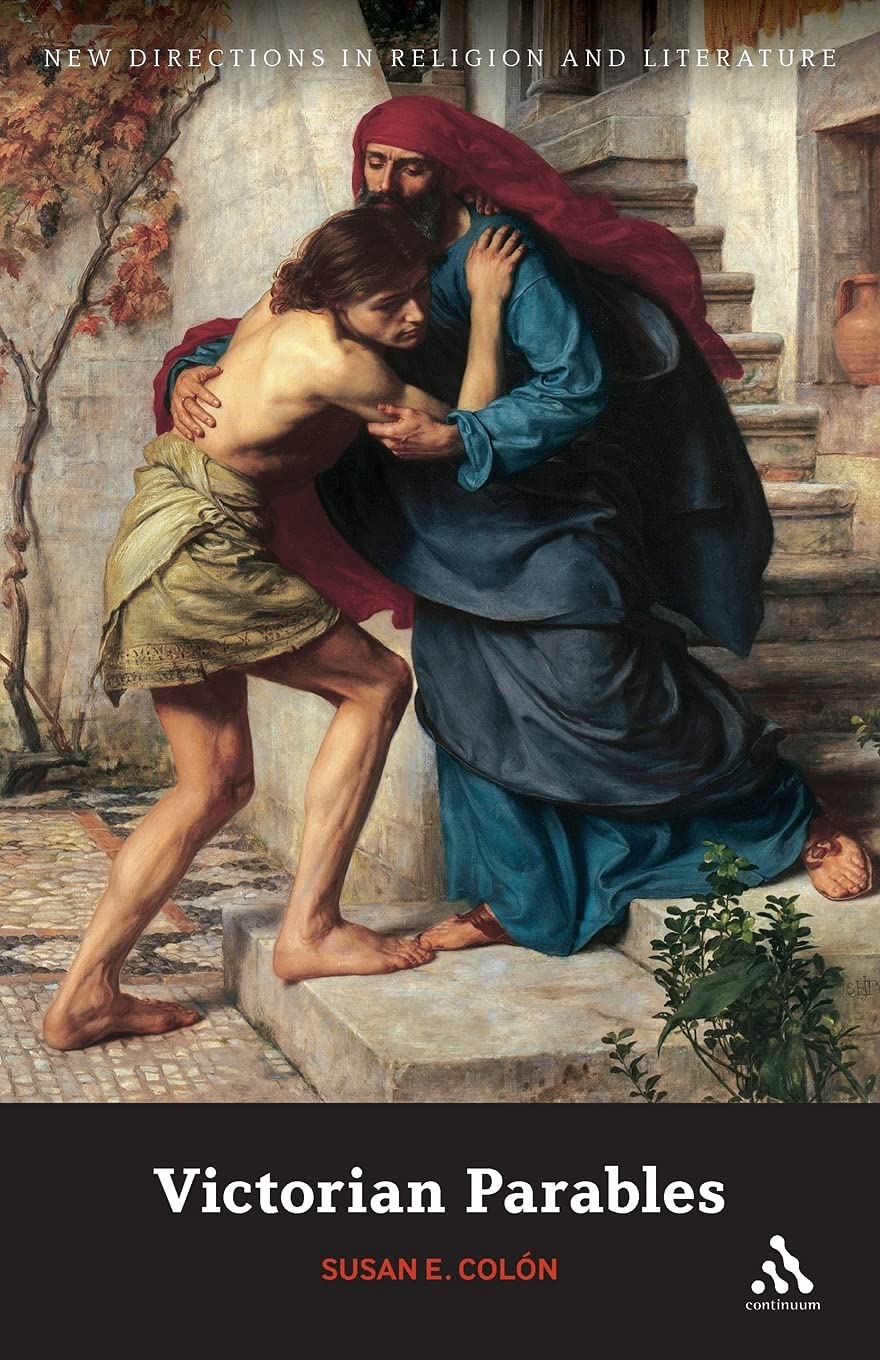



The familiar stories of the good Samaritan, the prodigal son, and Lazarus and the rich man were part of the cultural currency in the nineteenth century, and Victorian authors drew upon the figures and plots of biblical parables for a variety of authoritative, interpretive, and subversive effects. However, scholars of parables in literature have often overlooked the 19th-century novel, assuming that realism bears no relation to the subversive, iconoclastic genre of parable. In this book Susan E. Colòn shows that authors such as Charles Dickens, Margaret Oliphant, and Charlotte Yonge appreciated the power of parables to deliver an ethical charge that was as unexpected as it was disruptive to conventional moral ideas. Against the common assumption that the genres of realism and parable are polar opposites, this study explores how Victorian novels, despite their length, verisimilitude, and multi-plot complexity, can become parables in ways that imitate, interpret, and challenge their biblical sources. 'Susan Colón offers an original and highly accessible account of the way in which these subversive gospel stories worked at an ethical level to challenge the reading practices of Victorian readers. She provides equally assured guidance both through theoretical issues and in exemplary readings of works by Charlotte Yonge, Margaret Oliphant and Charles Dickens.' Victorian Studies 'This is a very satisfying book indeed.So much that other scholars do not see or get wrong Susan E. Colón observes and gets right.Victorian Parables not only offers insightful readings of Charlotte Yonge, Margaret Oliphant, and Charles Dickens, it defines and illuminates the genre of parables in a way that it would do literary scholars, theologians, and students of the Bible well simply to follow with humility and gratitude.' 'Victorian Parables applies theories of biblical hermeneutics to historically contextualized readings of Victorian novels in a clear, fresh and provocative way which overcomes conventional critical dichotomies opposing religious belief and novelistic realism. Colón's book represents a significant contribution to the post-secular interpretation of Victorian culture.' Emma Mason is Professor of English and Comparative Literary Studies at the University of Warwick, UK, and an editor of Bloombury's New Directions in Religion and Literature series. Mark Knight is Associate Professor in the Department of English at the University of Toronto, Canada. His books include Chesterton and Evil (2004), Biblical Religion and the Novel, 1700-2000 (co-edited with Thomas Woodman, 2006), Nineteenth-Century Religion and Literature: An Introduction (co-written with Emma Mason, OUP, 2006), An Introduction to Religion and Literature (2009) and Religion, Literature and the Imagination (co-edited with Louise Lee, 2009). Current projects include: a monograph entitled Good Words: Evangelicalism and the Victorian Novel ; a co-authored book (with Emma Mason) entitled Faithful Reading: Poetry and Christian Practice ; and a co-edited volume (with Jo Carruthers and Andrew Tate) entitled A Bible and Literature Reader . With Emma Mason, Mark Knight edits the book series New Directions in Religion and Literature for Bloomsbury Academic.