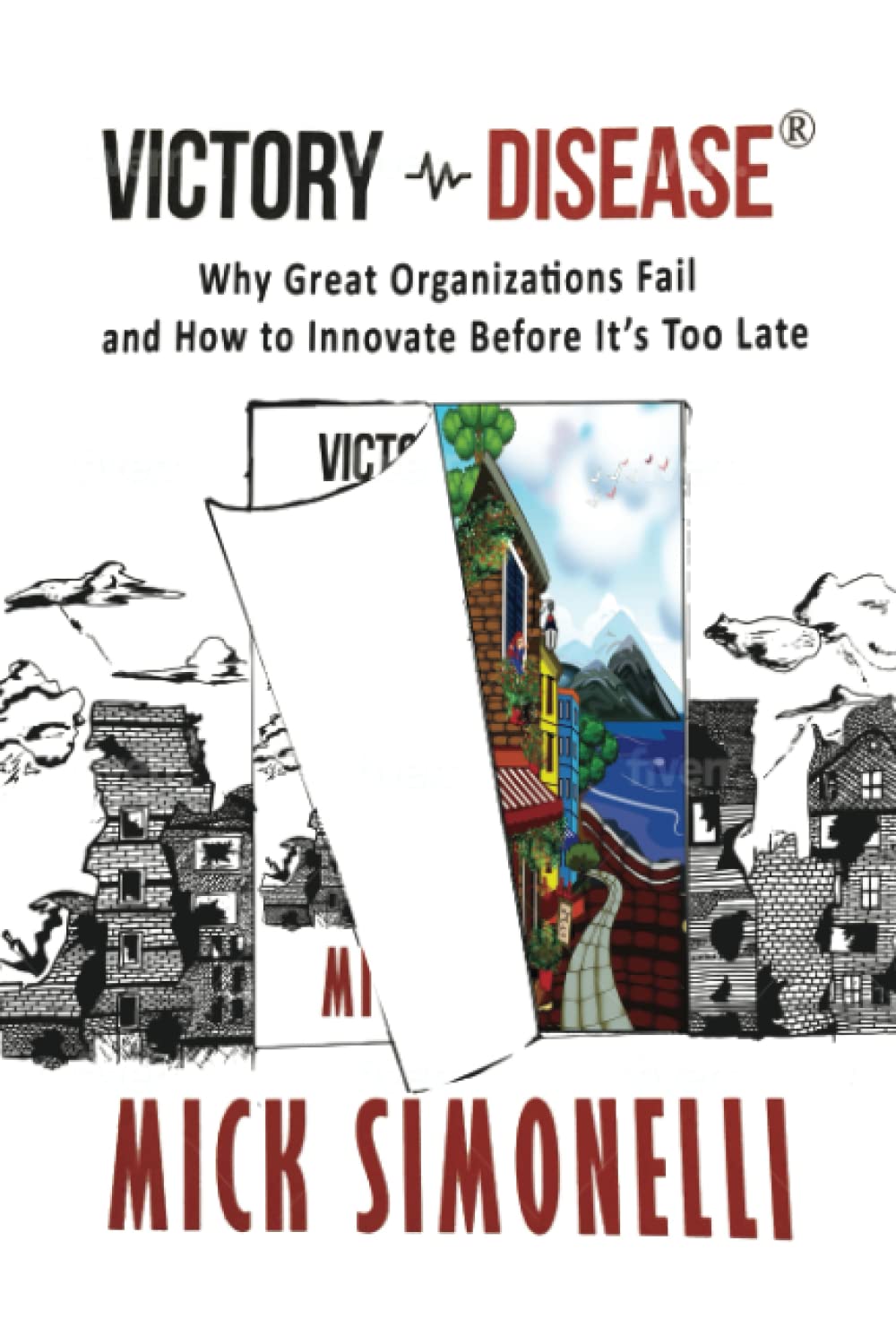
Victory Disease: Why Great Organizations Fail and How to Innovate Before It's Too Late
$14.99
by Mick Simonelli



More than seventy years ago, Japanese historians used the term Victory Disease to refer to their self-defeating behavior during World War II that included beliefs of invincibility and a divine right to victory. After a series of decisive early wins, the Japanese felt and acted as if they were unbeatable. Yet, the tremendous Japanese victories created a false sense of security that eventually led to their crushing defeat and their nation’s humiliation. After the war, U.S. military analysts adopted the term Victory Disease, pointing to many other battles where they saw it playing a significant role. Victory Disease describes a cultural malady that Japan could have avoided if it had recognized the symptoms and acted in time. Characterized by arrogance, bureaucracy, and complacency, Victory Disease brought about the unanticipated defeat of a formidable military that saw great initial success. While military operations and strategists have since recognized the disease as a known phenomenon, this book shows how the behavior of many modern organizations mimics the symptoms of the World War II Japanese and their reluctance to change.Victory Disease: Why Great Organizations Fail and How to Innovate before It's Too Late examines how successful organizations are in the midst of either succumbing to or overcoming this dreaded malady. With Victory Disease, the by-product of previous successes creates cancerous environments, a breeding ground for thriving organizations to begin developing malignant behaviors. The organizational culture becomes geared toward the status quo, which perpetuates groupthink and the belief of invincibility. Successful organizations easily fall into the trap of rewarding risk-averse behavior, where new ideas are minimized or killed to avoid disrupting previous winning ways. But in today’s hyper-innovation environment, new products, services, and solutions become the difference-makers. Modern organizations must continuously produce new value to stay on top. Yet, many established companies remain stuck in the circumstances of their current success, displaying the same predictable symptoms as did the Japanese during World War II—all the while denying their infection’s severity. Barely able to look toward the future, they remain enamored with past successes—achievements that become outdated and irrelevant over time. Unlike previous eras, the current pace of change demands new business models and practices. Successful organizations must continue to change and adapt . . . or die. Victory Disease examines the malaise direly affecting successful businesses and prescribes an antidote: a practical remedy for renewed organizational health and longevity. Victory Disease transcends so many pieces of society and beholds great lessons for government, the private sector, industry and so many walks of life. I have been sharing it in my everyday activities and even have my staff walking around citing the 3ingredients of Victory Disease - arrogance, bureaucracy & complacency. -Lieutenant General Thomas Horlander, Military Deputy, Assistant Secretary of the Army (Financial Management and Comptrollership) A great read that resonated with my own learnings across many businesses and companies. There were so many relevant learnings and actions, ranging from studying history of your business and factors that led to success and failure, to the importance of ruthlessly and objectively benchmarking externally, to the recognition that innovation is fundamentally a "people game". --Bruce Brown Chief Technology (R&D, Innovation) Officer, Board Member Mick's perspective and examples serve as an excellent reminder of the need for companies to continually innovate and disrupt their own businesses--before their competitors do. Innovators can learn from the common pitfalls and productive approaches cited in 'Victory Disease'. -- Jack Weekes, retired innovation leader, Fortune 100 Corporation. Mick is both an instrumental and thoughtful innovator, and his work in Victory Disease is evident of his natural thought leadership, and an indisputable track record in bringing sustainable innovation to life. Victory Disease is a must read for business leaders and practitioners seeking relevance and considering human-centricity by design. --Suleiman Barada; Sr. Advisor & Head of Ecosystem Digital Transformation Unit, Union of Arab Banks This book is a highly entertaining read that provides the insight necessary to diagnose the telltale symptoms of Victory Disease. Whether operating in the financial services sector, the government, or anywhere in between, Mick provides the template for leaders at all levels to understand the innovative health of their organizations. The importance of this cannot be understated as, too often, successful companies, organizations and even governments fall victim to a lack of innovation only to realize it after it is too late. Victory Disease shows us how to maintain the awareness necessary to avoid