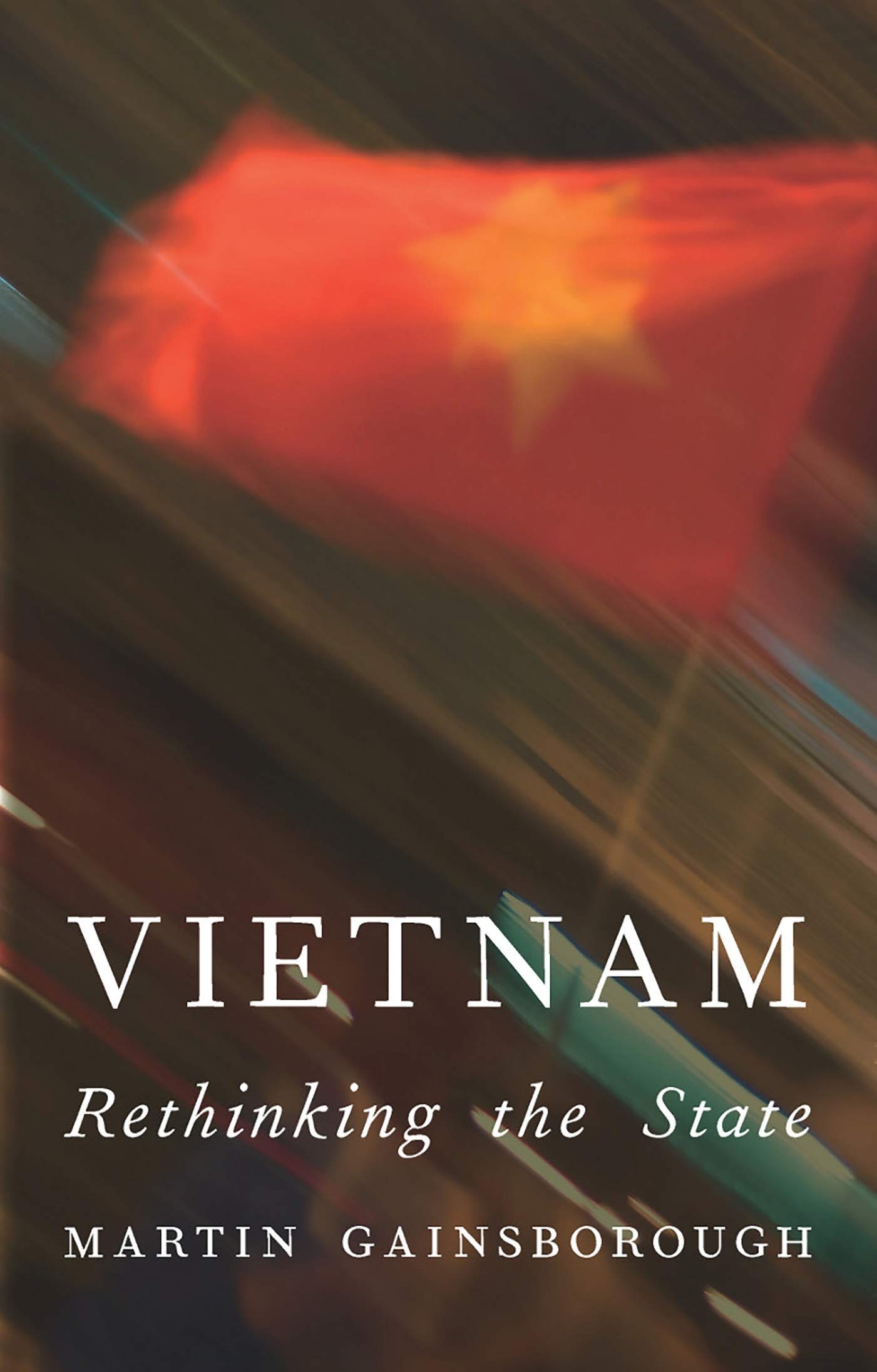



Vietnam: Rethinking the State offers an exciting and up-to-date look at the politics of this fascinating country as it seeks to make the transition from war-torn economic backwater to a dynamic and modern society. The book argues for a move away from the commonly associated idea of "reform," arguing for a deeper understanding of the concept and questioning the idea of state-retreat. The result is a path-breaking book which gets beneath the surface of Vietnam's politics in a way which few outsiders otherwise could. “Clearly written and based upon extensive field work, his discussion of the value of theory amplifies a vivid focus upon the major issues Vietnam faces as the relatively easy development seen since the emergence of the market economy in 1989-91 morphs into her troubled transition to 'middle income' status and demands for higher quality economic growth.” ― Adam Fforde, University of Melbourne and Victoria University “By challenging several concepts commonly used by observers of contemporary Vietnam - reform, the state, the centrality of national policy, and the rule of law - Martin Gainsborough has produced a lively, provocative analysis of political life in the country. His book is a must for specialists and non-specialists alike.” ― Benedict J. Tria Kerkvliet, The Australian National University “Vietnam: Rethinking the State is written in an engaging style and is wonderfully structured and organised. Stop, read and proceed!” ― Carlyle A. Thayer, author of War By Other Means: National Liberation and Revolution in Vietnam “Vietnam: Rethinking the State provides a highly sophisticated yet always accessible and eminently readable discussion and analysis of key issues in the Vietnamese reform process that will be of keen interest to students, teachers, government officials, journalists, the business community and others.” ― Mark Sidel, International Society for Third Sector Research “This book is an indispensable tool to make sense of the enormous transformations experienced by Vietnam over the last two decades.” ― Martin Rama, World Bank for Vietnam “Gainsborough's Vietnam is a valuable source of conceptual and empirical information for Vietnam specialists, practitioners of governance reform, and comparative political theorists.” ― Thaveeporn Vasavakul, Southeast Asian Studies Specialist Martin Gainsborough is a recognized international expert on Vietnam and its politics. He is Reader in Development Politics in the Department of Politics at the University of Bristol. He is also director of the Bristol-Mekong Project, and consults widely on aspects of Vietnam's politics and business, notably for the United Nations Development Programme, the UK's Department for International Development, and the World Bank. He teaches on development studies, Vietnamese and Asian politics, and state theory. He is author of Changing Political Economy of Vietnam: The Case of Ho Chi Minh City (Routledge, 2003) and editor of On the Borders of State Power: Frontiers in the Greater Mekong Sub-Region (Routledge 2009). Vietnam Rethinking the State By Martin Gainsborough Zed Books Ltd Copyright © 2010 Martin Gainsborough All rights reserved. ISBN: 978-1-84813-565-9 Contents Map of Vietnam, vii, Preface, ix, Introduction, 1, 1 Communist Party rule, 9, 2 New state business interests, 25, 3 Corruption, 50, 4 Hollowing out the state, 71, 5 Uncertainty as an instrument of rule, 88, 6 Local politics, 111, 7 Sharing the spoils, 135, 8 Elite resilience, 156, Conclusion, 177, Notes, 191, References, 201, Index, 221, CHAPTER 1 COMMUNIST PARTY RULE Some two decades after the collapse of Communism in Eastern Europe in 1989 and the former Soviet Union in 1991, Vietnam is just one of a handful of states where Communist Party rule persists (the others being China, North Korea, Laos and Cuba). While Vietnamese society is undoubtedly witnessing new forms of political expression, and pressure on the state, against the backdrop of rapid economic development, the fact of continued Communist Party rule at this juncture – whatever the future holds – requires some explanation. This chapter considers this issue with reference to theoretical ideas which have their origins in Barrington Moore's now classic text, Social Origins of Dictatorship and Democracy (Moore 1966). Moore's writing has since been built upon by other scholars, including most notably Rueschemeyer, Stephens and Stephens (1992). These writers, who emphasize the importance of changing class relations, state power and transnational forces in explaining moves towards greater democracy or their absence, are to be contrasted with those who focus on such things as political leadership, culture and political parties to explain why democratization has or has not occurred (Potter 1992: 355–79). This chapter, which looks at political change in Vietnam over the past twenty or more years, will do so primarily with reference to the