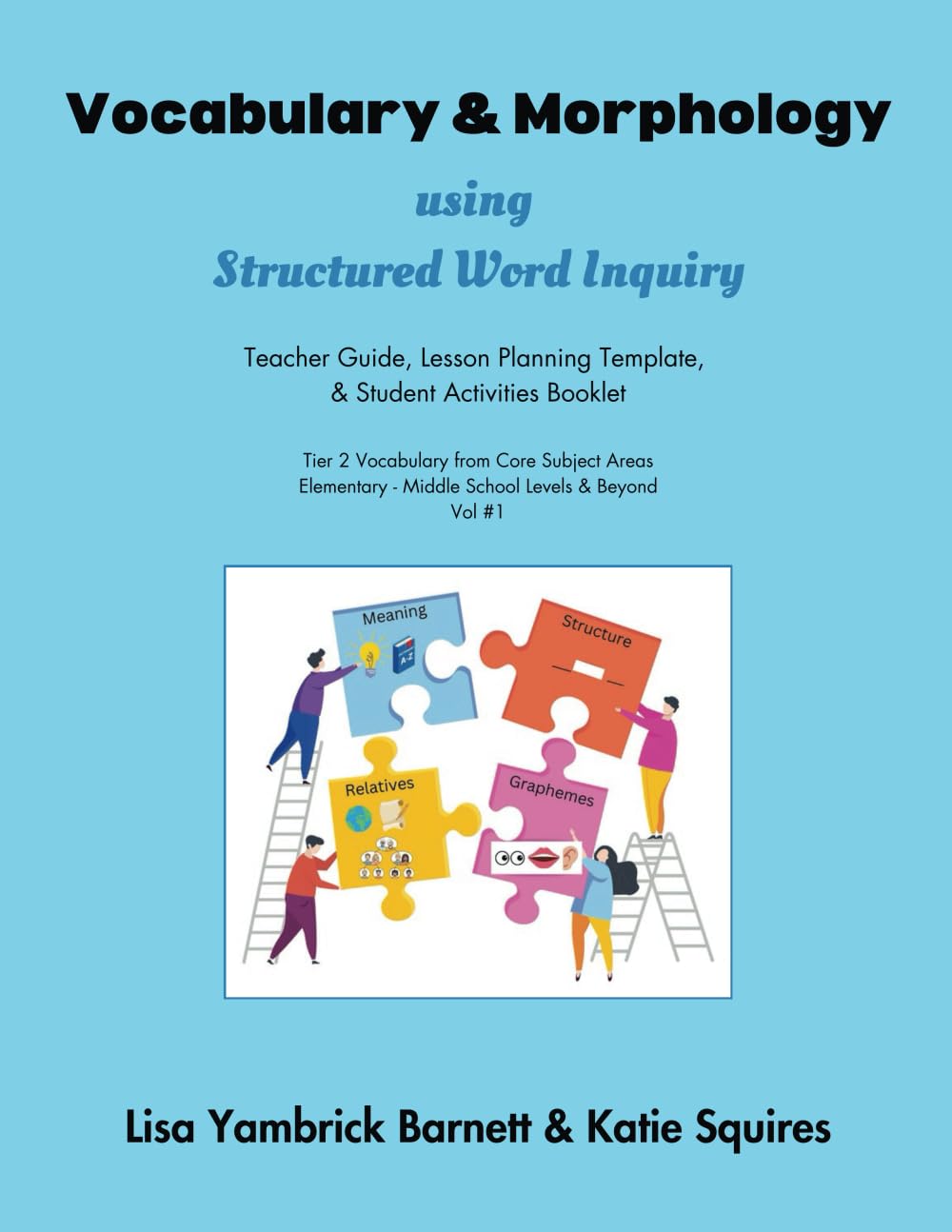
Vocabulary & Morphology using Structured Word Inquiry: Teacher Guide, Lesson Planning Template, & Student Activity Booklet of Tier 2 Vocabulary from
$39.99
by Lisa Yambrick Barnett



This Teacher Resource Guide and Student Booklet will help you bridge premium Tier 2 content-area vocabulary words with vital morphology lessons through the well-established practice of learning English orthography through structured word inquiry (SWI). The comprehensive Teacher Resource Guide leads you through the four Essential Questions of SWI to help the teacher present 11 lessons to their students that will uncover key concepts of the structure of our spelling system and connect vocabulary words within and beyond the subject area you are studying. These connections are discovered through studying the interrelationships of morphology, etymology, and phonology, all while increasing and strengthening curricular area vocabulary, spelling & critical thinking skills. This resource comes with a teacher Lesson Planning Template and a Student Booklet in which students complete short, meaningful activities. They will also be able to create their own note-taking booklet of all the words and connections studied! What an amazing resource this will be for your students to keep and use forever. The Teacher Guide and Lesson Planning Template allow you to move beyond the words in this series to create your own lessons if you choose. Look for other and future volumes created to support even more vocabulary and morphology connections. Praise for this book : -- In Vocabulary & Morphology Using SWI , Lisa Yambrick Barnett and Dr. Katie Squires share 11 engaging and in-depth word investigations, along with a wealth of related resources. This is an excellent handbook that explains the “why” of spelling for teachers so they can investigate words with their students. Whether you think “sound it out” is the best strategy for teaching spelling or you are an experienced SWI practitioner, this is a jewel of a book that will deepen your understanding of orthography. -Mona Voelkel , NBCT, Author of Stanley and the Wild Words and Moon Choo-Choo --This is a great addition to the books and resources that are out encouraging more people to incorporate SWI! My favorite section is your exordium. That is definitely a section that people will visit and revisit. The way you have organized your writing, people can choose any word on your list. They don't have to investigate the words in order. That's important. On the other hand, following your investigations will give them the confidence to stray from your list and investigate words better suited to their curriculum or interests. - Mary Beth Steven, Mrs. Steven's Classroom Blog -- In Vocabulary & Morphology Using Structured Word Inquiry , authors Lisa Barnett and Katie Squires give you the tools and ready-to-use lessons you need to get started using a Structured Word Inquiry approach for vocabulary building. The lessons are explicit and engaging, and the planning template will help you build curriculum-specific content in the future. Unlike some vocabulary resources, these lessons not only reveal the true nature of English orthography, but also help students develop critical thinking skills around word use and acquisition. This book will supersede your other vocabulary resources. – Jennifer Constantine & Kara Lee, authors of Structured Word Inquiry: An Implementation Guide for Teachers