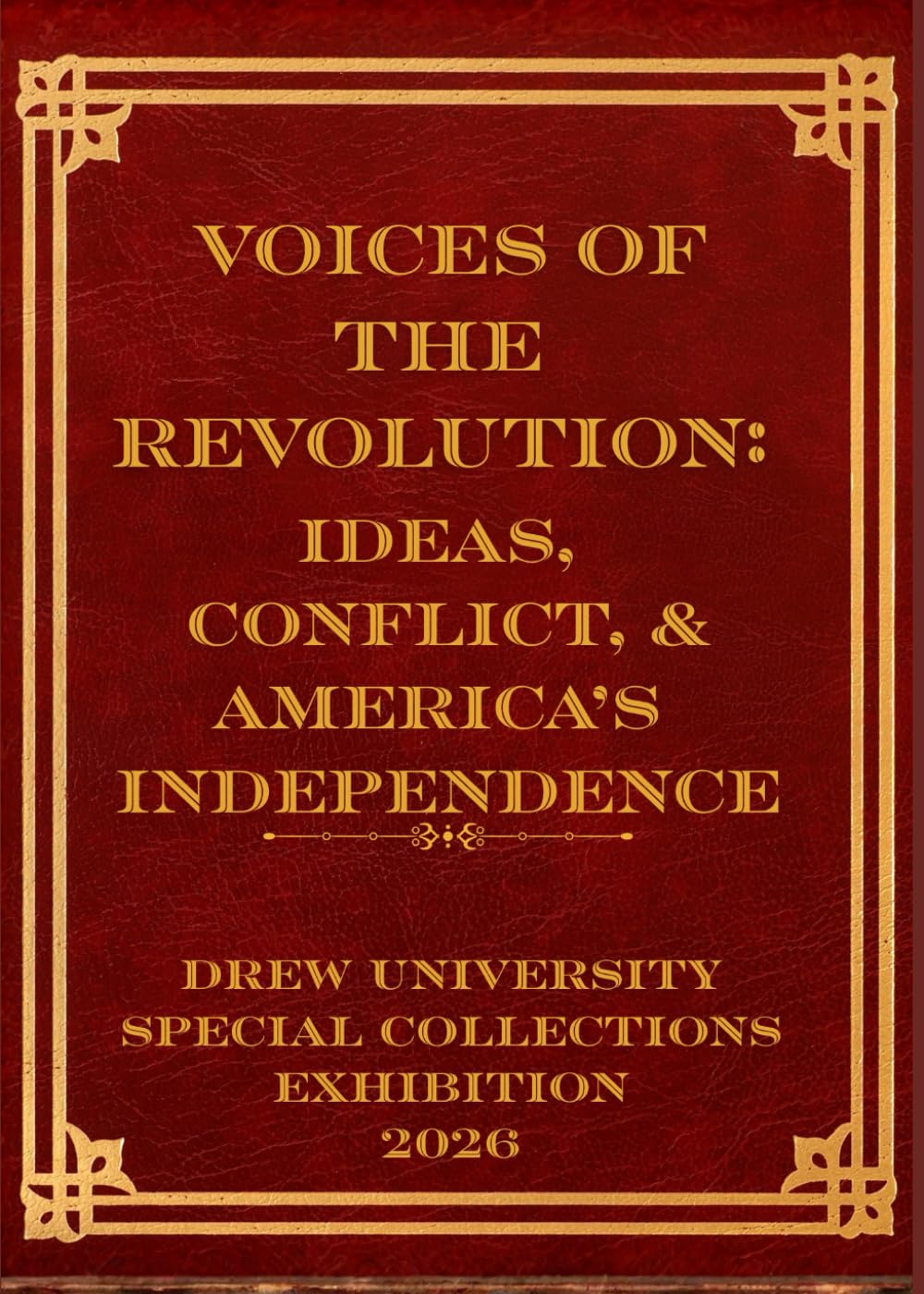
Voices of the Revolution: Ideas, Conflict, and America's Independence: Drew University Special Collections Exhibition 2026
$14.45
by Candace Reilly



Voices of the Revolution explores the American Revolution as a war of words as much as a war of arms. Marking the 250th anniversary of independence, the exhibition traces how sermons, pamphlets, letters, poems, and official orders shaped political thought, mobilized communities, justified resistance, and contested the meaning of liberty on both sides of the Atlantic. Drawing from a wide range of rare printed works and manuscripts from Drew University Special Collections and Methodist Collections, the exhibition foregrounds the competing voices that defined the revolutionary era: Patriots and Loyalists, preachers and philosophers, soldiers and statesmen, British critics and American advocates. Visitors encounter the moral and political arguments that fueled rebellion, including debates over parliamentary authority, resistance to tyranny, slavery and hypocrisy, religious obligation, and the nature of republican virtue. Figures such as Thomas Paine, whose Common Sense galvanized popular support for independence, are presented alongside their fiercest critics, revealing a revolutionary culture marked by fierce disagreement rather than consensus. Religion emerges as a central arena of conflict. Sermons by outspoken Patriot clergy and pro-British hymns and prayers illustrate how scripture was invoked to sanctify both rebellion and loyalty. The controversial interventions of John Wesley—including his denunciations of American independence and his condemnation of slavery—demonstrate how moral clarity in one arena could coexist with political misjudgment in another. Responses to Wesley’s writings expose the intensity of transatlantic print debates and the blurred boundaries between theology and politics. The exhibition also grounds ideology in lived experience. Military orderly books, correspondence between Continental officers, and memoirs of ordinary soldiers and sailors reveal the discipline, hardship, and ethical dilemmas of wartime service. These materials culminate in reflections on leadership and nation-building, from the battlefield authority of George Washington to the postwar challenges of governance, memory, and historical reputation. It is important to acknowledge that this exhibition does not encompass the full range of voices involved in the Revolution. Archival silences necessarily shape the narrative presented here, as the exhibition is limited to materials preserved within the existing collections. As a result, certain perspectives—most notably those of women and Indigenous peoples—are underrepresented or absent. Rather than presenting independence as inevitable, Voices of the Revolution emphasizes contingency, conflict, and persuasion. By placing opposing arguments side by side, the exhibition invites visitors to consider how America’s founding was shaped by debate as much as by victory—and how the unresolved questions of liberty, loyalty, and power continue to echo 250 years later.