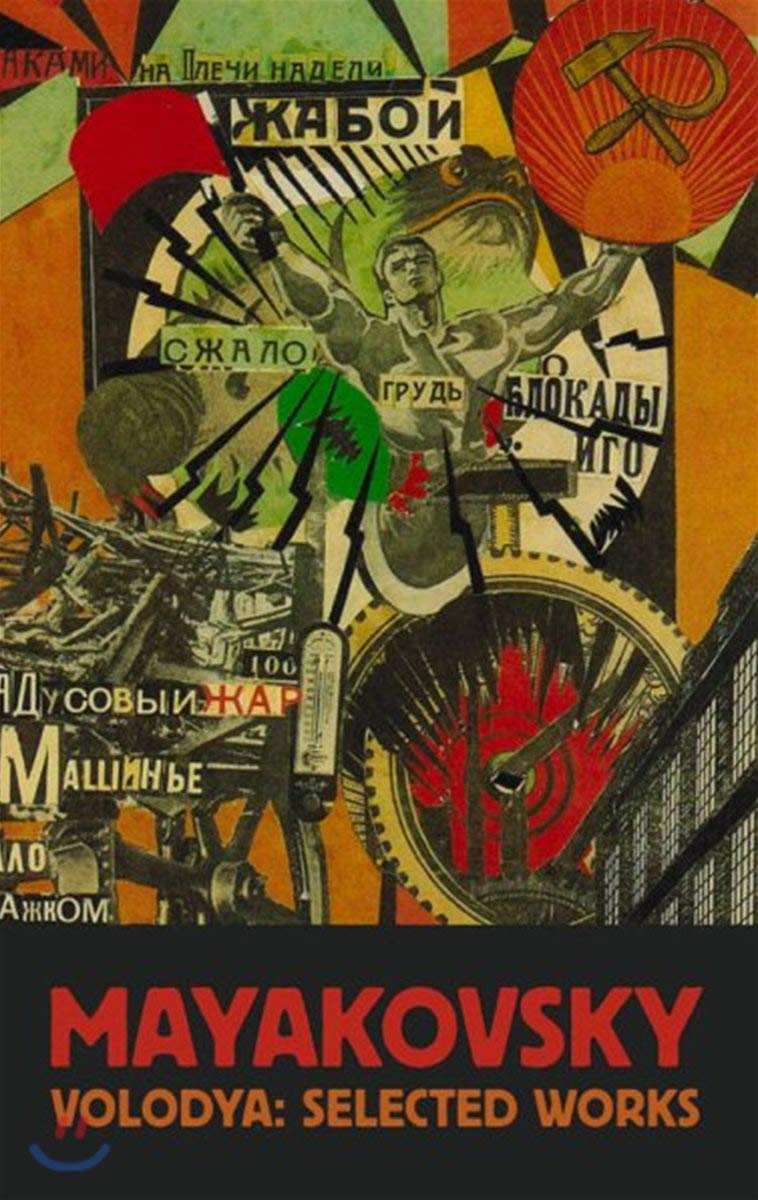



This groundbreaking collection draws together for the first time Vladimir Mayakovsky’s key translators from the 1930s to the present day, bringing some remarkable works back into print in the process and introducing poems which have never before been translated. The radical scope of its representation makes for the most comprehensive account of Mayakovsky’s work to date – an account which charts not only the extraordinary range of his creative output,, but also the fascinating and turbulent history of Mayakovsky’s cultural and political representation in the western world. Rosy Patience Carrick is a poet and a Mayakovsky scholar. Rosy teaches English literature, poetry and performance skills at schools, Universities and community settings around the UK, and is currently writing a PhD thesis on Mayakovsky at the University of Sussex. Vladimir Vladimirovich Mayakovsky (1893 - 1930) was a poet, playwright, artist, director, actor, diarist, producer of agitprop posters and advertisement slogans, and writer of articles, essays and speeches. Volodya Selected Poems By Vladimir Mayakovsky, Rosy Carrick Enitharmon Press Copyright © 2015 Rosy Carrick All rights reserved. ISBN: 978-1-910392-16-4 Contents List of Illustrations, Acknowledgements, Introduction by Rosy Carrick, A Slap in the Face of Public Taste (1912), from A Tragedy: Prologue (1913), I (1913), Listen! (1914), from The Backbone-Flute: Prologue (1915), A Cloud in Trousers (1915), Concern for Horses (1918), An Extraordinary Adventure Which Befell Vladimir Mayakovsky in a Summer Cottage (1920), ROSTA poster: 'What to do in order not to die from cholera?' (1921), Order No. 2 to the Army of the Arts (1921), Mayakonferensky's Anectidote (1922), I Love (1922), from Pro Eto – That's What (1923), from Vladimir Ilyich Lenin (1924), from The Flying Proletarian: II. Daily Life in the Future (1925), Drag Forth the Future (1925), What Is Good And What Is Bad (1925), This Here Little Book of Mine's About the Sea, About the Lighthouse (1926), Conversation with a Tax Collector about Poetry (1926), For British Workers (1926), To Sergey Esenin (1926), Goavy Dick! (1927), My Soviet Passport (1928), Comrade Teenager! (1930), At the Top of My Voice (1930), Past One O'Clock (1930), Verse fragments (1930), Essays & Lectures, Notes, List of Translators, Scots Language Glossary, Appendix: On the Captain's Bridge by Lev Kassil (1928), Further Reading, Permissions acknowledgements, from A Tragedy: Epilogue (1913), CHAPTER 1 A SLAP IN THE FACE OF PUBLIC TASTE To the readers of our New First Unexpected. WE ALONE ARE THE FACE OF OUR TIME. The horn of time blares through us in the art of the world. The past is too crowded. The Academy and Pushkin are more unintelligible than hieroglyphics. Chuck Pushkin, Dostoevsky, Tolstoy, and all that lot overboard from the Ship of Modernity. They who do not forget their FIRST love will not recognize their last. Who is naïve enough to direct their last love towards the perfumed lechery of Balmont? Is that really a reflection of today's potent soul?! Who is so spineless as to take fright at swiping the paper armour off Warrior Bryusov's tattered black coattails? Or do they contain the dawns of unknown beauty? Wash your hands, you who have fingered the filthy slime of books written by all those countless Leonid Andreyevs. All those Maxim Gorkys, Krupins, Bloks, Sologubs, Remizovs, Averchenkos, Chyornyis, Kuzmins, Bunins, etc, etc, need only a dacha on the river. Such is the manner tailors are rewarded by destiny. From the heights of skyscrapers we gaze down upon their insignificance! ... We COMMAND you to honour the RIGHTS of poets: 1) To enlarge THE SCOPE of vocabulary with arbitrary and derivative words (word-innovation). 2) To feel an insuperable hatred towards that language which exists before their own. 3) To discard in horror from their proud brows the wreaths of dirt-cheap fame manufactured by you from bathhouse birch-switches. 4) To stand on the solid rock of the word 'WE' amidst a sea of catcalls and indignation. And if FOR THE TIME BEING the filthy brand of your 'common sense' and your 'good taste' are yet present in our lines, they nevertheless – FOR THE FIRST TIME – already thrill with the Summer Lightning of the New Impending Beauty of the Self-valuable (self-creating) Word. Moscow, 1912, December David Burliuk, Alexander Kruchënykh, Vladmir Mayakovsky, Victor Khlebnikov CHAPTER 2 from A TRAGEDY PROLOGUE Can you understand, for what reason I, tranquil, like the threat of a jeer carry my soul on a plate to the dinner of passing years. Down unshaven plaza-cheeks flowing like an unneeded tear, I may be the last poet. Have you noticed – swinging in the cobblestone tracks the striped face of hanged boredom, and across swirling rivers on lathered-up necks the iron