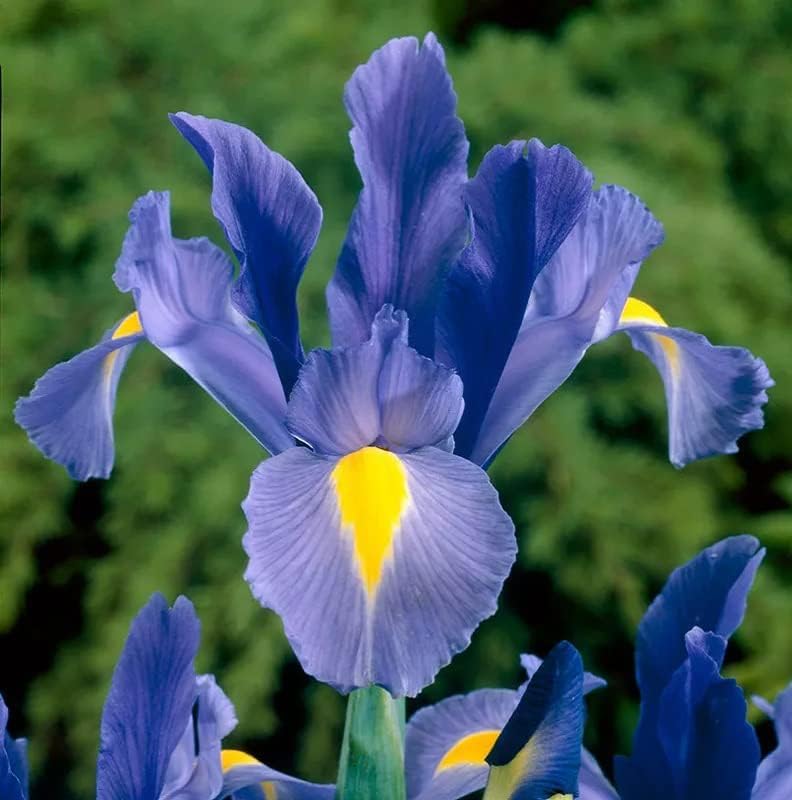



Votaniki Sapphire Beauty Dutch Iris bulbs produce deep blue, almost purple blooms that add a stunning touch of color to any garden. These bulbs are hardy in zones 3-9 and typically bloom in late spring to early summer They are easy to care for and prefer well-draining soil in a location that receives full sun Planting Dutch Iris bulbs in the fall at a depth of 6-8 inches and spacing them 4-6 inches apart will yield beautiful blooms for years to come The bulbs are drought-tolerant and low maintenance They are perfect for cutting gardens and adding to a bouquet Removing the spent flowers will encourage more blooms and prevent the plants from wasting energy on seed production Dutch Iris, also known as Iris xiphium, is a hybrid species of Iris that is known for its tall, stately flowers and graceful form. The Sapphire Beauty variety is particularly prized for its deep blue, almost purple blooms. The bulbs of Dutch Iris are typically planted in the fall, about 6-8 inches deep and 4-6 inches apart. They prefer well-draining soil in a location that receives full sun. Once established, Dutch Iris are relatively low maintenance and can be left undisturbed for several years. They are hardy in zones 3-9, and typically bloom in late spring to early summer. When planting Sapphire Beauty Dutch Iris bulbs, it is important to choose a spot that has well-drained soil and gets plenty of sun. They are tolerant of a wide range of soil conditions, but they should not be planted in soil that is consistently wet or in a location that is prone to flooding. One of the best way to look after the bulb is to remove the spent flowers, which will encourage more blooms and prevent the plants from wasting energy on seed production. Also to keep the soil moist but not wet, but don't let them dry out. And also, in fall, after the leaves have died back, you can cut them off at the base, which will discourage any disease from developing in the bulbs. In addition to their striking flowers, Dutch Iris are also popular for their sword-like leaves, which can add a touch of architectural interest to the garden.