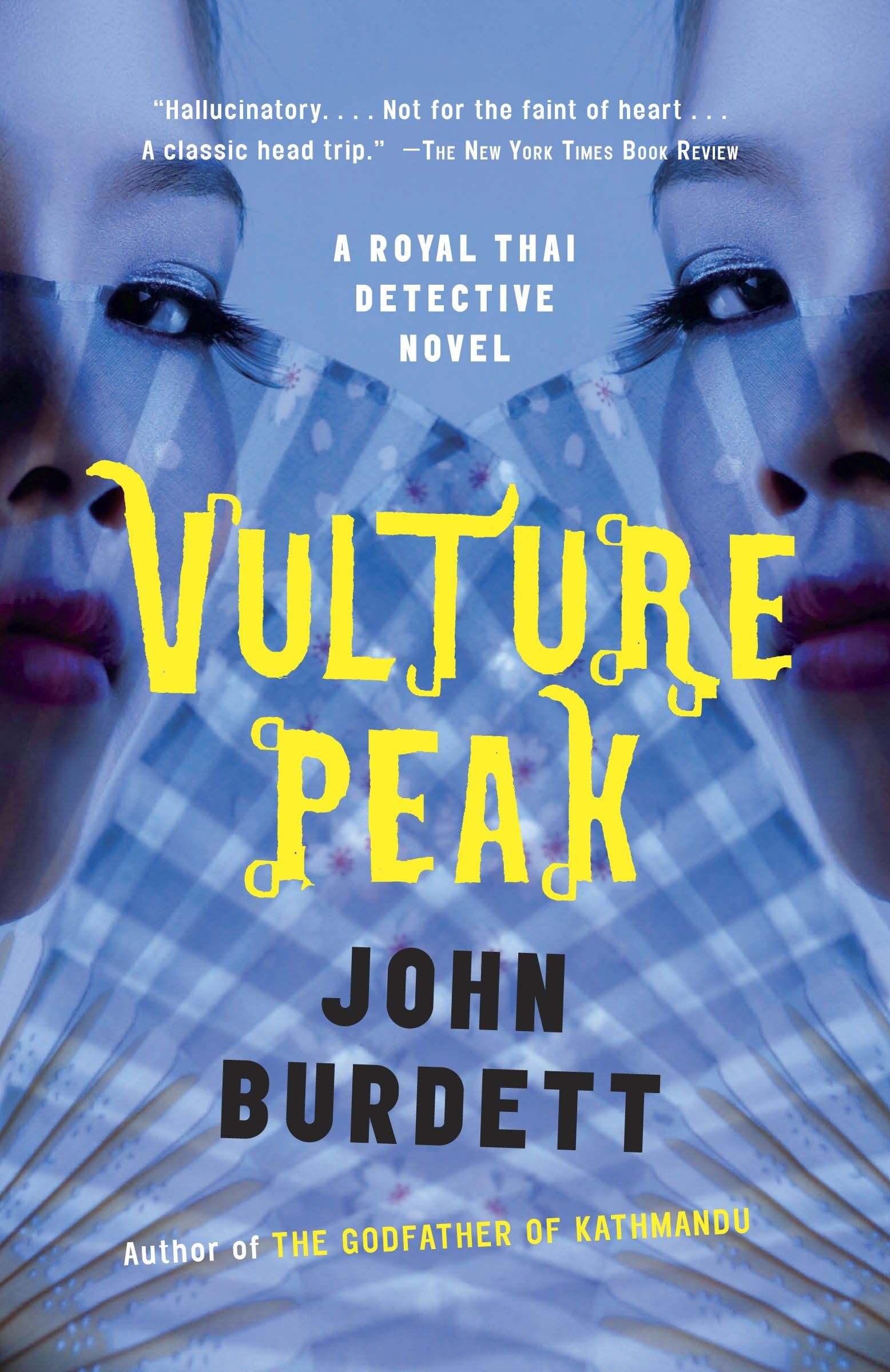



Nobody knows Bangkok like Royal Thai Police Detective Sonchai Jitpleecheep, but now he is heading out of his comfort zone. Way out. Assigned to the highest-profile case in all Thailand, he is tasked with ending international human-organ trafficking. His hunt will lead him across five countries and will draw in a host of unwitting players, including an aging rock star wearing out his second liver, and his quarry, twin Chinese queenpins of the international body-parts trade known as the Vultures. Meanwhile, there are rumors at home that Sonchai’s wife is having an affair. Although he has always known about her disreputable past, this is something else entirely. Confronting the rumors—and controlling his jealousy—while embroiled in the most contentious case of his career may well be more than this detective’s Buddhist soul can handle. “Hallucinatory. . . . Not for the faint of heart . . . a classic head trip.” — The New York Times Book Review “Redolent—in the most enjoyable way—of crime, violence, corruption and sex, not necessarily in that order. Vulture Peak upholds the high standards set by its predecessors.” — The Washington Post “Fine entertainment, with bite, from an author at home in many different worlds.” — Pittsburgh Post-Gazette “Time and again, John Burdett breaks the crime-thriller mold. And then reassembles it, piece by piece. His narrative becomes more than the sum of its parts. . . . Thoroughly enjoyable.” — New York Journal of Books “If you have never read John Burdett, the perfect place to start would be Vulture Peak .” — Book Reporter “John Burdett is writing the most exciting set of crime novels in the world.” — The Oregonian “What keeps the book buoyant is the observations of the hero, a Thai police detective obsessed with karma.” — The New Yorker “You might find yourself addicted to Burdett’s sizzling prose.” — San Antonio Express News “Intricate and . . . engaging.” — Newark Star Ledger “Fresh, humorous, and full of insights into Thailand.” — Publishers Weekly John Burdett was brought up in North London and worked as a lawyer in Hong Kong. To date he has published seven novels, including the Bangkok series: Bangkok 8 , Bangkok Tattoo , Bangkok Haunts , The Godfather of Kathmandu , and Vulture Peak . www.john-burdett.com 1 In the golden age of conspicuous consumption--it must be more than twenty years ago now, although it seems like only yesterday--someone rich and famous from Hong Kong built a stately pleasure dome high on a hill in Phuket overlooking the Andaman Sea. They used the finest Thai architects, who produced a lyrical palace with curving roofs under which teak pillars of great girth support high ceilings over vast play areas where pools of limpid blue are linked by tiny streams that tinkle over smooth pebbles selected by a feng shui master, and enormous bedrooms offer ocean views to make you gasp. The developer named the hilltop they had thus colonized Vulture Peak, whether in homage to the Indian mountain upon which the Buddha gave his celebrated sermons, or to the buzzards they had evicted, is unclear. It’s as good a place as any for a triple homicide, although access is complicated. I came by taxi, but the driver lost us in a complex of single-lane roads that led to other mansions. We could see the place clearly enough--it’s the biggest and swankiest of them all--so in the end I climbed up an iron ladder from the sea and have arrived a good fifty minutes after the forensic team, which is led by our senior pathologist, Dr. Supatra, a diminutive figure in white coveralls, mask, and gloves. We press our palms together and wai each other from a distance. She is accompanied by a team of about eight, for the news that it is an atrocity of the more serious kind preceded our arrival and the good doctor likes to be prepared. More than the size of her team, the heavy silence and glum faces--only she and her chief assistant are wearing masks--portend a crime scene lurid with bad luck. Not a one of us will not spend an hour or so making merit in a temple before the day is out. In my mind’s eye I stand before a Buddha image with a bunch of smoking incense and bow three times. Dr. Supatra leads me to the master bedroom, where three human forms lie on a giant bed. In an attempt to minimize the bad joss as much as to express respect for the dead, Supatra has covered them from head to toe with an equally extravagant white sheet. She pauses for a moment before inviting me to share the labor of removing it. The rest of her team have wandered in to observe my reaction. The Buddha taught that the distinction between subject and object, the self and other, even between you and me, Dear Farang Reader (may I call you DFR?), is illusory. This lesson is brought home with perhaps more drama than the Master intended when the human forms before you have been stripped of faces, eyes, genitals, and--as the good doctor indicates