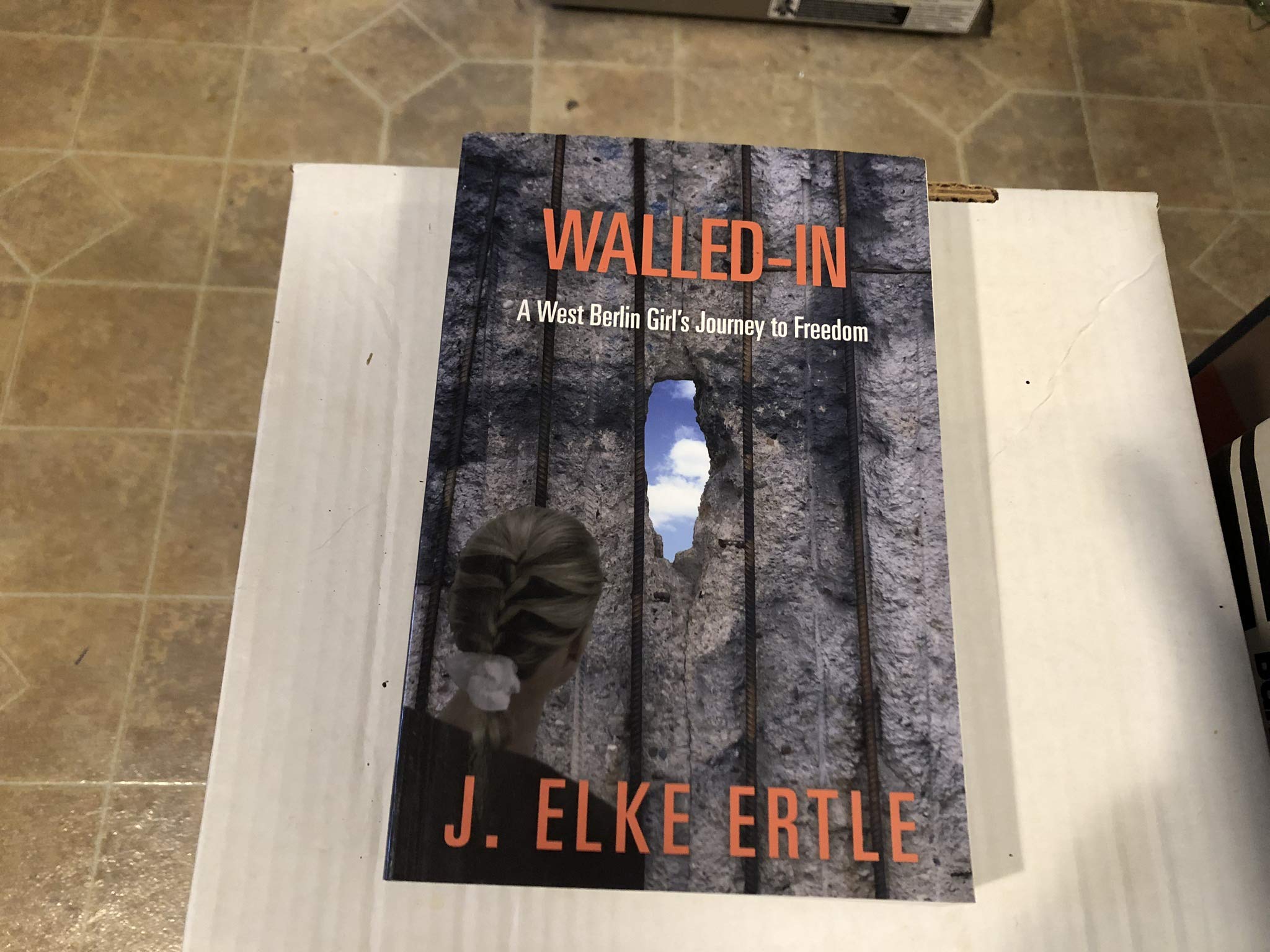



In WALLED-IN: A WEST BERLIN GIRL'S JOURNEY TO FREEDOM, J. Elke Ertle chronicles the first 21 years of her life growing up in West Berlin during the Cold War. Located one hundred miles from the closest West German border, West Berlin was nothing more than a tiny western island in the middle of a large Communist sea. But by the same token, it also represented the front line of the Cold War divide. Elke was a small child when in 1948 the Soviets blockaded West Berlin by cutting off all surface supply routes to the city. There was only enough food in the entire city to last for 35 days. Starvation seemed imminent. But in an incredible feat of logistics, the United States and Great Britain launched the Berlin Airlift, which for the next eleven months supplied everything Berlin needed by air. The total number miles flown during that period was close to the distance between the earth and the sun. As the economic disparity between East and West Germany continued to escalate during the 1950s, approximately 150,000 to 300,000 East Germans fled to the west every year in hopes of a better life. Elke was a teen when in 1961 the East Germany government, with Soviet support, erected the Berlin Wall to stem that drain of professionals and skilled labor. Two years later, she stood in the crowd of half million Berliners who wildly cheered when President John F. Kennedy said, “Ich bin ein Berliner” in front of West Berlin’s city hall. In her late teens, Elke struggled with parental walls almost as high as the Berlin Wall. In Walled-In, she draws a unique parallel between the conflicts over the brick-and-mortar Berlin Wall and her own hotly fought battles over equally insurmountable parental walls. Walled-In probes the concepts of freedom vs. conformity, conflict vs. cooperation, domination vs. submission, loyalty vs. betrayal. J. Elke Ertle was born in West Berlin in the aftermath of World War II when the city lay in shambles. Forty percent of all structures were destroyed. American, British, French, and Soviet forces occupied the city. Berlin was divided. Unemployment was high. Fear of a Communist takeover was on everyone’s mind. Following the Berlin Blockade and the Berlin Airlift, uncertainty regarding Berlin’s future intensified. In 1961, East Germany constructed a 12’ high wall around the western part of the city. American and Soviet tanks faced each other, and World War III with nuclear capabilities could not be ruled out. Eventually however, two Berlins – East and West - became the new reality, and Berliners on both sides of the wall adjusted to their circumstances. While the brick-and-mortar Berlin Wall restricted Elke’s physical freedom, equally rigid parental walls clipped her emotional freedom. Upon turning 21, she set off for a one-year adventure in the United States. The year turned into a lifetime and a career in Public Administration. Elke resides in San Diego, California, together with her husband and four-legged menagerie. She holds a Master’s degree in Industrial-Organizational Psychology from San Diego State University and a Certificate in Fitness Instruction and Exercise Science from the University of California, San Diego, and teaches group exercise classes on a part-time basis. Elke is a contributing author to “The Real F.M. Urban,” published in the Journal of the History of the Behavioral Sciences, and to two anthologies.