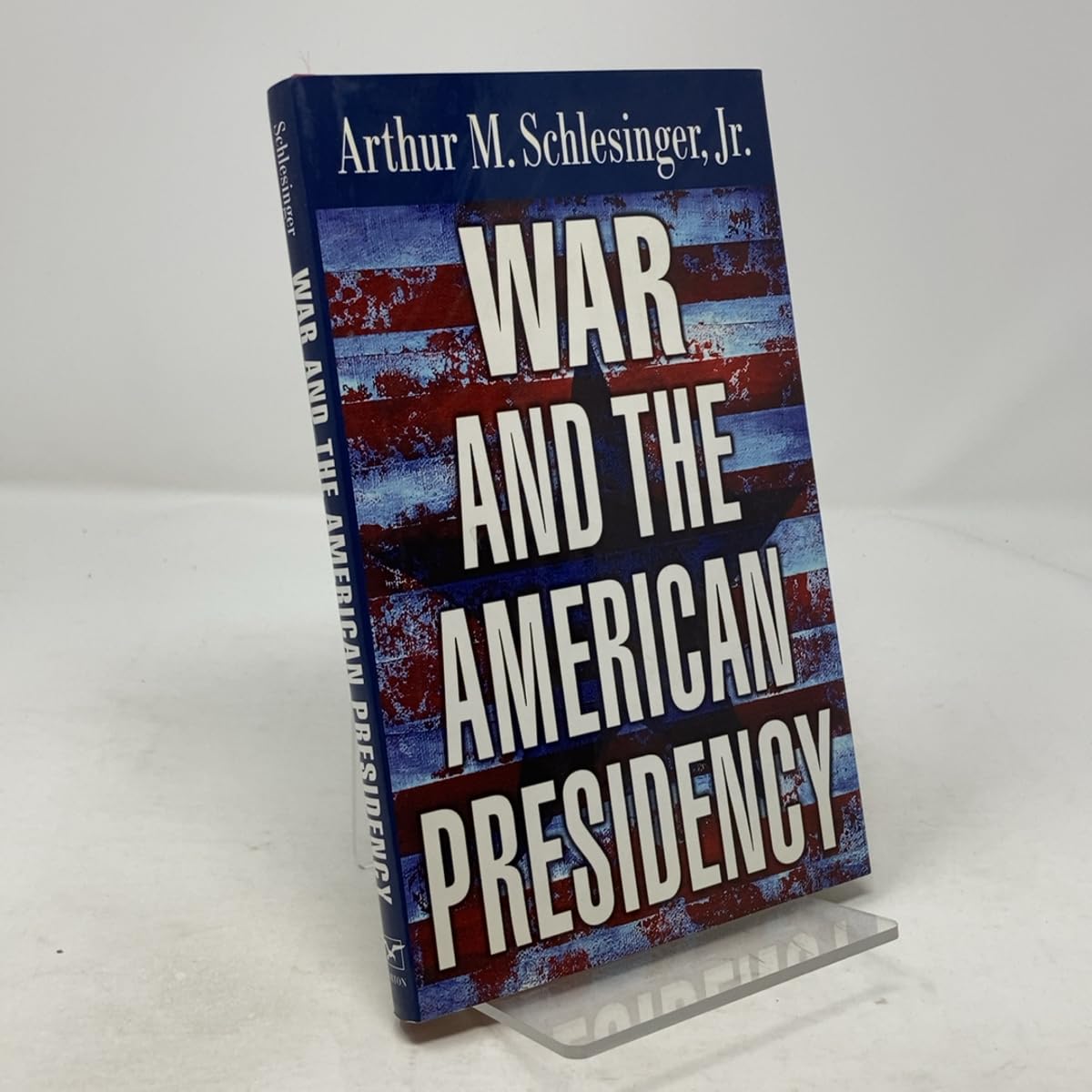



The Bush Doctrine in foreign policy and what it means for American democracy. The gravest decision in a democracy is the one to go to war. In a book that brings a magisterial command of history to the most urgent of contemporary questions, two-time Pulitzer Prize-winning historian Arthur M. Schlesinger, Jr., explores the war in Iraq, the presidency, and the future of democracy. Describing unilateralism as "the oldest doctrine in American history," Schlesinger nevertheless warns of the dangers posed by the fatal turn in U.S. policy from deterrence and containment to preventive war. He writes powerfully about George W. Bush's expansion of presidential power and the revived Imperial Presidency (a phrase Schlesinger invented). He reminds us of our country's distinguished legacy of patriotism through dissent in wartime, calling on us to honor that tradition even in the face of our need for security. And he reminds us of the inscrutability of history. War and the American Presidency shines an essential light on the meaning of our history and a guide for using our understanding responsibly in meeting today's challenges. Pulitzer Prize-winning presidential historian Schlesinger is perhaps best known for his study of the Kennedy presidency, A Thousand Days: John F. Kennedy in the White House (1965), and it is his reputation that will likely attract readers otherwise turned off by the vociferous glut of books, pro and con, about the Bush administration. Their interest will be well rewarded, for this selection is a notch better than most. Rather than comparing the current president's character with that of his predecessors--something both political camps enjoy doing--Schlesinger focuses on the office, not the man, and argues that the current administration's use of presidential power in war tells both an old story and a new one. Old, in that unilateral warfare is as old as America, but new--and, says Schlesinger, dangerous--in the manner in which Bush has taken advantage of wartime's mandate. This intelligent collection of essays, sketching historical congruities (most conspicuously between the Bush administration and Nixon's original "imperial presidency") as well as incongruities, includes a compelling discussion of the challenges inherent to history's lens. Brendan Driscoll Copyright © American Library Association. All rights reserved Arthur M. Schlesinger, Jr. , is a writer and historian. Among his many works are the Pulitzer Prize-winning The Age of Jackson and A Thousand Days: John F. Kennedy in the White House . He lives in New York City. Arthur M. Schlesinger Jr., the author of such magisterial works as The Age of Roosevelt, is the doyen of American historians. He is also a fervent liberal, and the two roles -- the intellectual and the partisan -- do not always mesh smoothly. But if we make generous allowance for his politics while paying due respect to his preeminence, this elegant and learned little book (a mere 160 pages in large type) offers a luminous and provocative guide for the perplexed in times of war. The targets of Schlesinger's passion are the Iraq war and the über-imperial presidency of George W. Bush. Some arrows hit home; some end up among the trees. One central instance is the chapter on "How to Democratize American Democracy," where Schlesinger complains bitterly about a president who won only a minority of the popular vote dragging the country into a foolish war. But since John Quincy Adams in 1824, minority presidents have been almost as American as apple pie. The sad but strictly constitutional fact is that the states, not the people, elect the president, a system that tends to overrepresent tiny or sparsely populated states. So don't blame W., blame the Founding Fathers. Or blame the people, who, in spite of a nasty, inconclusive war in Iraq, have returned Bush to the White House with a nice margin, adding some 9 million votes to his 50.4 million tally in 2000 and letting him carry the popular vote. So the principle of "one person, one vote," which Schlesinger advocates with a vengeance to guard against misbegotten foreign adventures, is a tricky thing; it all depends on what vox populi is saying. Having preached the wisdom of majorities, Schlesinger must be aghast at the outcome of November 2. One wonders whether he would still target George W. Bush today -- or the "false consciousness" of the electorate. Still, even those who (like this reviewer) supported the Iraq war now often harbor second thoughts. But foolish foreign ventures also are practically as old as the republic -- beginning with America's second war against Britain, the War of 1812, which almost ended in a humiliating rout when the Brits burned the Capitol and the White House. And it is not so obvious, as Schlesinger avers, that the folly in both 1812 or 2003 was glaringly self-evident ex ante. For the "logic" of either war was hardly demented. Heavily dependent on European markets, those young Americans in 1812