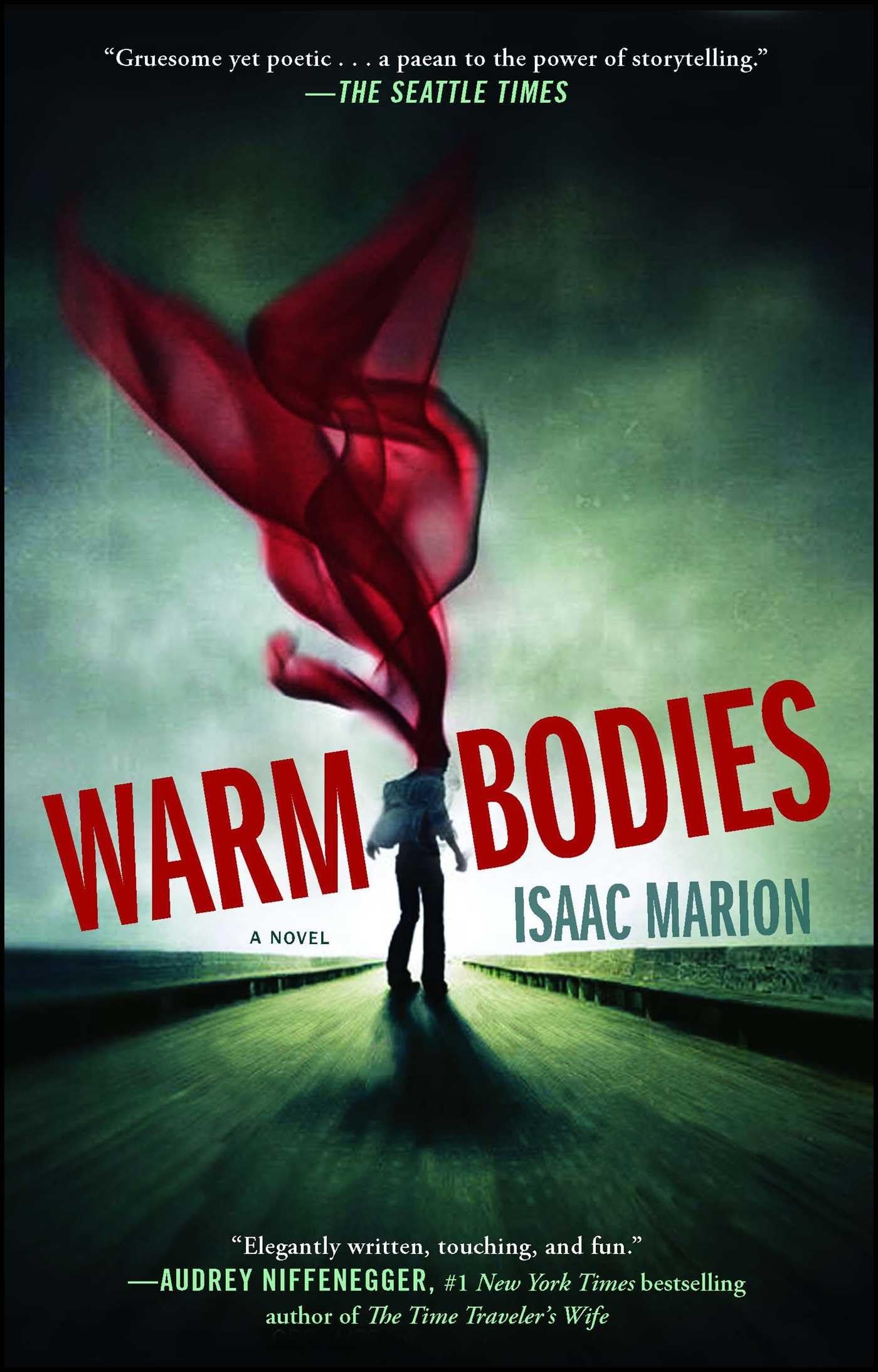



NEW YORK TIMES BESTSELLER, NOW A MAJOR MOTION PICTURE “Gruesome yet poetic…highly original.” — The Seattle Times “Dark and funny.” — Wired “A mesmerizing evolution of a classic contemporary myth.” —Simon Pegg “A strange and unexpected treat…elegantly written, touching, and fun.” —Audrey Niffenegger, author of The Time Traveler’s Wife “Has there been a more sympathetic monster since Frankenstein’s?” — Financial Times In Warm Bodies , Isaac Marion’s New York Times bestselling novel that inspired a major film, a zombie returns to humanity through an unlikely encounter with love. “R” is having a no-life crisis—he is a zombie. He has no memories, no identity, and no pulse, but he is a little different from his fellow Dead. He may occasionally eat people, but he’d rather be riding abandoned airport escalators, listening to Sinatra in the cozy 747 he calls home, or collecting souvenirs from the ruins of civilization. And then he meets a girl. First as his captive, then his reluctant house guest, Julie is a blast of living color in R’s gray landscape, and something inside him begins to bloom. He doesn’t want to eat this girl—although she looks delicious—he wants to protect her. But their unlikely bond will cause ripples they can’t imagine, and their hopeless world won’t change without a fight. “Gruesome yet poetic . . . a paean to the power of storytelling.” ― The Seattle Times “A jubilant love story.” ― Kirkus “Ruefully humorous . . . cinematic in scope.” ― The Guardian (UK) “Marion’s characters are far from perfect. Their flaws give them a realness and depth that have the reader caring deeply.” ― Paste Magazine Isaac Marion grew up in the mossy depths of the Pacific Northwest, where he worked as a heating installer, a security guard, and a visitation supervisor for foster children before publishing his debut novel in 2010. Warm Bodies became a #5 New York Times bestseller and inspired a major Hollywood film adaptation. It has been translated into twenty-five languages worldwide. Isaac lives in Seattle with his cat and a beloved cactus, writing fiction and music, and taking pictures of everything. Visit IsaacMarion.com for more on these endeavors. I AM DEAD, but it’s not so bad. I’ve learned to live with it. I’m sorry I can’t properly introduce myself, but I don’t have a name anymore. Hardly any of us do. We lose them like car keys, forget them like anniversaries. Mine might have started with an “R,” but that’s all I have now. It’s funny because back when I was alive, I was always forgetting other people’s names. My friend “M” says the irony of being a zombie is that everything is funny, but you can’t smile, because your lips have rotted off. None of us are particularly attractive, but death has been kinder to me than some. I’m still in the early stages of decay. Just the gray skin, the unpleasant smell, the dark circles under my eyes. I could almost pass for a Living man in need of a vacation. Before I became a zombie I must have been a businessman, a banker or broker or some young temp learning the ropes, because I’m wearing fairly nice clothes. Black slacks, gray shirt, red tie. M makes fun of me sometimes. He points at my tie and tries to laugh, a choked, gurgling rumble deep in his gut. His clothes are holey jeans and a plain white T-shirt. The shirt is looking pretty macabre by now. He should have picked a darker color. We like to joke and speculate about our clothes, since these final fashion choices are the only indication of who we were before we became no one. Some are less obvious than mine: shorts and a sweater, skirt and a blouse. So we make random guesses. You were a waitress. You were a student. Ring any bells? It never does. No one I know has any specific memories. Just a vague, vestigial knowledge of a world long gone. Faint impressions of past lives that linger like phantom limbs. We recognize civilization—buildings, cars, a general overview—but we have no personal role in it. No history. We are just here . We do what we do, time passes, and no one asks questions. But like I’ve said, it’s not so bad. We may appear mindless, but we aren’t. The rusty cogs of cogency still spin, just geared down and down till the outer motion is barely visible. We grunt and groan, we shrug and nod, and sometimes a few words slip out. It’s not that different from before. But it does make me sad that we’ve forgotten our names. Out of everything, this seems to me the most tragic. I miss my own and I mourn for everyone else’s, because I’d like to love them, but I don’t know who they are. • • • There are hundreds of us living in an abandoned airport outside some large city. We don’t need shelter or warmth, obviously, but we like having the walls and roofs over our heads. Otherwise we’d just be wandering in an open field of dust somewhere, and that would be horrifying. To have nothing at all around us, nothing to touch or look at, no hard lines whatsoever, just us and the