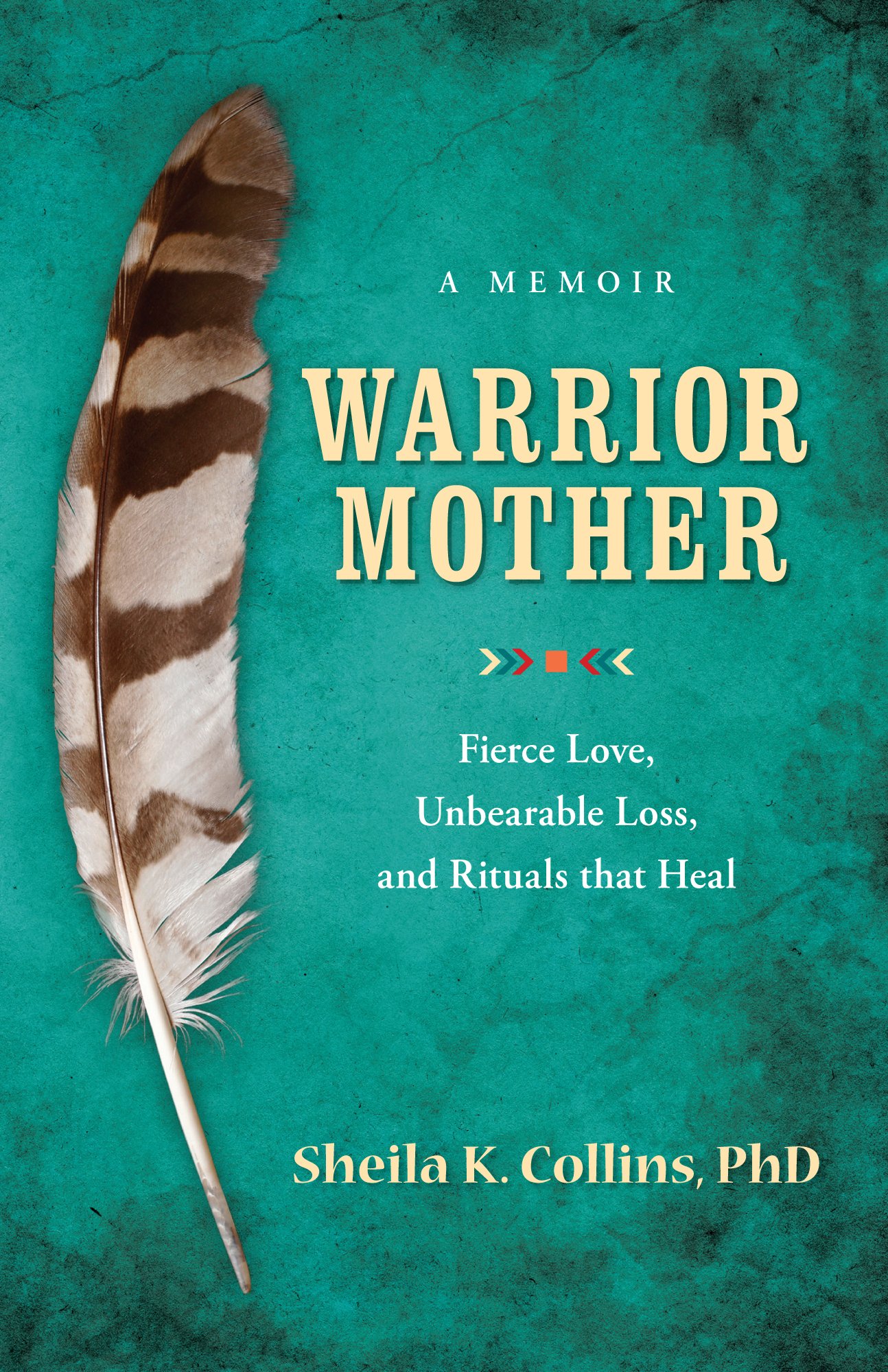
Warrior Mother: A Memoir of Fierce Love, Unbearable Loss, and Rituals that Heal
$9.23
by Sheila K Collins



Warrior Mother: Fierce Love, Unbearable, Loss, and Rituals that Heal is the true story of a mother's fierce love and determination, and her willingness to go outside the bounds of the ordinary when two of her three adult children are diagnosed with life-threatening disease. Coming soon! "With courage and grace, Sheila K. Collins' Warrior Mother generously invites the reader on her heartbreaking journey, with equal doses of candor and sensitivity. Admirably free of self-pity, physically and emotionally precise, her story is bound to enlighten others who have grieved and healed from the loss of a child." --Sarah Saffian, author of Ithaka: A Daughter's Memoir of Being Found "Just as love survives death, so too does spirit supplant mere survival. Sheila K. Collins has faced a parent's worst fears and learned to still dance in their wake. Warrior Mother is a mother's manual of profound honesty, hope, and healing." -Marc Nieson, author of Schoolhouse: A Memoir in 13 Lessons People would often say to me, "This isn't the way it's supposed to be, children dying before their parents." They said it when my 31-year-old son, Kenneth, died of AIDS and again, seven years later, when my 42-year-old-daughter, Corinne, died of breast cancer. When Corinne died, I got a phone call from my cousin, who had lost her own daughter in a car accident twenty years before: "This shouldn't be happening to you," she said in an attempt to comfort me. When I asked who it should be happening to, she said, "Someone who hasn't already lost a child." But I prefer not to think this way. When I am in that place of questioning the circumstances of my own life, I picture the gravestones in the historical cemeteries our history buff father took us to visit as children. We kids would run from stone to stone, doing the math, and discovering children our own ages or younger buried there. I remind myself it's only in recent generations and in a country as fortunate as our own, where parents can expect to raise all their children, and to predecease them. So I set out to write about my experiences as a mother who has lost two adult children to horrific diseases. I wrote partly for my own healing, and partly to share with others what my family and I learned in the process. Many people did not understand my spending so much time writing about this, especially my husband, Richard, whose style of grieving was entirely different from my own. He and I finally came to an understanding several years into the project, when I returned from a writer's workshop in Iowa City, held a couple of weeks after the town had suffered a significant flood. I brought back two of the thousands of sandbags that had been stacked as barricades against the rising waters. The empty sandbags had been decorated and made into handbags by artists in the community, and sold to raise money to help the local Habitat for Humanity with the cost of the clean-up. Before I'd left for the writers' workshop, Richard had said, "I hope someday you will find something more pleasant to write about." My first night home I laid out the two handbags made from the sandbags alongside a folder that contained some of my writing. "My writings are my sandbags," I told him. "We have to make art, or at least something useful out of what happens to us, and we don't get to pick what that is." People have asked me how I've survived all the tragedy and loss in my life. Perhaps I've written the stories of my journeys with my children, other family members, and my best friend, in order to answer that question for myself. I know my grieving process has been strongly affected by remembering how hard both my children fought to stay alive, and all that they were willing to do to gain more life. I have never wanted to dishonor them by wasting one moment of whatever precious life I am given. Like a prospector panning for gold, with the help of my journal, I have panned and sifted through these experiences: of life, death, and the places in between. I have shaken the sieve in such a way as to uncover the valuable shiny nuggets in these stories, amongst the dirt, pebbles, and other debris. This sifting and sorting has been, like the experiences themselves, tough at times, but also enlightening. Ultimately, I've come to appreciate the many ways that people confront illness, diagnoses and treatment decisions, and yes, even death; the many faces and masks of grief, as well as the precious gifts that come in dreadful-looking packages. (from Warrior Mother - Fierce Love, Unbearable Loss, and the Rituals that Heal by Sheila K. Collins PhD.) At a dance workshop, held to address the threat of the pandemic AIDS, the author admits she doesn't know how to be the mother to her gay son. With the help of women in her spirituality group, she learns to say yes to what life is asking of her son, and of her, as his mother. The author's best friend, dying of breast cancer, asks the author to accompany