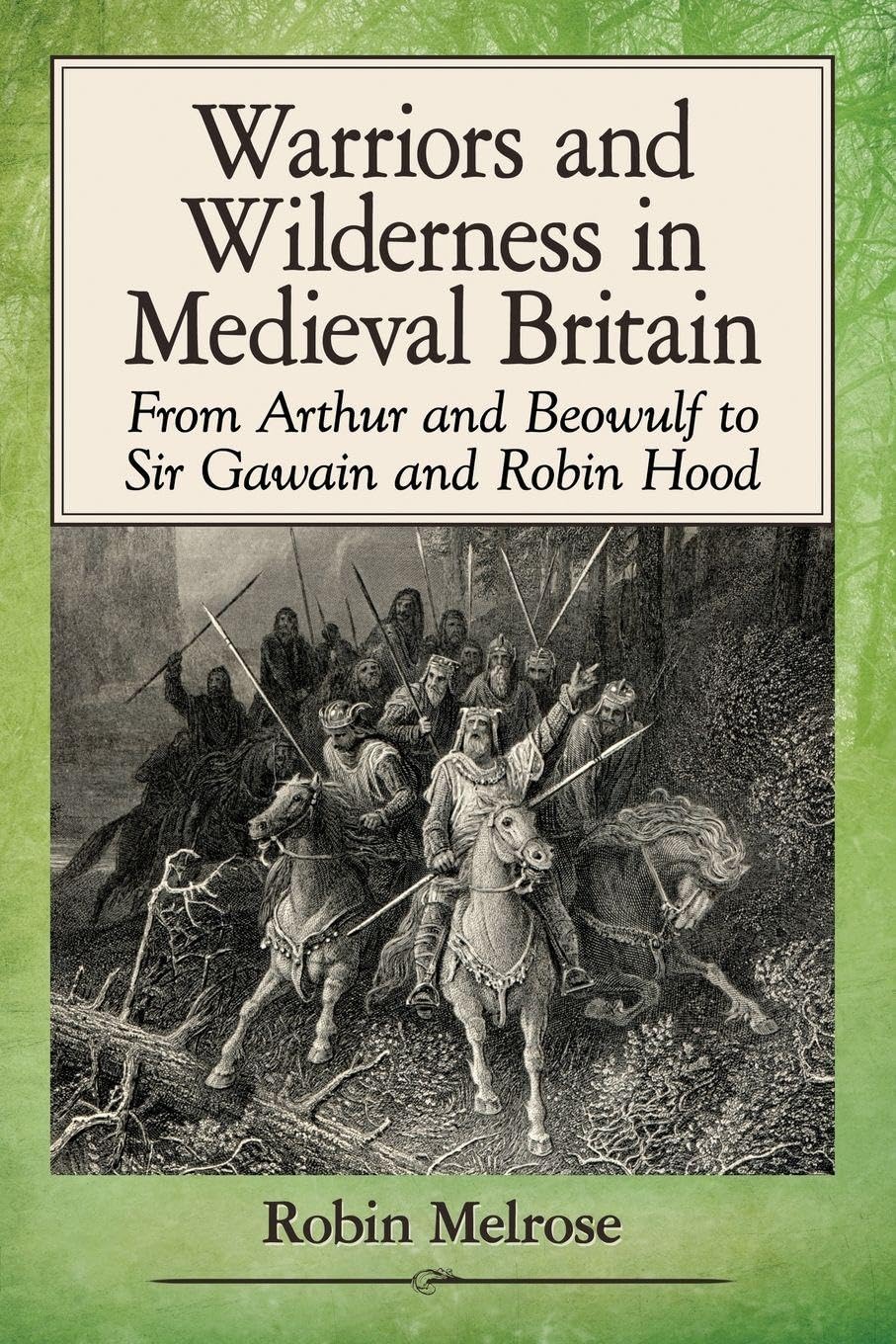
Warriors and Wilderness in Medieval Britain: From Arthur and Beowulf to Sir Gawain and Robin Hood
$19.99
by Robin Melrose



Tracing the development of the King Arthur story in the late Middle Ages, this book explores Arthur's depiction as a wilderness figure, the descendant of the northern Romano-British hunter/warrior god. The earliest Arthur was a warrior but in the 11th century Welsh tale Culhwch and Olwen , he is less a warrior and more a leader of a band of rogue heroes. The story of Arthur was popularized by Geoffrey of Monmouth, in his Latin History of the Kings of Britain , and was translated into Middle English in Layamon's Brut and the later alliterative Alliterative Morte Arthure . Both owed much to the epic poem "Beowulf," which draws on the Anglo-Saxon fascination with the wilderness. The most famous Arthurian tale is Sir Gawain and the Green Knight , in which the wilderness and themes from Beowulf play a leading role. Three Arthurian tales set in Inglewood Forest place Arthur and Gawain in a wilderness setting, and link Arthur to medieval Robin Hood tales. Robin Melrose is a retired senior lecturer in English and linguistics at England's University of Portsmouth. He lives on the Isle of Wight in southern England.