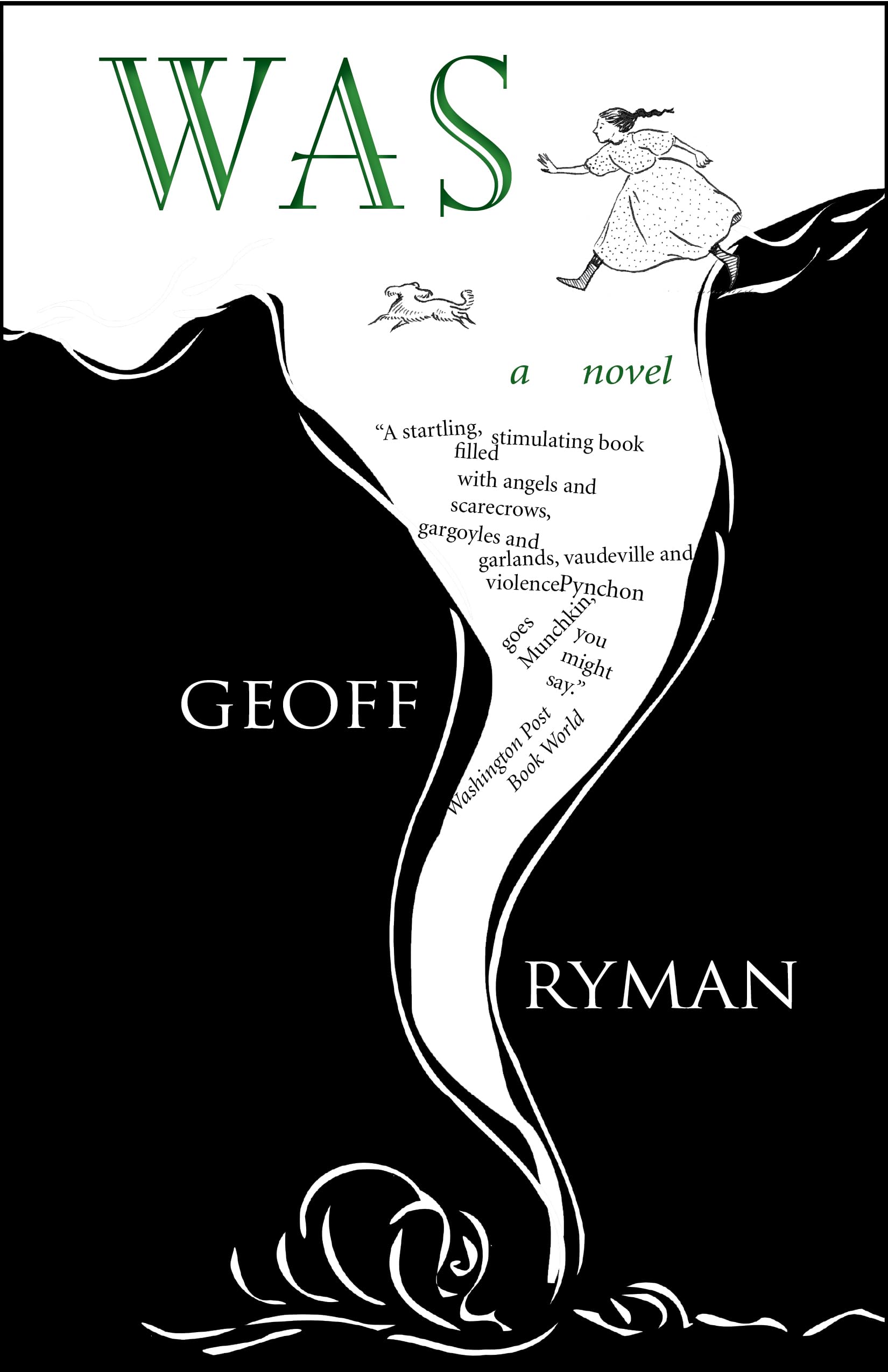



"A moving lament for lost childhoods and an eloquent tribute to the enduring power of art."— The New York Times Was is a haunting novel which explores the lives of characters intertwined with The Wizard of Oz : the “real” Dorothy Gale; Judy Garland’s unhappy fame; and Jonathan, a dying actor, and his therapist, whose work at an asylum unwittingly intersects with the Yellow Brick Road. Geoff Ryman is the author of The King's Last Song , Air, Him, 253, The Child Garden , The Unconquered Country , and Paradise Tales . He has lived in Cambodia and Brazil, and now teaches at the University of Manchester, England. “A startling, stimulating book filled with angels and scarecrows, gargoyles and garlands, vaudeville and violence. Pynchon goes Munchkin, you might say.” — Washington Post Book World “In an era of bright, simple adaptations, Was is different—melancholy, beautiful, and yes, full of heartaches and nightmares. If we were to put those green glasses back on to block them out, we would leave ourselves knowing so much less about why such Technicolor stories matter to us, even long after childhood.” — Slate "The Scarecrow of Oz dying of AIDS in Santa Monica? Uncle Henry a child abuser? Dorothy, grown old and crazy, wearing out her last days in a Kansas nursing home? It's all here, in this magically revisionist fantasy on the themes from The Wizard of Oz ." — Kirkus Reviews "Ryman's darkly imaginative, almost surreal improvisation on L. Frank Baum's Oz books combines a stunning portrayal of child abuse, Wizard of Oz film lore and a polyphonic meditation on the psychological burden of the past." — Publishers Weekly "A mediation on art, lies and human pain. None of Ryman's books is quite like any of the others—this is one of his most straightforward and best" —Roz Kaveneny, Time Out Was, an excerpt: PART ONE: THE WINTER KITCHEN MANHATTAN, KANSAS SEPTEMBER 1989 During the spring and summer I sometimes visited the small Norwegian Cemetery on a high hill overlooking a long view of the lower Republican Valley. In late evening a cool breeze always stirs the two pine trees which shade a few plots. Just south of the Cemetery in a little ravine is a small pond surrounded with a few acres of unbroken prairies sod. On the rise beyond the ravine a few large trees grow around a field. They are the only markers of the original site of my Grandfather's homestead. My Grandmother once told me that when she stood on the hill and looked southwest all she could see was prairie grass. An aunt told me of walking over the hills to a Post Office on the creek there. I can remember when a house stood just across the field to the west and now I can still see an old tree and a lonely lilac bush on the next hill where a few years ago a house and farm building stood. Of the ten houses I could see from this hill when I was a child, now only two exist - but instead of the waving prairie grass which Grandmother saw in the 1870s, there are rectangles and squares of growing crops and trees along the roads. A few miles distant the dark green of trees, with a water tower, tall elevator and an alfalfa mill rising above them define the area of a small town. Elinor Anderson Elliott, The Metamorphosis of the Family Farm in the Republican Valley of Kansas: 1860-1960, MA thesis, Kansas State University The Municipal airport of Manhattan, Kansas, was low and brown and rectangular, and had a doorway that led direct from the runway. The last passenger from St. Louis staggered through it, his cheek bristly, his feet crossing in front of each other as he walked. He blinked at the rows of chairs and Pepsi machines and then made his way to the Hertz desk. He gave his name. "Jonathan," he said, in a faraway voice. Jonathan forgot to give his last name. He was enchanted by the man at the Hertz desk, who was long, lean, solemn, wearing wire glasses. He reminded Jonathan of the farmer in the painting American Gothic. Jonathan grinned. He passed the man an airport napkin with a confirmation number written on it. American Gothic spoke of insurance and had forms ready to sign. Jonathan put check marks in the little boxes and passed over a credit card. He waited, trying not to think about how ill he was. He looked at a map on the wall. The map showed Manhattan the town and, to the west of it, Fort Riley, the Army base. Fort Riley covered many miles. It had taken over whole towns. Jonathan did not know there had once been a town in Kansas called Magic. There had even been a Church of Magic, until the congregation had to move when the Army base took over. The ghost towns were marked. Fort Riley DZ. DZ Milford. The letters D were ambiguously rounded. Quite plainly on the map, there was something that Jonathan read as "OZ Magic." It had its own little box, hard by something called the Artillery and Mortar Inpact Area, quite close to a village called Keats. "There you go," said American Gothic. He held out car keys. "What's this mean?" Jonathan asked