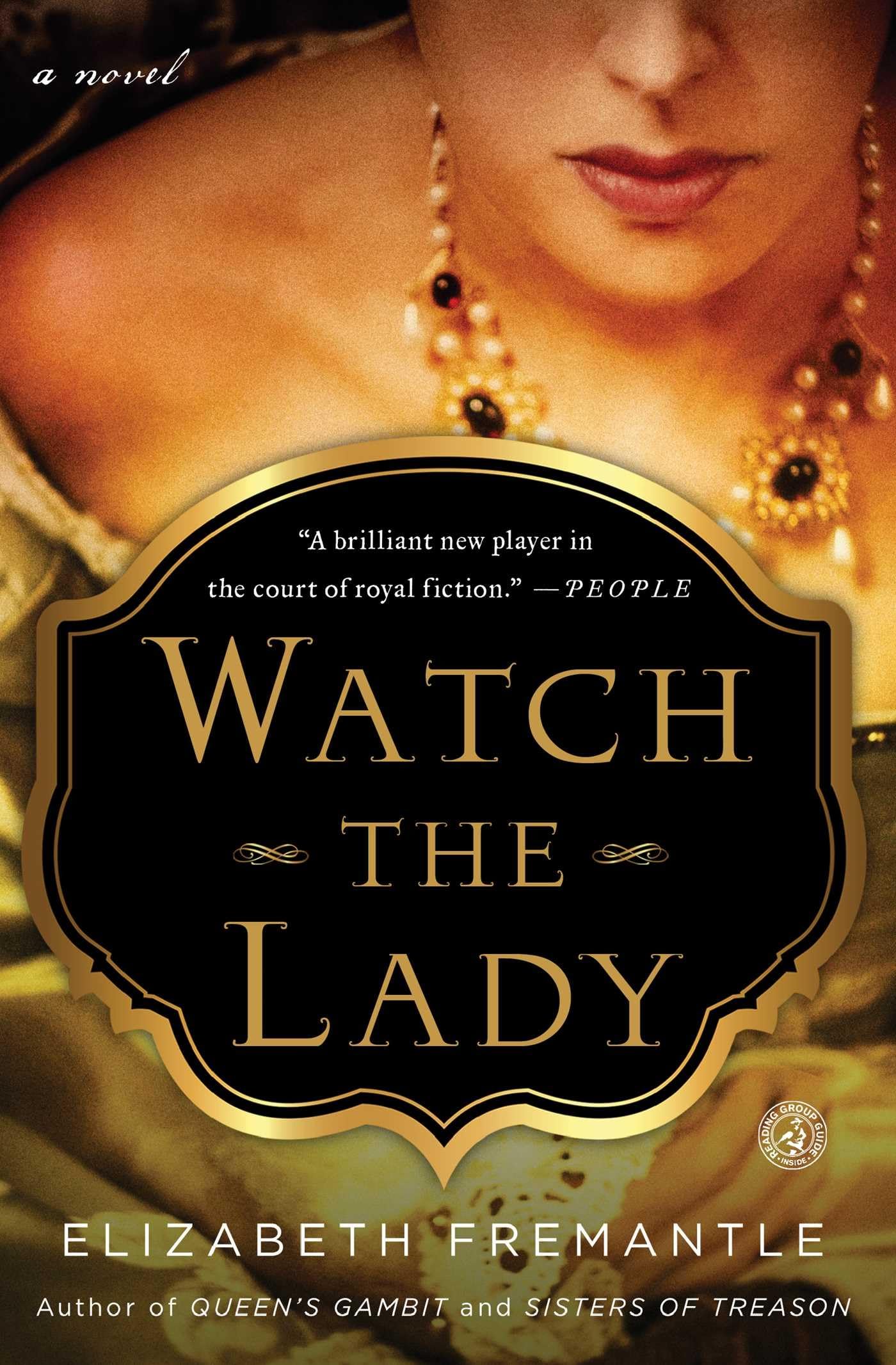



From “a brilliant new player in the court of royal fiction” ( People ), comes the mesmerizing story of Lady Penelope Devereux—the daring young beauty in the Tudor court, who inspired Sir Philip Sidney’s famous sonnets even while she plotted against Queen Elizabeth. Penelope Devereux arrives at Queen Elizabeth’s court where she and her brother, the Earl of Essex, are drawn into the aging Queen’s favor. Young and naïve, Penelope, though promised elsewhere, falls in love with Philip Sidney who pours his heartbreak into the now classic sonnet series Astrophil and Stella. But Penelope is soon married off to a man who loathes her. Never fainthearted, she chooses her moment and strikes a deal with her husband: after she gives birth to two sons, she will be free to live as she chooses, with whom she chooses. But she is to discover that the course of true love is never smooth. Meanwhile Robert Cecil, ever loyal to Elizabeth, has his eye on Penelope and her brother. Although it seems the Earl of Essex can do no wrong in the eyes of the Queen, as his influence grows, so his enemies gather. Penelope must draw on all her political savvy to save her brother from his own ballooning ambition and Cecil’s trap, while daring to plan for an event it is treason even to think about. Unfolding over the course of two decades and told from the perspectives of Penelope and her greatest enemy, the devious politician Cecil, Watch the Lady chronicles the last gasps of Elizabeth’s reign, and the deadly scramble for power in a dying dynasty. "This is a superbly written novel . . . Fremantle is surely a major new voice in historical fiction and this book is the answer to the question about what Hilary Mantel fans should read while waiting for the final part of her trilogy." ― The Bookseller “Intrigue, romance, and treachery abound in Fremantle’s debut novel . . . . This compulsively readable fictional biography of the ultimate survivor is infused with the type of meticulous attention to historical detailing that discerning fans of Alison Weir and Philippa Gregory have come to expect in the Tudor canon.” ― Booklist “Fremantle manages to combine pacey storytelling with superb background…terrifically entertaining.” ― The Sunday Times “The research and historical detail are impeccable.. and fans will enjoy this evocation of Elizabeth’s tumultuous court” ― The Times Elizabeth Fremantle is the author of four Tudor novels: Queen’s Gambit (now a major motion picture, Firebrand , starring Alicia Vikander and Jude Law), Sisters of Treason , Watch the Lady , and The Girl in the Glass Tower . As EC Fremantle she has written two gripping historical thrillers: The Poison Bed and The Honey and the Sting . Her contemporary short story, ‘That Kind of Girl,’ was shortlisted for the Bridport Prize in 2021. She has worked for Elle and Vogue in Paris and London and contributed to many publications including Vanity Fair , The Sunday Times (London), the Financial Times, and The Wall Street Journal . She lives in London. Watch the Lady January 1581 Whitehall When she had first been fitted for the dress she would wear to be received by the Queen, it had seemed an infinitely beautiful thing, but there in the long gallery at Whitehall it had transformed into something wrong—too plain, too Puritan. The countess was listing instructions as they walked. “Stay on your knee until she indicates you may rise; do not stare; do not speak unless she asks it of you.” Penelope wanted to stop and listen to the singing, which she could hear faintly coming from the chapel where the choir were practicing. They had worshipped there on the previous day after their journey and Penelope had felt the music burrow deep inside her, expanding until she could no longer tell where she began or ended. She had never heard such a choir. Forty voices—she counted them—each singing a different part, yet marrying as if they were one. That must be the sound of heaven, because nothing on earth can draw itself tight about your heart like that until you might gasp for the sheer joy of it. The Earl and Countess of Huntingdon did not allow music in their chapel; they said it distracted from private contemplation and communion with the Lord. “Don’t dawdle so, Penelope.” The countess’s hand was clamped on her wrist, so tightly she feared it would leave a bruise. They walked swiftly past the line of portraits, too fast for Penelope to see if she could find her family amongst them, the countess barking at the dawdlers to step aside. The women’s gowns were cut in a way Penelope had never encountered, waspish pointed stomachers embroidered with flowers and birds, skirts flaring out so wide two could not pass in a corridor without negotiation. Some wore gossamer structures curving up behind their heads, like the wings of dragonflies. She wanted to take a closer look to see how they were fashioned, whether it was wire that held them up, or magic. The countess favored